
Gen Z as Pet Parents: How the New Generation is Redefining Europe Pet Food Market
Despite having lower total accumulated wealth than Baby Boomers, Gen Z allocates a significantly higher percentage of their disposable income to premium pet care.

The era of the "pet owner" is quietly fading. In its place, the rise of the "pet parent" is taking over. This isn't just a change in terminology; it is a fundamental shift in consumer behavior that is sending shockwaves through the Europe pet food market. As Generation Z comes of age, their spending power and distinct values - centering on sustainability, digital convenience, and animal welfare - are forcing legacy brands to pivot or perish.
For this new generation, a dog is not merely a guardian of the house. A cat is not just a mouser. They are family members, or "fur-babies," deserving of the same nutritional quality and care as a human child. This cultural evolution is driving unprecedented growth across the continent. By analyzing the latest market data and consumer trends, we can see exactly how these young Europeans are reshaping an entire industry.
What Does the Data Say About the European Pet Food Market Growth?
The market is experiencing a robust upward trajectory, fueled by premiumization and a steady increase in pet ownership rates across the continent.
According to the latest industry analysis by IMARC Group, the Europe pet food market size reached US 37.77 billion in 2025. However, this is just the beginning of the surge. Experts forecast that the market will reach a staggering US 63.29 billion by 2034. This growth exhibits a Compound Annual Growth Rate (CAGR) of 5.90% during the forecast period of 2026-2034.
This growth is not evenly distributed. Germany currently holds the leading position in the market. They account for approximately 26% of the share. This dominance highlights the German consumer's strong propensity for high-quality, premium pet nutrition. Consequently, they set the trend for the rest of Europe. The numbers tell a clear story: the industry is healthy, growing, and increasingly lucrative for those who understand the new demographics.
Why is Gen Z Choosing "Fur-Babies" Over Human Children?
Financial constraints, climate anxiety, and the desire for companionship without the rigidity of traditional parenting are driving this massive demographic shift.
The term "fur-baby" might sound affectionate, but it represents a serious economic reality. With the rising cost of living and housing challenges across Europe, many Gen Z adults are delaying traditional parenthood. In this vacuum, pets fulfill the biological and emotional need for nurturing. Previous generations viewed pets as property. In contrast, Gen Z views them as extensions of their identity.
This "humanization" of pets is the primary driver behind the market's expansion. If a pet is a child, then "feed" becomes "cuisine." This psychology explains why standard kibble sales are flattening while functional, human-grade, and organic segments are skyrocketing. Brands that market to the "owner" are missing the mark. Successful brands today market to the "parent."
How is Sustainability Driving Pet Food Innovation in Europe?
Gen Z consumers actively demand eco-friendly packaging, alternative proteins, and transparent supply chains to align their purchasing habits with their environmental values.
European Gen Z consumers are arguably the most eco-conscious demographic in history. They are acutely aware of the carbon footprint associated with traditional meat production. Consequently, they are not just looking for healthy food; they are looking for ethical food. This has led to the rise of insect-based proteins (such as black soldier fly larvae) and plant-based diets for pets. These options were once considered niche but are now entering the mainstream.
This trend aligns perfectly with the broader European Green Deal initiatives. Manufacturers are under pressure to reduce waste and prove their sustainability claims. Greenwashing does not work on this generation. They read labels, check sourcing, and demand accountability. A brand using non-recyclable plastic or opaque sourcing methods will likely face a swift backlash on social media platforms like TikTok and Instagram.
Are Gen Z Pet Parents Willing to Pay More for Premium Nutrition?
Yes, despite having lower total accumulated wealth than Baby Boomers, Gen Z allocates a significantly higher percentage of their disposable income to premium pet care.
There is a misconception that younger people, often earning entry-level salaries, will opt for budget-friendly options. The data suggests the opposite. Gen Z views pet food as preventative healthcare. The logic is sound: spend more on high-quality nutrition now to avoid expensive veterinary bills later.
This has birthed the "premiumization" of the pet aisle. We are seeing a surge in demand for:
- Functional Foods: Diets enriched with probiotics, omega-3s, and superfoods.
- Specific Solutions: Formulas for anxiety, digestion, and joint health.
- Fresh/Frozen: The "HelloFresh for dogs" model, where fresh meals are delivered to the door.
While the older generation might scrutinize the price per kilo, the younger generation scrutinizes the ingredient list. They are willing to sacrifice other luxuries (like dining out) to ensure their pet eats well.
Where and How is the New Generation Buying Pet Food?
While physical supermarkets remain the dominant volume channel, online subscriptions and Direct-to-Consumer (DTC) models are the fastest-growing avenues for sales.
Data from IMARC Group indicates that Supermarkets and Hypermarkets still represent the largest distribution channel. They hold roughly 62.7% of the market share. This is largely due to convenience and the sheer volume of established retail footprints in countries like Germany, France, and the UK.
However, the growth engine is digital. Gen Z lives on their phones. They prefer the convenience of auto-ship subscriptions that ensure they never run out of food. Furthermore, DTC brands often offer the personalization that retail shelves cannot - customized meal plans based on the pet's breed, age, and activity level. This digital-first approach allows brands to build direct relationships with consumers. It effectively bypasses the "middleman" of the grocery store.
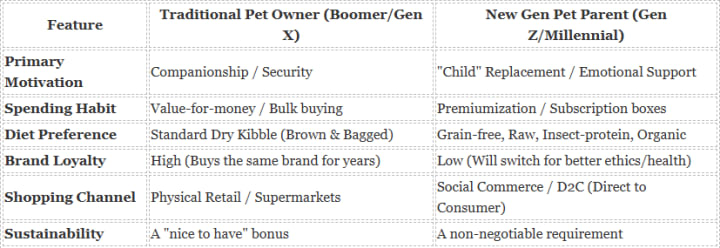
How Does Gen Z Compare to Traditional Pet Owners?
Gen Z prioritizes ethics, customization, and convenience, whereas traditional owners tend to prioritize value, volume, and brand loyalty.
To truly understand how the market is being redefined, it helps to look at the stark contrast between the old guard and the new wave of consumers.
Frequently Asked Questions
What is the largest market for pet food in Europe?
Germany is the largest market. They hold approximately 26% of the total market share, driven by a strong culture of pet ownership and manufacturing excellence.
What is the projected growth of the European pet food market?
The market is forecasted to grow from US 37.77 billion in 2025 to US 63.29 Billion by 2034. This represents a CAGR of 5.90%.
What trends are shaping the future of European pet food?
The three main trends are the humanization of pets (premium ingredients), sustainability (eco-packaging and insect proteins), and the digitalization of sales (subscription models).
Conclusion
The numbers presented by IMARC Group - a forecast of US$ 63.29 billion by 2034 - paint a picture of a vibrant industry. However, the raw numbers only tell half the story. The driver of this growth is a fundamental shift in values led by Generation Z.
As this generation moves into their prime earning years, their influence will only solidify. For manufacturers and retailers in Europe, the message is clear. The days of "generic kibble" are numbered. The future belongs to brands that can offer transparency, sustainability, and health benefits that rival human food. In the eyes of a Gen Z pet parent, love is measured in the quality of the bowl.
About the Creator
Joey Moore
I'm Joey Moore, a seasoned Research Analyst with 5+ years of experience in market research. Expert in data analysis, strategic planning, and industry insights. Proven track record in delivering actionable reports.
Keep reading
More stories from Joey Moore and writers in Journal and other communities.
E-Commerce Disruption in the Jewelry Market in Europe: From Brick-and-Mortar to Click-and-Order
Traditionally, the velvet-rope experience of boutiques in Milan, Paris, and London defined the allure of the Europe jewelry market. However, a seismic shift is currently underway. We are witnessing a historic transition where centuries-old craftsmanship meets the high-speed demands of the digital age. While the tactile "touch-and-feel" nature of luxury goods once protected physical stores from digital disruption, 2024 has proven that even the most high-ticket items are finding a home in the digital cart.
By Joey Moore2 days ago in Journal
~ Fired ~
— Ai Intrusion ~ Are you Next ~ Is Ai Evolution after your job? — Few workplaces haven't been affected. Ai is in supermarkets, at doctors' offices, and even monitoring farms. I just can't think of anything this machine is not getting into, can you? For instance: Education ~ Law and Tech jobs will one day have a major influence or be taken over by these inanimate machines, with accuracy and vigor. From mechanics' diagnoses to a wide variety of everyday jobs, including fast food workers, with this input having the ability to cut their unnecessary work hours. I'm certain all of us have been touched by this with our short stories and colorful headings, have you? Even comments are very questionable 'Non-Robot' insertions.
By Jay Kantor3 days ago in Journal
How One Small Tech Innovation Changed the Face of Air Travel Forever
Air travel has come a long way since the Wright brothers’ first flight in 1903. From propellers to jets, the industry has continuously evolved with innovations that have made flying faster, safer, and more efficient. Among these advancements, one small tech innovation stands out as a pivotal moment in aviation history, the development of advanced avionics systems that transformed the way we navigate and communicate in the sky.
By Beckett Dowhan7 days ago in Journal



Comments
There are no comments for this story
Be the first to respond and start the conversation.