
From Order to Anarchy: The Fracturing of Global Stability
"How Power Shifts, Rising Authoritarianism, and Global Crises Are Redefining the World Order"
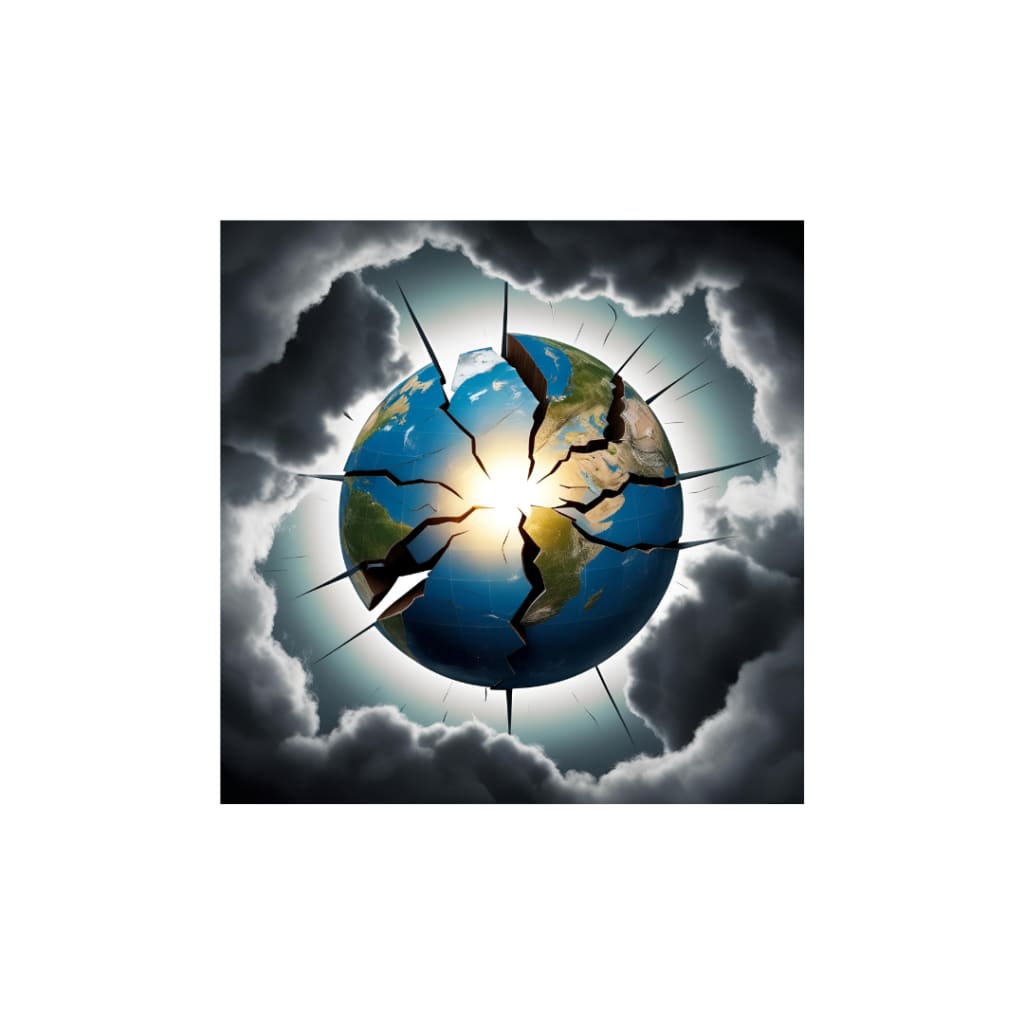
From Order to Anarchy: The Fracturing of Global Stability
Introduction: The Unraveling World
The modern global order—once anchored in institutions, alliances, and shared norms—is now buckling under the weight of rising nationalism, geopolitical rivalries, climate crises, economic instability, and technological disruptions. The dream of a cohesive, rules-based international system, shaped after the Cold War, appears increasingly fragile. Today, the world teeters on the edge of strategic uncertainty, with power centers drifting, cooperation collapsing, and the very idea of global unity in disarray.
The Collapse of the Post-Cold War Consensus
After the fall of the Soviet Union, the world briefly embraced the idea of a unipolar order led by the United States, supported by liberal democratic values and global institutions like the United Nations, NATO, and the World Trade Organization. This period promised peace, open markets, and cooperation. However, that illusion has gradually dissolved. The 2003 Iraq War, the 2008 global financial crisis, and growing disillusionment with globalization exposed deep fractures in the system.
Nations began to question the legitimacy of Western-led global governance. Emerging powers like China and Russia challenged the narrative of Western supremacy, while smaller states felt marginalized within this order. What followed was a shift—gradual, then sudden—from shared governance to fragmented realities.
The Rise of Authoritarianism and Nationalism
Across continents, strongmen leaders have risen, fueled by populist narratives, economic grievances, and anti-globalist rhetoric. From Russia’s Vladimir Putin to China’s Xi Jinping, and from Turkey’s Erdoğan to India’s Modi, a new brand of leadership has taken root—one that prioritizes sovereignty over cooperation, and power over diplomacy.
According to Freedom House’s 2024 report, global freedom has declined for the 18th consecutive year. Democratic backsliding is no longer a regional anomaly; it is a global trend. In this context, international agreements, human rights obligations, and peacekeeping norms are being routinely ignored or undermined.
Geopolitical Flashpoints: Chaos on the Rise
The global map today is dotted with high-risk geopolitical flashpoints that threaten regional and international stability:
Ukraine-Russia War: Beyond its tragic human toll, the war symbolizes a broader contest between authoritarian ambition and Western resolve. It has revived Cold War tensions and destabilized global energy and food markets.
Middle East Conflicts: From the escalating Israel-Palestine conflict to the Iranian nuclear crisis and the Yemen civil war, the Middle East remains a volatile landscape with little global consensus on solutions.
Asia-Pacific Tensions: China's military assertiveness in the South China Sea and its growing threats toward Taiwan have triggered a new era of strategic competition with the United States, risking a confrontation in one of the world’s most economically vital regions.
Africa’s Coup Wave: Since 2020, more than seven military coups have occurred in West and Central Africa. This signals the weakening of democratic institutions and a surge in militarized governance, driven by external influence and internal instability.
The Erosion of Multilateral Institutions
Once the bedrock of global stability, institutions like the United Nations, the World Health Organization, and the World Trade Organization face a severe crisis of credibility. These platforms, designed for collective action, are now paralyzed by political rivalries, underfunding, and lack of enforcement mechanisms.
For instance, during the COVID-19 pandemic, the WHO struggled to coordinate a global response due to accusations of bias and political pressure. Similarly, the UN Security Council has become increasingly dysfunctional, with veto-wielding powers blocking resolutions on critical crises, such as in Syria or Gaza.
Technology and the Weaponization of Information
In today’s disorderly world, technology—once seen as a bridge—has become a battleground. Cyber warfare, misinformation campaigns, surveillance tools, and AI-driven manipulation have emerged as instruments of statecraft and social control.
Cyber Attacks: In 2023 alone, cyberattacks targeting government infrastructures increased by 38%, with critical systems in the U.S., Ukraine, and India hit by foreign hackers.
Disinformation: Weaponized narratives and deepfakes have blurred the line between truth and fiction, undermining public trust and creating echo chambers that feed extremism and paranoia.
Economic Disparities and the Broken Global Economy
Global economic inequality is widening, with the richest 1% owning more wealth than the remaining 99%. According to Oxfam's 2024 report, five billion people globally have become poorer since 2020, while billionaire wealth has surged by over $3.3 trillion. The rules of global trade, once governed by fairness and openness, now favor monopolies and regional blocs.
Supply chains are being reshaped by national security concerns rather than efficiency. Trade wars, sanctions, and economic coercion have replaced cooperation, leading to inflation spikes, food insecurity, and debt crises in the Global South.
The Climate Crisis: A Catalyst for Disorder
Climate change is the ultimate force multiplier in the chaos equation. As the planet warms, resource competition intensifies, mass migrations increase, and disasters multiply. According to the IPCC, over 3.5 billion people live in regions highly vulnerable to climate impacts.
Water wars, such as those between Egypt and Ethiopia over the Nile or India and Pakistan over the Indus, are no longer theoretical. Droughts, floods, and wildfires are reshaping geopolitics and straining fragile states to the breaking point.
Global South’s Rebellion and Multipolarity
The Global South is increasingly rejecting Western dominance in favor of alternative alliances. BRICS expansion (including new members like Iran and Egypt) signals a shift toward multipolarity, where multiple power centers compete rather than collaborate.
This rebellion is not only political but also economic and cultural. Developing nations demand greater voice in global forums, fairer trade practices, and more autonomy in setting their developmental paths.
Conclusion: Toward a New Reality
The world is not merely in transition—it is in turmoil. The erosion of global norms, the rise of authoritarianism, and the breakdown of multilateral cooperation have ushered in an age of disorder where chaos, not consensus, defines international affairs.
However, this disorder also presents an opportunity. It demands bold thinking, renewed diplomacy, and inclusive leadership that can rebuild trust, restore justice, and craft a new global compact. Without that, we are not just witnessing a shift from order to anarchy—we are spiraling deeper into a fragmented future with no clear horizon.
About the Creator
Keep reading
More stories from Farhad khan and writers in Journal and other communities.


Comments (2)
Informative
Informative