
Friedrich Merz Sworn In as Germany’s Chancellor After Tense Parliamentary Vote
Conservative leader forms government with SPD amid internal dissent, rising far-right opposition, and bold reform promises
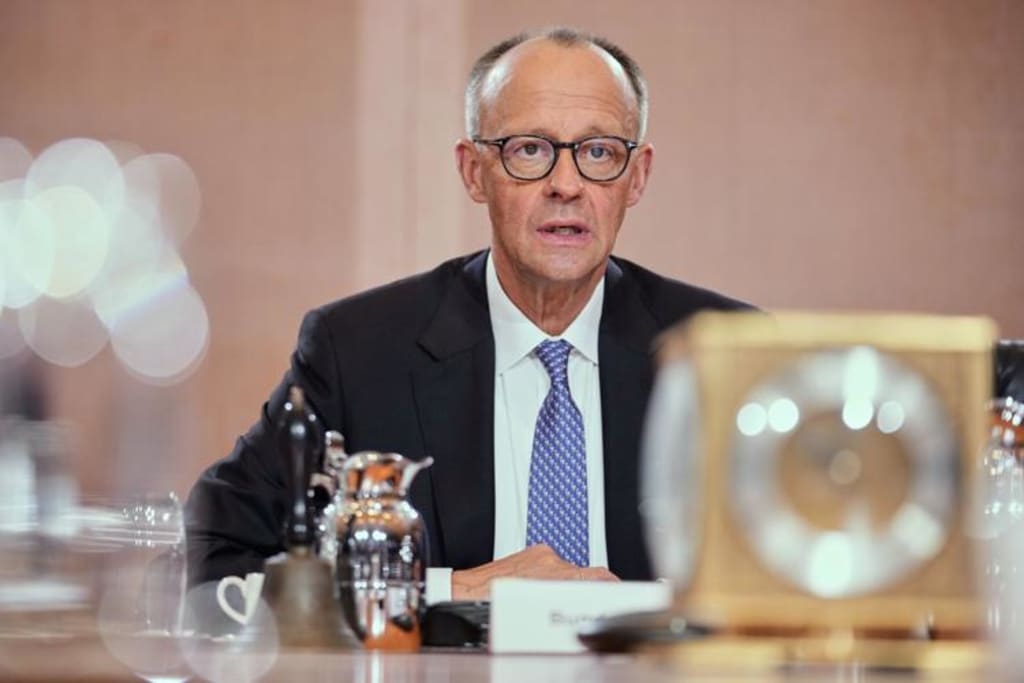
Friedrich Merz Sworn In as Germany’s Chancellor After Tense Parliamentary Vote
Conservative leader forms government with SPD amid internal dissent, rising far-right opposition, and bold reform promises
BERLIN — Friedrich Merz, leader of Germany’s conservative CDU/CSU bloc, was officially sworn in as chancellor on May 7, 2025, marking the beginning of a new chapter in German politics. His ascension follows months of intense coalition negotiations and a dramatic parliamentary vote that exposed deep divisions within the ruling alliance.
Merz leads a so-called “Grand Coalition” formed between the CDU/CSU and the center-left Social Democratic Party (SPD), a partnership familiar to German politics but one that has often been criticized for lacking vision and bold leadership. The coalition agreement promises an ambitious reform agenda, but the events of this week have already cast doubt on the unity and stability of Merz’s government.
A Rocky Start
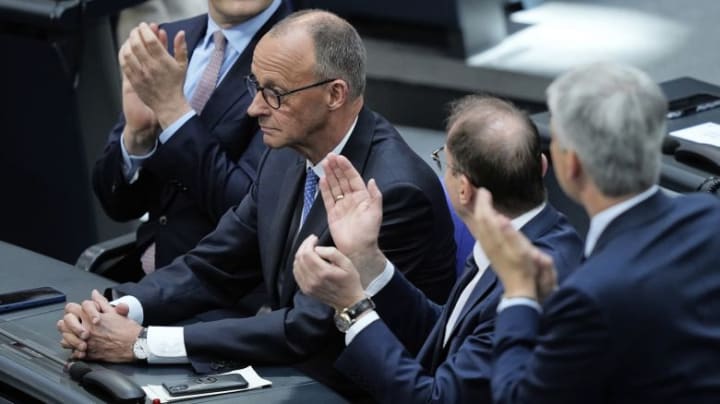
In a stunning and unprecedented turn during the chancellor confirmation vote, Merz failed to secure a parliamentary majority on his first attempt, receiving only 310 votes—six short of the required 316—despite the coalition having a 12-seat majority. The vote, conducted via secret ballot, signaled dissent within the ranks and prompted urgent behind-the-scenes negotiations.
Just hours later, a second vote was held, and Merz was elected with 325 votes in favor. While he cleared the threshold, the narrow margin and initial failure have weakened his mandate and left political observers questioning whether his coalition can function cohesively.
“We must now focus on the future and on delivering the reforms Germany needs,” Merz said in his first statement as chancellor. “The people expect us to govern responsibly, decisively, and with unity.”
Challenges Ahead
Merz takes office at a time of political volatility in Germany. The far-right Alternative for Germany (AfD) party surged in the most recent federal election, securing 152 seats and becoming the second-largest party in the Bundestag. Their rise, driven by discontent over immigration, inflation, and energy prices, poses a serious challenge to the traditional parties and their ability to maintain public trust.
The CDU-SPD coalition’s policy platform seeks to address this unrest through a mix of conservative and progressive initiatives. Chief among them is a €500 billion infrastructure investment package over the next decade, with €100 billion earmarked for climate-related projects such as renewable energy expansion, public transport modernization, and carbon-neutral housing.
To fund these programs, the coalition plans to revise Germany’s strict constitutional “debt brake,” allowing more flexibility for public borrowing—especially for climate and defense investments. The proposal is likely to face legal and political hurdles, especially from opposition parties and fiscal conservatives.
Climate, Digitalization, and Immigration Policy
The government aims to accelerate Germany’s coal exit to 2030 and raise the share of renewables in electricity production to 80% by 2040. Investments in hydrogen, electric mobility, and power grid upgrades are central to this strategy.
Digital transformation is another pillar of the coalition’s agenda. Merz’s government has pledged to expand 5G coverage nationwide, build high-speed fiber networks, and digitize public services. Startup-friendly policies, artificial intelligence investment, and blockchain integration are also on the table.
On immigration, Merz has signaled a tougher stance. The coalition will introduce an “influx limitation law” aimed at reducing irregular migration and expediting deportations of those without legal status. The policy has drawn sharp criticism from civil rights groups and opposition lawmakers, who argue it risks undermining Germany’s humanitarian commitments.
A European Vision
Internationally, Merz is expected to continue Germany’s support for Ukraine and deepen cooperation with European allies. His first visit abroad as chancellor was to Paris, where he met French President Emmanuel Macron. The two leaders reaffirmed their commitment to European defense integration and pledged to enhance collaboration on arms development, cybersecurity, and joint foreign policy.
Conclusion
Friedrich Merz’s election as chancellor marks a pivotal moment for Germany, as the country grapples with economic uncertainty, climate imperatives, and shifting geopolitical realities. However, the drama of his parliamentary confirmation and the slim nature of his majority suggest that governing will not be easy.
The weeks and months ahead will test the strength of Merz’s leadership, the cohesion of the coalition, and the resilience of Germany’s democratic institutions.
About the Creator
Extraordinary Savings Await: Why Smart Consumers Are Rethinking How They Spend
In an age defined by rising living costs, economic uncertainty, and shifting consumer habits, one message is resonating louder than ever: extraordinary savings await those who know where and how to look. Across households, businesses, and even governments, people are re-evaluating spending patterns and discovering that meaningful savings are not just possible—they are essential.
By Aarif Lasharia day ago in Journal




Comments
There are no comments for this story
Be the first to respond and start the conversation.