
Flange Bearings Explained: Everything You Need to Know
Get insights into the different types of flange bearings for higher durability and performance. Know how these bearings work in various applications.

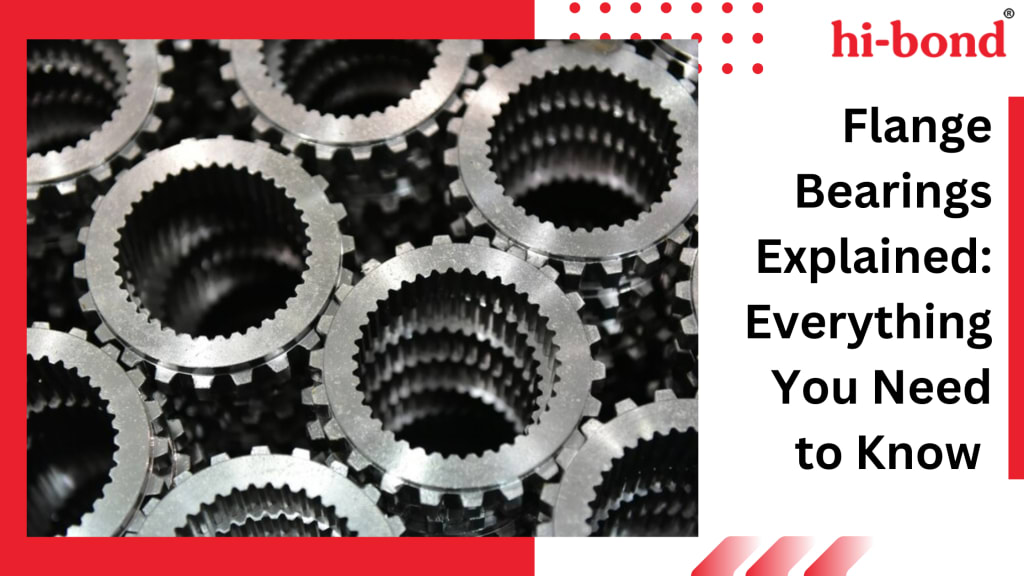
With the innovation in mechanical machinery, tiny mechanical component bearings are necessary for reducing friction between two rotating machines. One of the most popular bearings for industrial applications is a flange bearing. However, they play a crucial role in industrial and mechanical applications by supporting rotating shafts and reducing friction.
These specialized bearings are designed to handle both axial and radial loads while ensuring smooth and efficient operation. They are widely used in conveyor systems, automotive applications, heavy machinery, and precision instruments. This blog discusses flange bearings, their different types, applications, advantages, and how to select the right one for your needs.
An Overview Of Flange Bearings: Primary Features and Benefits
Flange bearings are specialized mechanical components designed with an integrated radial projection that allows for easy mounting and precise alignment in various applications.
A projecting rim provides a robust and reliable mounting surface that reduces the risk of misalignment. This mechanical design characteristic is helpful in industrial applications where directional stability is critical.
A primary advantage of these mechanical components is their unique ability to accommodate axial loads and radial forces. Radial loads push bearings perpendicular to their shaft, while axial loads act parallel to the shaft. The flat rim design helps distribute these forces evenly, improving the bearing’s operational life and efficiency.
They are extensively used in automotive, manufacturing, aerospace, and energy industries, where precision and durability are critical.
How Do Flange Bearings Work?
Flange bearings work by reducing the excess friction between moving parts in machinery. They are a mechanical interface between rotating shafts and stationary components, ensuring instant rotational motion is maintained with minimal resistance.
Their protective rim offers a mounting surface securely attached to the machine’s structure, preventing unwanted movement and misalignment. However, different rolling elements inside the bearing, including balls or rollers, support smooth motion.
Ball bearings are extensively used in many industrial and commercial applications, including assembling specialized industrial bearings. They help distribute radial and axial loads efficiently, reducing friction and wear over time.
The precise engineering behind these mechanical components ensures they can handle remarkable operational stresses while maintaining high performance and reliability. Moreover, the design of these industrial bearings often includes features such as shields and seals, which safeguard the internal components from contaminants such as dirt, mechanical components, moisture, and dust.
This advanced protection is essential for maintaining the entire bearing’s efficiency and longevity, especially in harsh operating environments.
Understanding Axial Loads In Flange Bearings for Optimal Performance
A specific type of axial load is one critical factor influencing a bearing's performance. These loads are focused parallel to the shaft's axis and can remarkably impact a bearing's lifespan if not appropriately managed.
In flange bearings, the integrated projected rim design helps uniformly distribute these axial forces, reducing localized stress that can result in premature failure. When a bearing is subjected to axial loads, it is crucial to consider the bearing’s alignment and the quality of the mounting surface.
Any misalignment can worsen the effects of the axial load, potentially leading to increased wear or catastrophic failure. Therefore, proper flange bearing installation and regular maintenance are essential to ensure the bearing continues operating within its decided parameters.
In many industrial applications, engineers design specific systems carefully considering the axial loads the bearings will encounter. This process often involves selecting a bearing with the appropriate size, material, and internal design features capable of handling the expected load.
In addition, supplementary components, including thrust washers or additional supports, might be employed to further reduce the effects of the axial forces.
Comprehensive Guide To Different Types Of Flange
Understanding the types of flanges is the primary thing when selecting the correct type of specialized bearing for your application. Several variations are customized to meet different operational demands and installation environments. There are some primary types include:
Flat Flange Bearings: A Simple Yet Reliable Solution
They feature a flat mounting surface and are primarily used in those applications where the bearing is bolted directly onto the flat surface. Their simple design makes them ideal for general-purpose applications where high precision is not a primary concern.
Curved Flange Bearings: Improving Flexibility and Performance
They offer improved performance in dedicated applications requiring better load distribution or accommodating slight misalignments. The contoured surface allows for a more even stress distribution, which can be particularly useful under high-axial loads.
Extended Flange Bearings: Maximizing Support and Stability
These specialized industrial bearings are designed with an extended flange surface that offers additional mounting area, improving their strict alignment and stability. They are often used in heavy-duty industrial applications where extra support is needed to manage remarkable loads.
Custom Flange Bearings: Tailored Solutions for Unique Applications
A reputable bearing manufacturer can design custom flange bearings for specialized applications that meet specific dimensional and operational requirements. These custom solutions are primarily employed in highly specialized aerospace or custom machinery manufacturing industries.
Each type of specialized bearing offers distinct advantages, and the selection process should involve carefully analyzing the entire operational environment, the expected loads, and the component's desired longevity.
Diverse Applications Of Flange Bearings
These tiny mechanical components are used in various industries due to their versatility and ability to handle axial loads effectively. Some of the standard applications include,
Textile Machinery: It provides smooth rotation for spindles and other moving parts.
Heavy Machinery: They are used in industrial machines that need high-load capacity and durability.
Automotive Industry: They are standard in transmission systems and steering mechanisms.
Agricultural Equipment: They are used in tractors, plows, and harvesters to support rotating components.
Conveyor Systems: These mechanical components support rollers and ensure smooth movement of conveyor belts.
Industrial Machinery: They are found in pumps and gearboxes where precise alignment is essential for optimal performance.
Aerospace Components: They contribute to the reliability and efficiency of various moving parts, ensuring that vehicles and aircraft operate safely under demanding conditions.
Energy Production: They are used in turbines and machinery that experience variable loads.
Maintenance Best Practices for Longevity
Maintaining these specialized mechanical components is essential to ensure a long service life.
Lubrication: Proper lubrication reduces friction and wear. Follow the recommendations of a reliable bearing manufacturer regarding the type and frequency of lubrication.
Regular Inspection: Check for signs of wear, misalignment, or excessive vibration.
Cleaning: Remove excess dirt, dust, and debris to prevent contamination.
Replacement: You can replace worn-out bearings promptly to avoid machinery failure.
Achieve Better Durability and Versatility In Diverse Industrial Applications With Flange Bearings
Flange bearings are crucial components in various mechanical systems. They reliably support rotating shafts while effectively handling axial and radial loads. Understanding their different types, applications, and maintenance needs will help you choose the correct bearing for your application.
Whether working in the industrial, automotive, or agricultural sectors, selecting high-quality, specialized bearings from a reputable bearing manufacturer will ensure efficiency, durability, and reduced operational downtime.
About the Creator
Trump Administration Announces Next Phase of Gaza Peace Plan
The Trump administration has announced the next phase of its Gaza peace plan, marking a new step in efforts to bring stability to a region that has faced months of conflict, destruction, and humanitarian suffering. This second phase, often called “Phase Two,” focuses on post-war governance, security, and rebuilding Gaza after intense fighting between Israel and Hamas.
By sehzeen fatima7 days ago in Journal
How to Succeed at the Benson Directory®
Congratulations and welcome to the Benson Directory® employee #22391! As our newest call handler, you will have the privilege of speaking with dozens of unique and interesting people on a daily basis as well as the opportunity to earn bonuses for high performance. Contained within this handbook you will find a set of ease to follow instructions designed to help you settle in to your new role and begin paving the way to success.
By S. A. Crawford4 days ago in Fiction



Comments
There are no comments for this story
Be the first to respond and start the conversation.