
Finance Minister Presents Union Budget 2026 With Focus on Growth, Jobs, and Stability
Government balances spending and fiscal discipline amid global uncertainty Tax relief and development projects headline budget priorities Focus on agriculture, healthcare, and digital economy Economists praise long-term vision but warn on execution Infrastructure and innovation drive growth strategy

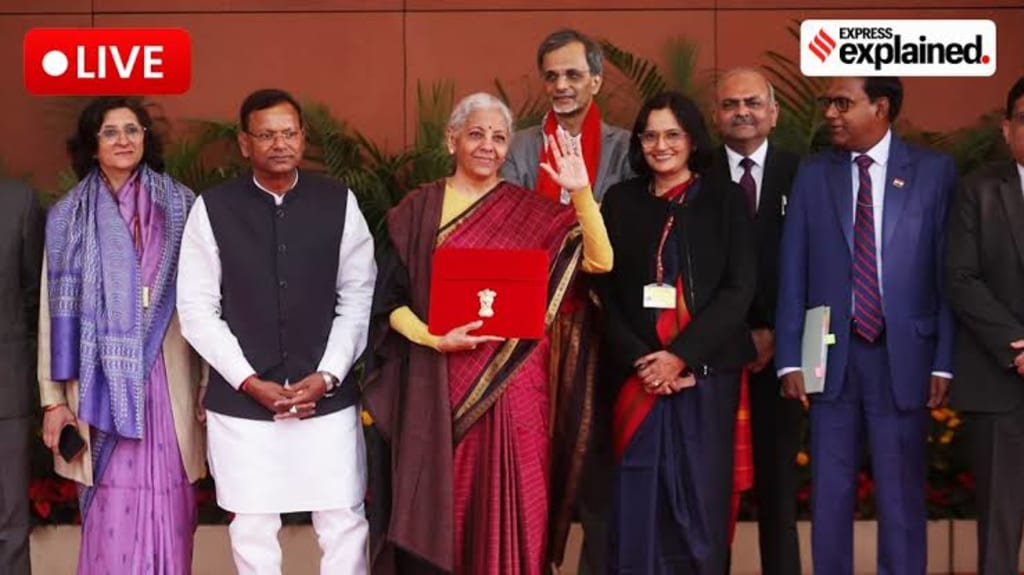
The Finance Minister presented the Union Budget 2026 in Parliament today, outlining a comprehensive roadmap aimed at strengthening economic growth, creating employment opportunities, and maintaining fiscal discipline amid global uncertainty. The budget places strong emphasis on infrastructure development, digital transformation, agriculture, and social welfare while attempting to balance rising public spending with responsible deficit management.
In her speech, the Finance Minister described the budget as “future-oriented and people-centered,” stating that it seeks to build resilience in the economy while protecting vulnerable communities from inflationary pressures.
Key Economic Priorities
One of the central objectives of the Union Budget 2026 is to stimulate economic growth through increased public investment. Major allocations were announced for transportation networks, renewable energy, and urban development projects.
The government has proposed expanded funding for highways, railways, and ports, aimed at improving connectivity and boosting trade. Infrastructure spending is expected to generate millions of jobs across construction, engineering, and manufacturing sectors.
“This budget is designed to unlock private investment by building strong public foundations,” the Finance Minister said during her address.
Taxation and Fiscal Discipline
On the taxation front, the budget seeks to provide relief to middle-income earners while widening the tax base. Minor adjustments to income tax slabs were announced, along with incentives for digital compliance and small businesses.
Corporate tax policies remain stable to encourage investment and maintain confidence among domestic and foreign investors. The government also reaffirmed its commitment to reducing the fiscal deficit gradually over the next three years.
Economists note that maintaining fiscal discipline while increasing spending is a delicate balance.
“The government is trying to walk a tightrope,” said one financial analyst. “It wants growth without risking long-term debt instability.”
Boost for Agriculture and Rural Development
Agriculture received special attention in the budget, with new schemes introduced to promote crop diversification, irrigation efficiency, and market access for farmers. The Finance Minister announced additional funding for horticulture, organic farming, and climate-resilient crops.
New rural employment programs aim to provide stable income opportunities while supporting infrastructure projects in villages. Credit facilities for small farmers and cooperatives were also expanded.
“These measures will strengthen rural economies and ensure food security,” the Finance Minister said.
Education and Healthcare
Education and healthcare were highlighted as long-term investments in human capital. The budget includes increased funding for public schools, vocational training centers, and digital learning platforms.
Healthcare allocations were raised to support hospitals, preventive care programs, and medical research. Special focus was placed on expanding healthcare access in remote and underserved areas.
Public health experts welcomed the move but stressed the importance of transparent and efficient use of funds.
“Spending more is important, but spending wisely is even more critical,” said a healthcare policy specialist.
Digital Economy and Innovation
The Union Budget 2026 emphasizes technology and innovation as engines of growth. Funding has been allocated for artificial intelligence research, startup incubation, and cybersecurity infrastructure.
The government plans to expand broadband access to rural regions and promote digital services in governance and commerce. Small and medium enterprises will receive incentives to adopt digital tools for productivity and market expansion.
Officials believe these measures will strengthen the country’s competitiveness in the global economy.
Climate and Sustainability Measures
Addressing climate change and environmental challenges was another major theme. The budget includes investments in renewable energy projects such as solar and wind power, along with programs to promote electric vehicles and reduce carbon emissions.
Funds have been earmarked for water conservation, waste management, and afforestation initiatives. The government also announced new incentives for green industries and sustainable manufacturing practices.
Environmental groups cautiously welcomed the announcements but urged stronger enforcement mechanisms.
Reactions From Political Parties and Experts
Opposition leaders criticized certain aspects of the budget, arguing that it does not do enough to control inflation and unemployment. They also questioned whether proposed welfare schemes would reach the intended beneficiaries.
Supporters of the budget praised its balanced approach and focus on long-term growth. Business leaders welcomed stable tax policies and infrastructure spending, calling the budget “investor-friendly.”
Financial markets reacted cautiously, with stock indices showing mixed movements as investors assessed the implications of new policies.
Challenges Ahead
Despite ambitious goals, the budget faces several challenges. Rising global interest rates, energy prices, and geopolitical tensions could affect economic performance. Implementing large-scale projects efficiently will require strong coordination between central and regional governments.
Experts warn that delays or mismanagement could weaken the impact of the proposed measures.
“The success of this budget depends entirely on execution,” said an economic policy researcher. “Announcements alone will not change realities on the ground.”
Conclusion
The Union Budget 2026 sets out a vision of inclusive growth, technological advancement, and fiscal responsibility. By prioritizing infrastructure, agriculture, education, healthcare, and sustainability, the government aims to create a stable foundation for long-term development.
While reactions remain mixed, the budget has clearly outlined the government’s economic direction for the coming year. For citizens, businesses, and investors alike, the coming months will reveal whether these promises translate into tangible progress.
As Parliament debates the proposals, attention now turns to implementation and accountability—key factors that will determine whether Union Budget 2026 becomes a milestone in economic reform or another chapter of unrealized potential.
About the Creator
Fiaz Ahmed
I am Fiaz Ahmed. I am a passionate writer. I love covering trending topics and breaking news. With a sharp eye for what’s happening around the world, and crafts timely and engaging stories that keep readers informed and updated.
Keep reading
More stories from Fiaz Ahmed and writers in Journal and other communities.
Why I Keep Blockading Food Distribution Centres
To many people, the idea of blocking food distribution centers sounds cruel and irresponsible. These facilities supply groceries to thousands of families, charities, and local markets. Disrupting them risks harming the very communities already struggling with inflation, unemployment, and food insecurity. Yet for some protesters, these actions are seen as a desperate attempt to be heard in a system they believe no longer listens. The decision to block such sites does not come lightly. It grows out of frustration, anger, and a belief that traditional protest has failed. For years, activists have marched, petitioned, and written to officials about rising food prices, corporate control of agriculture, and unequal access to basic necessities. Many feel ignored. “When you block traffic, people complain but forget,” one protester explained. “When you block food supply, suddenly everyone pays attention.” This logic reflects a deeper belief: that disruption is the only language powerful institutions understand. A Protest of Desperation Those who justify these actions often describe them as moral protests rather than criminal ones. They argue that food distribution centers symbolize a system that prioritizes profit over people. Large corporations dominate supply chains, while small farmers and low-income consumers struggle to survive. For these activists, the blockade is meant to expose contradictions: warehouses filled with food exist alongside families who cannot afford meals. They claim their actions force uncomfortable conversations about inequality and corporate responsibility. However, this reasoning clashes sharply with public opinion. Many citizens see the protests as punishing ordinary people instead of policymakers. Food bank volunteers and truck drivers are often caught in the middle, unable to do their jobs and sometimes facing verbal abuse or threats. The Human Cost Critics argue that such protests cross a moral line. Food distribution is not just another industry; it is part of society’s lifeline. Any disruption can have immediate consequences for hospitals, shelters, and vulnerable populations. Health workers warn that delays in food delivery can affect elderly residents, children, and patients who depend on regular supplies. Even a short interruption can ripple through the system, causing shortages that take days to fix. “These actions hurt the wrong people,” said one community organizer. “They don’t hurt politicians. They hurt families.” This tension between intention and impact is at the heart of the controversy. Protesters may aim to challenge injustice, but the method risks creating new harm. Protest Versus Public Trust Another consequence is the erosion of public support. Movements rely on sympathy and shared values. When tactics appear extreme, public trust collapses. Instead of discussing the underlying issues—corporate power, food access, or government policy—the focus shifts to disruption and legality. Law enforcement has increasingly treated blockades as serious offenses, citing risks to public safety and essential services. Arrests and fines have followed. Courts in several countries have ruled that blocking food supply infrastructure crosses from civil disobedience into endangerment of public welfare. This legal response reflects a growing belief that some forms of protest must have limits, especially when they interfere with survival needs. A Crisis of Communication At its core, the issue reveals a breakdown in communication between citizens and institutions. Protesters feel unheard. Authorities see disorder. Both sides harden their positions. Sociologists note that extreme protest methods often emerge when people believe peaceful channels are ineffective. History shows similar patterns in labor movements and civil rights struggles. Yet history also shows that movements succeed when they build alliances, not when they isolate themselves from the public. The challenge is how to protest power without harming the powerless. Searching for Alternatives Some activists are now questioning their own strategies. They argue that targeting food systems risks undermining the very justice they seek. Instead, they call for boycotts, mass strikes, or legal challenges that pressure corporations and governments directly. Others emphasize community-based action—supporting food banks, helping farmers, and creating local supply networks—rather than disrupting existing ones. “If the goal is food justice,” one former protester said, “then we should be feeding people, not stopping food.” A Moral Reckoning The debate over blockading food distribution centers forces a difficult moral reckoning. Is disruption justified if it draws attention to injustice? Or does it become wrong when it threatens basic human needs? There is no easy answer. What is clear is that society must confront the issues driving such protests: rising inequality, fragile supply chains, and growing mistrust in institutions. Protest is a powerful tool, but it also carries responsibility. When the line between resistance and harm blurs, movements risk losing their purpose. The question is not only why people block food centers, but whether such actions truly bring us closer to the justice they claim to seek—or push us further apart.
By Fiaz Ahmed about 7 hours ago in Journal
Cerebras Continues the Long March of Moores Law
Historically, computer performance progress has been made by packing more and more devices — transistors — on to a chip. Wafer integration is reaching the physical limits of what can be fabricated, with just 2 nanometre (nm) between devices now being achieved. To do this fabricators use export-restricted extreme ultra-violet lithography machines from Dutch company ASML. China would love to have them.
By James Marineroa day ago in Journal




Comments
There are no comments for this story
Be the first to respond and start the conversation.