
Exploring the Mysteries of Antarctica
Insights into the Evolution of Climate and Life on Earth

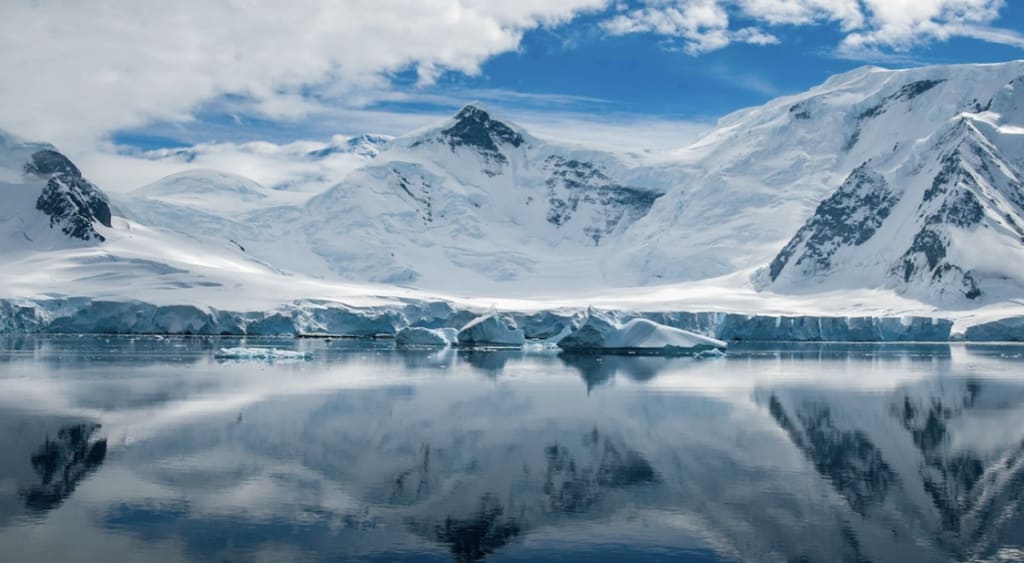
Title: Antarctica: Unraveling the Mysteries of the World's Southernmost Continent
Abstract:
Antarctica, the world's southernmost continent, is a land of extremes. It is the coldest, driest, and windiest place on earth, covered in ice and snow, and shrouded in darkness for much of the year. Despite its harsh conditions, Antarctica is home to a rich diversity of life, from penguins and seals to microbes that thrive in the icy waters. The continent has also fascinated scientists and explorers for centuries, who have sought to unlock its many mysteries. This thesis article aims to explore the mysteries of Antarctica, including its geology, climate, and unique ecosystem, as well as the ongoing scientific research being conducted on the continent.
Introduction:
Antarctica is a continent like no other. Located at the southernmost tip of the world, it is a land of extremes, with temperatures that can drop to as low as -128.6 degrees Fahrenheit and winds that can reach speeds of over 200 mph. The continent is also covered in ice and snow, with an average thickness of 1.9 miles, making it the largest ice sheet on earth. Despite its harsh conditions, Antarctica is home to a rich diversity of life, including penguins, seals, whales, and a host of microorganisms that thrive in the frigid waters. Antarctica has long fascinated scientists and explorers, who have sought to unravel the many mysteries of this frozen continent.
Geology:
One of the greatest mysteries of Antarctica is its geology. The continent is believed to have formed around 250 million years ago, when it was part of the supercontinent Gondwana. Over time, the continent broke apart and drifted south, eventually settling at the South Pole. Despite its location, Antarctica was not always covered in ice. Fossil evidence suggests that the continent was once a temperate rainforest, with lush vegetation and a mild climate. However, around 34 million years ago, the continent began to cool, and ice began to form, eventually covering much of the landmass.
Climate:
Antarctica's climate is another area of mystery. The continent's extreme cold and dry conditions make it difficult for scientists to study the atmosphere and climate patterns. However, recent research has revealed some surprising insights. For example, a study published in the journal Nature in 2020 found that the West Antarctic Ice Sheet is melting at a faster rate than previously thought, which could lead to a significant rise in sea levels. Other studies have suggested that changes in the Earth's orbit and tilt could have contributed to the formation of the Antarctic ice sheet, while others have found evidence of past climate events, such as warm periods that allowed for the growth of mosses and other plants.
Ecosystem:
Antarctica's unique ecosystem is yet another area of mystery. The continent's harsh conditions make it difficult for life to thrive, but a surprising number of species have adapted to this extreme environment. These include penguins, seals, whales, and a host of microbes that live in the icy waters. However, scientists are still learning about the full extent of the continent's biodiversity, and new species are still being discovered. For example, in 2020, scientists discovered a new species of marine worm living in the frigid waters off the coast of Antarctica.
Research:
Antarctica is a hub of scientific research, with scientists from around the world flocking to the continent to study its many mysteries. Research in Antarctica has led to many important discoveries, including insights into the Earth's climate history, the formation of ice sheets, and the evolution of life on earth. For example, in 2019, scientists drilled into the West Antarctic Ice Sheet, revealing evidence of a warm period in the past that allowed mosses and other plants to grow. This finding shed light on the past climate conditions in Antarctica and how it has evolved over time.
In addition to past climate conditions, research in Antarctica also helps scientists understand current climate patterns and how they may be changing. Many scientific studies in Antarctica focus on climate change and its impact on the continent's ice sheets and ecosystem. For example, a research team from the University of Queensland is currently studying how increased carbon dioxide levels in the atmosphere are affecting the ocean around Antarctica and its impact on marine life.
Apart from climate research, scientists in Antarctica also study the continent's unique ecosystem, including its microbial life. Recent studies have discovered new species of microbes that are capable of surviving in extreme environments, and these discoveries have led to new insights into how life adapts to harsh conditions. In 2018, scientists discovered a microbe in Antarctica that can withstand freezing, thawing, and exposure to ultraviolet radiation. This discovery has led to new research into how these organisms may be useful in biotechnology and medicine.
Mysteries:
Despite the ongoing research in Antarctica, the continent is still shrouded in many mysteries. One of the greatest mysteries is the existence of subglacial lakes, which are large bodies of water that are trapped beneath the ice sheet. These lakes are thought to be home to unique microbial life, and their study could reveal new insights into the origins of life on earth. In recent years, scientists have discovered several subglacial lakes in Antarctica, including Lake Vostok, which is the largest known subglacial lake in the world. However, access to these lakes is difficult, and scientists must drill through miles of ice to reach them.
Another mystery of Antarctica is the presence of meteorites. Antarctica is one of the best places on earth to find meteorites, due to its cold and dry conditions, which help preserve the space rocks. Since the 1970s, scientists have collected thousands of meteorites from the continent, and these rocks have revealed new insights into the origins of our solar system. However, the mystery of why so many meteorites are found in Antarctica is still unknown, and scientists continue to study the phenomenon.
Conclusion:
Antarctica is a continent that is rich in mysteries, from its geology and climate to its unique ecosystem and ongoing research. Despite its harsh conditions, scientists continue to flock to the continent to study its many mysteries, and new discoveries are being made every year. The ongoing research in Antarctica is not only important for understanding the continent but also for gaining insights into the origins of life on earth and the evolution of our planet's climate. Antarctica may be one of the most remote and inhospitable places on earth, but it is also one of the most fascinating and important for scientific research.
About the Creator
Rio Vijey
As a lifelong lover of storytelling, I am thrilled to begin my journey as a writer. I have a vivid imagination and a passion for exploring the depths of the human experience through fiction.
How to Succeed at the Benson Directory®
Congratulations and welcome to the Benson Directory® employee #22391! As our newest call handler, you will have the privilege of speaking with dozens of unique and interesting people on a daily basis as well as the opportunity to earn bonuses for high performance. Contained within this handbook you will find a set of ease to follow instructions designed to help you settle in to your new role and begin paving the way to success.
By S. A. Crawfordabout 23 hours ago in Fiction



Comments
There are no comments for this story
Be the first to respond and start the conversation.