
Expert’s on Titan subs “catastrophic implosion” near Titanic
Expert’s discussed the potential causes of the “catastrophic implosion” of the Titan sub that went missing during a voyage to the wreckage of the Titanic.
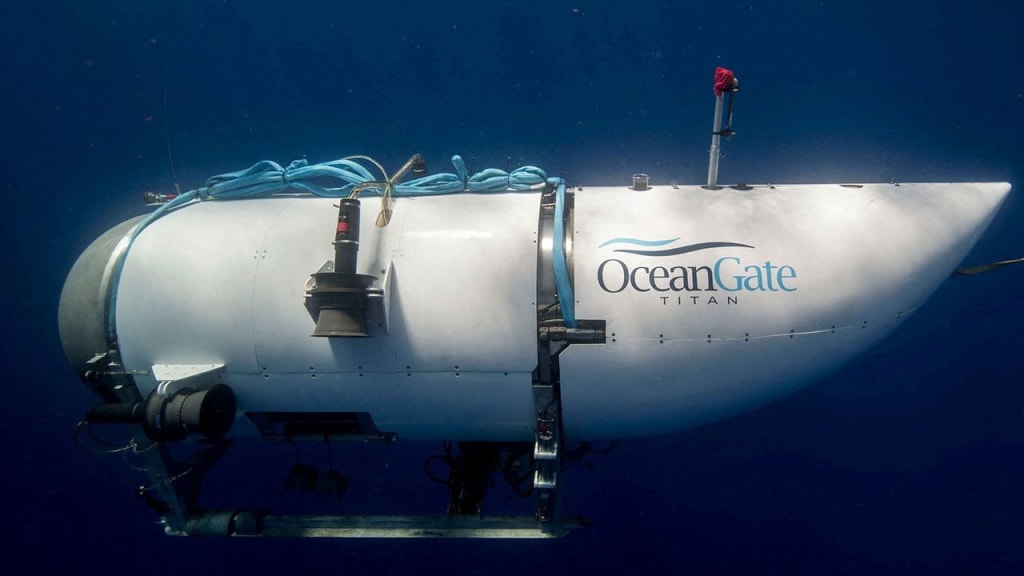
this morning an ROV or remote operated vehicle from The Vessel Horizon Arctic discovered the tail cone of the Titan submersible approximately 1600 feet from the bow of the Titanic on the sea floor the ROV subsequently found additional debris in consultation with experts from within the unified command the debris is consistent with the catastrophic loss of the pressure chamber upon this determination we immediately notified the families so the question was is there any question as to whether or not the sub collided with the Titanic or whether it imploded above and debris field created from that so the uh the the location of the Titan submersible was in an area that was approximately sixteen hundred feet from the wreck of the Titanic I have an expert here that can that is familiar with that area and can talk about the debris field and and what the debris field indicates in terms of the where the casualty may have occurred quickly can you tell me when that massive Fleet will be called back yeah uh thank you Admiral uh so the question is where does the wreck lie in relation to the Titanic uh I didn't hear the Admirals uh answer I think 1600 feet was that correct Admiral uh so that's uh that's off the bow of Titanic it's in an area where there is not any debris of Titanic it is a smooth bottom uh there to my knowledge and anything I've seen there's no Titanic wreckage in that area and again 200 plus meters from the bow and consistent with the location of last communication for an implosion in the water column and the size of the debris field is consistent with that implosion in the water column your estimation that this happened right at the moment when they lost contact and after 45 minutes so the question was about the timing of the catastrophic implosion uh right now it is uh too early to tell with that we know that as we've been Prosecuting uh this search over the course of the last uh 72 hours uh and and beyond that we've had sonar buoys in the water nearly continuously and have not detected any catastrophic events uh when those sonar buoys have been in the water now let's bring in Stefano rizzolara he is an ocean engineering expert and co-director of the Virginia Tech Center for marine autonomy and Robotics Stefano I'm I'm really glad to be talking to you because you actually have a basis for understanding this that the rest of us don't have first of all just tell us about your immediate reaction to this tragedy and when you hear the consistent with a catastrophic implosion given the the pressure that was on this vehicle and your understanding of engineering and Robotics and Marine exploration what additional insights can you provide for us yeah unfortunately a failure of the pressure Hull was probably the the first hypothesis that could be done this is something that may well happen at those uh pressure uh that you experience at those depths uh you you must consider that at 4 000 meters depth the pressure is a 400 atmosphere which is 400 times the pressure we experience at sea level you you pump the tires of your car at the two atmospheres so it's 200 times the pressure that is in your in in the tires of your car before we hear or learn more about exactly what went wrong and uh what can you tell us about just the efforts that went into this uh we understand that it was a robotic device that detected this that there were several uh that were used to reach these extreme deaths uh that here in the United States uh it's 12 500 feet that is the ocean floor where the where the Titanic wreckage is can you talk to us a little bit about just um what it takes uh how these work and and um what wanted to identifying uh the pieces that were found yeah underwater at those depths there is no light obviously and the light actually can can penetrate probably maximum 20 meters for a strong light so you cannot use a really light to see anything under water you have to use acoustic waves a sonar the reflection of the acoustic wig that you will meet come back and there is the sensors that read the distance basically from which the acoustic wave reflects and then the image in modern sonar with the synthetic aperture is reconstructed and it can gives you it can give you a pretty good image three-dimensional image even all the of the bottom this is the technology we mount on our autonomous underwater vehicle that are a main vehicle that can scan the surface of the sea bottom while they are traveling at a certain speed usually between two and three knots on top of the bottom and we can reach 4000 meters with our unmanned Vehicles even 6000 meter we developed a vehicle like that for a startup in Boston that then was acquired by a large company oh no it'll be many more stuff now you know as we're as we are learning more about this I'm I'm struck a bit by how technology how rapidly technology has evolved right the Titanic sunk in 1912. at that point it was considered the uh the greatest technological achievement of its time 75 years later in 1985 it was discovered by Robert Ballard uh through a robotic an ROV that was also part of what found uh the Titan now that part of that team and today in 2023 we have human exploration down to these depths two miles below the ocean's surface I'm wondering as we're as we're talking about this and it just seems so incredible how quickly we have made these these changes what lessons come from this you you teach uh I I believe you teach students a about Marine autonomy robotics where where does this go and uh did these five lose their lives in pursuit of scientific advancement but yeah so we teach we have a program in Ocean engineering so we teach our students actually how to design and build the larger Naval vessel including submarines large submarines this was more of an experimental uh submersible I would say with some new kind of material used for the pressure Hull for the first time I would say to reach those that carbon fiber has never been used for a a pressure vessel to reach those depth and there is a reason actually because carbon fiber is much less compliant in case of a failure than traditional steel or even titanium still in titanium are ductile materials they can deform in a plastic manner and even if they uh implode and fail they can still guarantee a certain Integrity so while carbon fiber breaks immediately is fragile and it breaks in pieces probably those pieces that they found I just want to make sure that I'm understanding you correctly uh Stefano because we're not experts uh Stefano sorry um but that the carbon fiber that was used in the the submersible the Titan that uh the Titan was that it had less Integrity uh because it has advantages it is lighter and thinner for the same kind of uh strength in static condition in let's say in case of failure where the structure heavily deforms and the start to curve on itself carbon fiber doesn't allow for plastic deformation so doesn't allow for large deformation it starts to crack and completely uh break so given that this is the first time that it's being used Stefano is what you're saying I mean do you have a suspicion that perhaps this level of innovation could have something to do with why this happened is is this what you suspect I mean yeah traditional steel or titanium may have mitigated the the failure perhaps and from what you know how long do you think we'll have to wait to understand whether or not this I guess suspicion that you have is in fact what could have caused this catastrophic implosion but if if if it is uncertain as we understand from the Declaration of the Coast Guard that these debris are from the pressure Hollow of the vessel this is 100 what happened I mean the hull imploded and a small uh lack of symmetry a small misalignment the the hull was uh was built in two parts at least connected by bolted connection so the the smallest misalignment the smallest asymmetry can start this kind of failure and then at those pressures everything happens very fast and in a catastrophic way unfortunately and just just so I understand a little bit of the timing and what we can expect to learn uh moving forward do they need to bring those pieces back up uh can these rovs or what is used to bring this back up and study it closer or because of the quality of the the cameras and the technology used is it possible to study everything you need to learn to understand why this happened can that be done from the bottom of the ocean yeah I think that it is possible nowadays to have a good image let's say it's an artificial image but it's a good image of the uh debris and pieces they found on the bottom and from there reconstruct uh what happened yes I don't I I mean they will decide but I wouldn't I wouldn't spend time and effort in uh retrieving the pieces from the bottom which is complicated complicated maneuver because you need arms uh manipulators and probably the current vehicles cannot do that well Conan joins us now he's president and CEO of hydro space Group which specializes in engineering pressure vehicles for human capacity well first I'd like to get your reaction to to Thursday's news yeah this is uh this has been a very sad day we've been on pins and needles for days and and hearing the Coast Guard announcement this morning uh I've been doing this for a few hours now trying to find a word that's just stronger than tragic um this is very tragic this is this is the single biggest incident in our industry of submersibles in since 1960 UH 60 years this is this has never happened we've had some fatalities four fatalities in the 1970s through three different events and here in a single event I we have a this is more than all the rest combined so we are it is it is very sad they're they're all colleagues I mean this is a small community the families are just it's just devastating for their families and uh but there is a world of uh of Engineers and professionals that gathers uh I'm chairman of the submersible committee within the Marine technology Society who has been around since 1968. we gather we discuss we review designs regulations uh we are close to this we have safe regulations and uh it is a battle between uh pushing the boundary of innovation and regulation uh one is too slow one is too fast and finding the balance it's It's Tricky for any industry of finding that balance and sadly in the world of deep ocean and this is very very deep Even in our industry this is very deep there's only 10 vehicles that in the entire world that can go to this depth and uh and the uh uh do you have a sense will of what what do you have a theory about what might have happened and is there do you think there's any way to ever know yeah I think I think I think we will know I mean they will be picking up the pieces we uh uh uh we will see what the I mean one one of the issues is seeing what the debris field is down there we have like some amazing technology on the sea floor with the remotely operated vehicles I mean these are very dexterous uh machines that can take photographs video and pick up some of the parts when something like that happens when they call it catastrophic implosion that just means uh an underwater explosion just inwards and that means something gave way uh and and if they have the front and the back pieces as those were made out of titanium uh it appears that the central part uh just gave weight the Navy detected what it called an acoustic anomaly consistent with an implosion after the Titan lost contact on Sunday the official says the information was shared with the Coast Guard which used it to narrow down the search area now today the Coast Guard said in a press conference that throughout its search it had listening devices in the water but did not detect any catastrophic failures and it said for 72 hours or about three days it had sooner sonar buoys in the water that did not detect any catastrophic events
About the Creator
Keep reading
More stories from Amoah Mensah and writers in Journal and other communities.
Exposing OceanGate Submarines many fatal Designs
you've probably heard about the tragic story of ocean Gates Titan submersible it was a small diving vessel designed to explore the wreckage of the Titanic 3800 meters under the sea but how did this submersible and the systems on it actually work there are a lot of interesting systems on the Titan from propulsion to communication some that worked some that tragically didn't and one that was even designed to dissolve underwater I'm Ryan and welcome to xeroth foreign normally focuses on sustainable energy and transport but given that this was an electric vessel that operates out at Sea where a lot of energy projects are now being deployed I thought you'd probably find this interesting let's start with a quick overview the Titan submersible was designed to go as far as 4 000 meters underwater the pressure that deep is equivalent to an elephant standing on one leg and then 226 more elephants climbing on top this pressure combined with the darkness cold and difficulty communicating with the surface are part of what makes deep sea exploration so difficult the whole system weighed approximately 10 tons and was primarily made of a few core components the largest of which was the carbon fiber Hull which was the eventual failure point of the vessel and sadly resulted in all those aboard losing their lives the hull was 5 inches thick repeated exposure to high pressures meant that on the seventh dive to the Titanic it imploded to demonstrate this effect here is a railroad tank imploding when put under a vacuum this is caused by the pressure outside being much larger than the pressure inside the implosion for the Titan would likely have been even quicker this left me wondering what was actually put in place to stop this happening the first way to prevent failures like this is to create a virtual model of the submersible and test its limits however carbon fiber is notoriously hard to model because it is not one single block of material it is instead lots of thin fibers that are interwoven and cured together this also means there are many ways it can weaken as layers shift and come apart from one another without any destructive testing to fully test the limits of the Titan these models were just not enough this is where the second system was meant to come in aboard the Titan there was a real-time acoustic monitoring system which Ocean Gate claimed could detect buckling of the carbon fiber Hull prior to a catastrophic failure according to a patent held by ocean Gates CEO Richard Stockton Rush this used multiple small sensors such as ultrasonic microphones and strain gauges to monitor vibrations in the carbon fiber this data would have been collected at regular intervals and sent to a centralized system for storage and Analysis at this point it should have been able to assess the health of the internal and external structure and predict failure conditions however this type of testing is a relatively new field and clearly wasn't enough in hindsight in fact an open letter from the Marine technology Society said they had concerns the Titan design could result in catastrophic negative outcomes Not only was the use of carbon fiber concerning but so was the tubular shape which is much worse than a sphere at Distributing the pressure from the weight of the ocean next we have the end caps of the Titan which were made from titanium and secured onto the main Hull using 18 bolts giving passengers no way to get out from inside the viewing window was also reportedly made from a material that was only certified down to 1 300 meters just a third the depth of the Titanic these components were all tested together on a one-third model in collaboration with the University of Washington at which point an ex-employee called David Lockridge expressed concerns that the scale model of the sub had revealed flaws in the carbon fiber under pressure testing but aside from the fatally designed Hull how did the Titan submersible actually operate or know where it was going after an initial briefing the first step of a Titan launch was to deploy the docking station from the main ship this is why the Titan was actually classified as a submersible rather than a submarine because a submarine is able to leave and come back to Port under its own power the docking station would then fill up its ballast tanks with seawater increasing its weight and causing it to plunge nine meters underwater at this point the Titan could detach and begin its descent whilst the docking station refills its tanks were there and floats to the surface at the end of The Voyage this process would then be done in reverse the Titan was carefully balanced so it wouldn't float or sink unless the electric thrusters were activated it had four electric thrusters in total that could Propel It Up Down forwards and backwards or rotate it around these were from a company called Innerspace and a specifically designed to operate extremely efficiently in both forward and reverse directions the power for these motors would then come from an onboard battery system similar to those found in an electric car the controls for the submersible have come under some significant scrutiny in the media with the main focus being on the game's controller used to direct The Vessel however as strange as this sounds it's actually quite common in military applications too due to their ease of use durability and accessibility game controllers are currently used all around the world to control anything from explosive disposal robots to Virginia class attack submarines the Titan also had touch screen displays which would have shown images from the external cameras and text messages sent from the main ship at the surface however neither of these things are easily achieved deep down into the sea for the cameras to pick up anything in the dark depths of the ocean you need some pretty serious lights that's why the Titan had 40 000 lumens of external lighting which is about 40 times as much as a car headlight receiving messages however uses a much more elaborate system the communication and tracking for the Titan sub were both done using what is known as an ultra short Baseline acoustic system acoustic pulses could then be used like Morse code to send messages this is how the Titan sub was directed to the Titanic wreckage on previous voyages as it had no navigation system of its own but that begs the question how did the surface ship know where the Titan sub was located well that's where the acoustic positioning system came into play first the surface ship would emit an audio frequency from a transducer when the transponder on the Titan received this it would then respond with a similar signal which would be picked up by the surface Ship by measuring the time taken to receive a signal the surface ship could work out how far away the Titan was and by having multiple transducers on the ship it could also work out the direction the audio wave came from by combining these together it would know where the sub was located and send messages to direct it to the wreck of the Titanic because we all know the tragic outcome of the last Titan Voyage the Safety Systems aboard may seem pointless and given the corners that were cut when designing the hull in many ways they were however let's see what safety systems were aboard that could have helped the passengers if the emergency was different it is first important to consider that in all possible emergency scenarios where the passengers remain alive such as a power cut or loss of communication the best option would always be to return to the surface however if there was a fire this would require extra action this is why there was was a fire extinguisher on board and smoke masks for all passengers because resurfacing would have been the priority there were seven systems aboard to help the Titan reach the surface these included powering the electric thrusters inflating an air balloon and dropping lead weights however one of these systems was actually a dead man's switch this means that it would have worked even if everyone aboard had passed out this dead man's switch was made using a material that would dissolve when exposed to the Salt Water this meant that after around 10 hours of diving the material would completely dissolve and release sandbags from the bottom of the sub because of this lost weight the sub would have buoyancy and start floating towards the surface none of these Safety Systems would work however if the Titan didn't have a fresh supply of breathable air the key requirement for that is to provide oxygen to the hull and remove carbon dioxide the oxygen was supplied by onboard tanks and the carbon dioxide was likely removed by a CO2 scrubber a common choice for this is sodium and calcium hydroxide which trap the CO2 in a chemical reaction to ensure the air is breathable this tragedy really shows that the ocean must be respected during all projects within it from energy to exploration I hope from all of this that you learned something new and found this video interesting if you did I'd really appreciate you subscribing to my channel as you'd probably like some of the other videos I make like this one about a new Micro Hydro turbine
By Amoah Mensah3 years ago in Journal
Affection and Healing for Yourself
During the night of the last quarter moon, I gathered my ritual supplies. I carefully handled the chunk of black tourmaline that would protect me from your overall negative and narcissistic energy. I carefully walked the house with my stick of selenite in hand, asking the universe to cleanse our working space.
By Alisha Wilkins ✒️🦋🖋️3 days ago in Fiction


Comments
There are no comments for this story
Be the first to respond and start the conversation.