
Exotic Leather: The Ultimate Guide to Types, Care, and Authenticity
From Crocodile to Stingray: Your Complete Guide to Authentic Exotic Leather, Care, and Ethical Sourcing

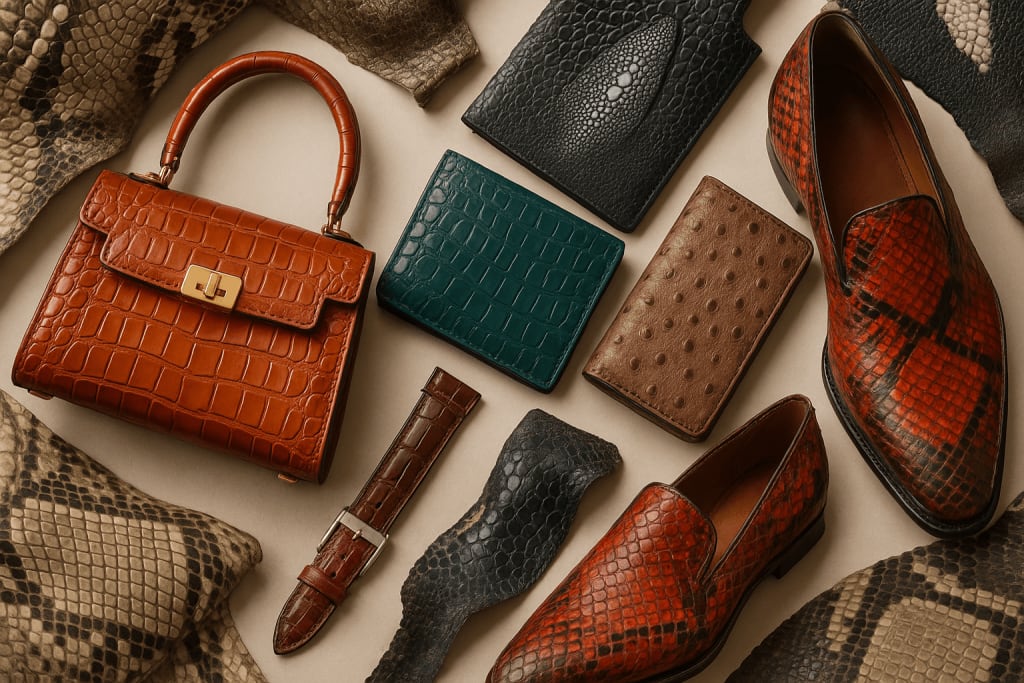
Exotic leather has long symbolized luxury, craftsmanship, and timeless style. Renowned for its rarity, durability, and unique textures, it’s a preferred material for high-end handbags, wallets, shoes, and artisan accessories. From crocodile to ostrich, python to stingray, each exotic hide tells its own story.
For buyers and designers alike, understanding types, sourcing, grading, and care is essential to making informed decisions and ensuring every investment in exotic leather maintains its value and beauty.
What Is Exotic Leather?
Exotic leather comes from animal species beyond traditional cattle. Common types include:
Crocodile & Alligator: Structured, strong, and luxurious with natural scale patterns
Python & Lizard: Flexible, patterned, and ideal for intricate designs
Ostrich: Soft, supple, with distinctive quill bumps
Stingray & Fish Leathers (eel, salmon, shark, carp): Durable, water-resistant, and unique in texture
Unlike embossed or printed cowhide, genuine exotic leather features authentic natural markings that cannot be duplicated, giving each product individuality.
Types of Exotic Leather
Each exotic hide offers distinctive qualities:
Crocodile & Alligator: Bold scale patterns, strong, perfect for bags and belts
Python & Lizard: Intricate patterns, supple, ideal for wallets and small accessories
Ostrich: Quill bumps add texture, soft and flexible, suitable for shoes, jackets, and handbags
Stingray & Fish Leathers: Pebbled surfaces, high durability, water resistance, excellent for watch straps, wallets, and key holders
Understanding these differences helps artisans select the right leather for functionality and visual impact.
How Exotic Leather Is Sourced
Exotic leather is ethically sourced from regulated farms, fisheries, and approved suppliers:
Reptile skins: Alligator, crocodile, lizard, and python often come from controlled breeding farms
Ostrich hides: Typically a by-product of the food industry
Fish hides: Collected from sustainable fisheries
All hides undergo cleaning, tanning, and finishing in specialized tanneries, ensuring durability, quality, and traceability.
Legal & Ethical Considerations
Exotic leather trade is guided by strict laws and ethical standards:
Many species require CITES certification for legal trade
Certification ensures responsible sourcing and wildlife protection
Buyers should verify suppliers, check documentation, and understand regional laws
Supporting certified exotic hides encourages sustainable industry practices and wildlife conservation.
Characteristics & Benefits
Exotic leather is prized for:
Unique textures: Each hide has natural, distinct markings
Durability: Long-lasting and resilient
Luxury appeal: Enhances the elegance of bags, wallets, shoes, and accessories
Value retention: Premium investment that ages gracefully
Specific benefits by type:
Crocodile/Alligator: Strong, structured, perfect for long-term use
Ostrich: Soft, flexible, stylish
Python/Lizard: Intricate, eye-catching patterns
Stingray/Fish: Tough, water-resistant, low maintenance
Exotic Leather Grading & Classification
Grading ensures quality and helps buyers make informed choices:
High-grade hides: Consistent texture, minimal imperfections, richer color
Lower-grade hides: Slight blemishes but still durable and usable
Understanding grades aids in selecting the right leather for bags, wallets, shoes, and accessories.
Exotic Leather vs. Printed/Embossed Leather
Genuine exotic leather: Natural patterns, authentic texture, develops character over time
Printed/embossed leather: Mimics patterns, lacks depth and durability
Choosing genuine hides guarantees long-lasting quality and luxury appeal.
Uses & Applications
Exotic leather is versatile:
Fashion: Bags, wallets, belts, shoes, watch straps
Artisan crafts: Custom designs and luxury accessories
Interior accents: Small furniture, decorative elements
Each type’s unique texture enhances both style and functionality.
Pricing Guide
Exotic leather prices reflect rarity, quality, and craftsmanship:
Crocodile, alligator, ostrich: Most expensive
Python, lizard, stingray: Price varies by size, grade, and finishing
Investing in genuine exotic leather ensures long-term durability and style.
How to Verify Authentic Exotic Leather
Check for CITES certification
Feel the leather—genuine hides are firm yet supple
Inspect natural patterns and irregularities
Avoid overly glossy or uniform surfaces
Verification ensures authenticity, quality, and ethical sourcing.
Care & Maintenance
To preserve exotic leather:
Clean gently with a soft cloth
Condition regularly with specialized products
Avoid water, heat, and direct sunlight
Store in breathable dust bags
Proper care maintains luxury appearance and longevity.
Sustainability & Environmental Outlook
Modern exotic leather emphasizes:
Ethical sourcing: Farmed and certified hides
Eco-friendly tanning: Reduced chemical waste
Innovations: Lab-grown or bio-engineered exotic leather
Choosing sustainable options supports conservation and responsible luxury practices.
Best Exotic Leathers for Different Purposes
Leather Type Best Uses
Crocodile / Alligator Structured handbags, wallets, belts
Ostrich Shoes, bags, jackets
Python / Lizard Small accessories, watch straps
Stingray / Fish Wallets, key holders, accent pieces
Selecting the right type ensures optimal performance and aesthetic appeal.
Where to Buy Exotic Leather
Choose reputable, certified suppliers
Verify CITES certification and origin
Avoid deals that seem unusually cheap—risk of imitation or illegal sourcing
Trusted suppliers ensure authentic, high-quality, and ethically sourced hides.
Future Trends in Exotic Leather
Innovative colors, textures, and finishes
Sustainable and ethical sourcing becoming standard
Lab-grown exotic leather as luxury alternative
Improved tanning and finishing techniques for durability and aesthetics
The market continues to blend tradition, luxury, and innovation for designers and artisans.
Conclusion
Exotic leather is the pinnacle of luxury, durability, and style. Understanding types, sourcing, grading, authenticity, and care ensures buyers and artisans make informed, responsible choices. With ethical practices and proper maintenance, genuine exotic hides and skins deliver elegance, uniqueness, and long-lasting value in every product.
About the Creator
Keep reading
More stories from Lily Haven and writers in Journal and other communities.
Smart Kitchen Storage in London Houses: The Magic Corner
Are you looking for a justified storage for your kitchen? The Magic Corner is a brilliant invention that changes challenging kitchen corners into fully accessible, useful storage. The Magic Corner is magic in reality that helps Londoners to set their kitchen according to the way they want.
By Lily Haven7 months ago in Journal




Comments
There are no comments for this story
Be the first to respond and start the conversation.