
Enhancing Drug Delivery, Naturally | Pharmaceutical Lipid-Based Excipients Market Set for Steady Expansion by 2030
For formulators, biotech innovators, and pharmaceutical industry strategists, it is time to ride the lipid wave as it blends nature and innovation to drive better health outcomes.

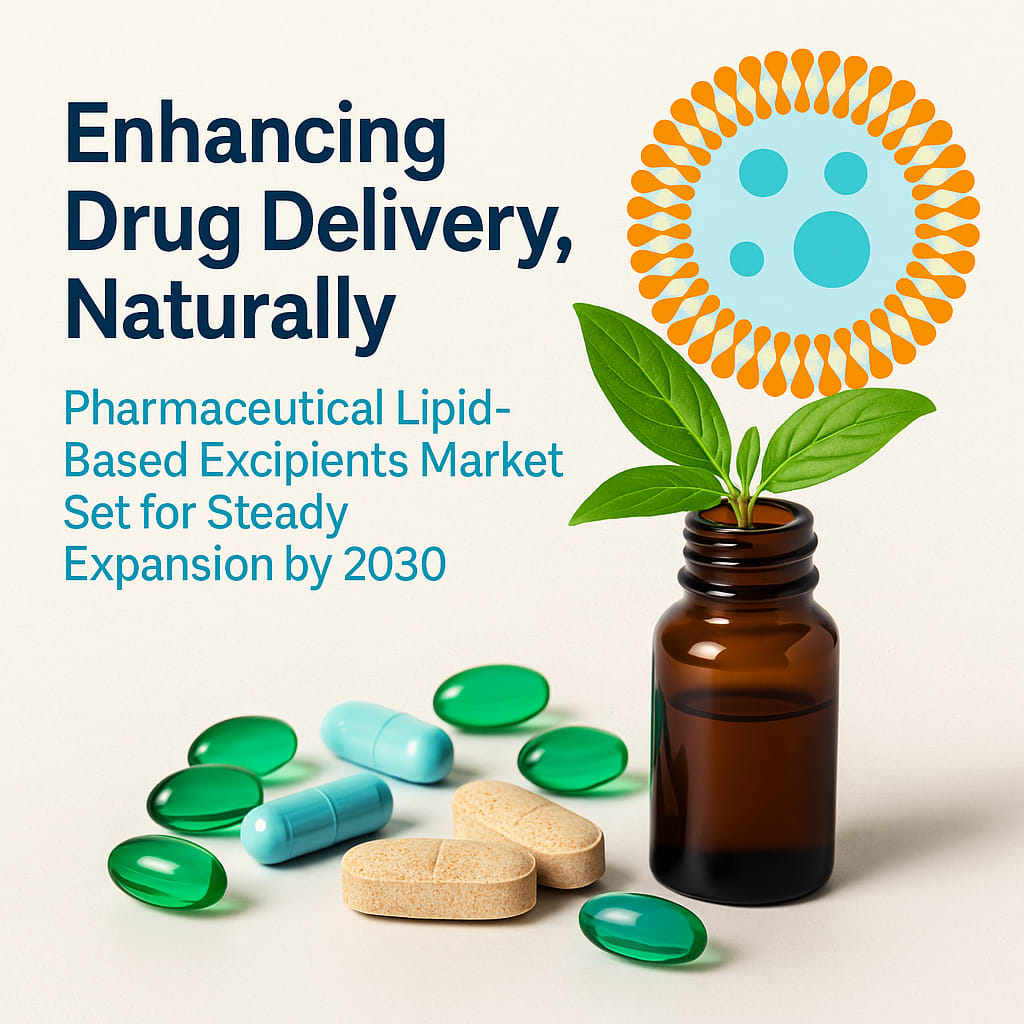
The global pharmaceutical lipid-based excipients market is expected to continue its growth momentum in the coming years. The lipid-based excipients offer unique properties that enable improved solubility, enhanced bioavailability, and natural formulating options. The excipients category is emerging as a major enabler of next-generation therapeutics in the pharmaceutical industry.
Lipid-based excipients are surfactant or non-surfactant compounds that aid drug absorption and other oral formulations of low water solubility drugs. The increase in the number of new chemical entities (NCEs) with poor water solubility is one of the significant factors supporting the increased application of lipid-based excipients.
Lipid-based excipients have the ability to solubilize many poorly water-soluble drugs. The global pharmaceutical lipid-based excipients market covers different product types, including triglycerides, phospholipids, fatty acids, and waxes. These excipients are widely used for oral solid and liquid dosage forms, injectables, topical products, and nanomedicines. The natural and biocompatible properties of lipid-based excipients make it a highly suitable excipient in generic and innovative drug products.
Drivers Of The Pharmaceutical Lipid-Based Excipients Market
1. Increasing Demand For Bioavailability Enhancing Technologies
As the number of drugs with solubility issues exceeds 40%, drug delivery systems that can effectively deliver these drugs and enhance their permeability are on the rise. Lipid-based excipients are gaining attention because of their bioavailability enhancement capabilities, including permeability enhancement and lymphatic uptake. They are therefore proving to be beneficial in overcoming formulation challenges for BCS class II and IV drugs.
2. Natural & Biocompatible Properties
Lipid excipients are derived from natural sources and are often considered as GRAS (generally regarded as safe) ingredients. The pharmaceutical industry is constantly seeking solutions to enable the development of clean-label products and patient-friendly drug products. Lipid-based excipients are a natural choice in the formulation of innovative and generic products, including nutraceuticals, pediatric medicines, and patient-centric therapies.
3. Biologics, Peptides, mRNA Therapies
Biologics, peptides, and mRNA-based therapies are on the rise, and with them comes the need for lipid-based drug carriers. Lipid nanoparticles (LNPs) are essential for stabilizing, protecting, and delivering these sensitive molecules to target sites. LNPs have gained worldwide recognition through the COVID-19 mRNA vaccines and continue to drive development and research in the area of next-gen drug delivery.
4. Innovation In Lipid Engineering & Manufacturing
Advances in lipid synthesis and purification techniques, as well as modular formulation platforms that can be tailored to specific drug profiles and application areas, are paving the way for innovation in drug formulation science. Companies like BASF, Croda International, and Gattefossé are expanding their lipid-based excipient portfolios and partnering with other pharmaceutical companies to offer highly customized excipients for specific therapeutic areas.
Market Size And Forecast By 2030
The Pharmaceutical Lipid-Based Excipients Market is expected to grow at a CAGR of 4.8% through 2030 with North America and Europe leading in R&D investments, regulatory approvals, and adoption of complex and advanced drug products.
Asia-Pacific is expected to be the fastest-growing market with a CAGR of around 5% driven by the expansion of the region’s generic manufacturing capacity, government support for pharma innovation, and a rise in demand for cost-effective drug delivery solutions in India, China, Japan, and South Korea.
Challenges And Considerations
Complex Formulation Development: Lipid-based drug formulation and scale-up may require specific expertise and stability testing.
Regulatory Scrutiny: As with all excipients, it is essential to ensure that lipid-based excipients adhere to pharmacopeial standards and are well documented for safety and efficacy evaluation and global market access.
Raw Material Sourcing: Sustainable and consistent sourcing of high-purity raw lipids can impact production quality and cost.
Leading Players And Trends
BASF, Croda International, Gattefossé, Abitec Corporation, IOI Oleo GmbH, and Lipoid GmbH are among the leading companies in the pharmaceutical lipid-based excipients market.
Key strategies adopted by companies operating in the pharmaceutical lipid-based excipients market include:
Expanding Lipid Portfolio
Companies are expanding their range of lipid-based excipients to cater to specific drug profiles and application areas by developing and offering tailored and innovative lipid-based excipients.
Collaboration & Partnerships
Collaboration with pharmaceutical companies is one of the key strategies adopted by companies in the pharmaceutical lipid-based excipients market. These collaborations aim to integrate lipid technology into the formulations of pharmaceutical companies.
Mergers, Acquisitions, And Joint Ventures
Mergers, acquisitions, and joint ventures are also key strategies adopted by companies in the pharmaceutical lipid-based excipients market.
Conclusion
In conclusion, as the pharmaceutical industry continues to struggle with the twin challenges of solubility and patient compliance, lipid-based excipients are poised to become a natural and ideal solution. The ability of lipids to enhance drug delivery and therapeutic outcomes is only one of the many benefits of these exciting excipients. Lipids have unique properties that enable them to support advanced therapy products and next-generation drug products. As the market continues to grow, we can expect it to play a leading role in the future of formulation science.
The pharmaceutical lipid-based excipients market is on a growth trajectory and is expected to grow at a CAGR of 4.8% through 2030. By 2030, the market will anchor a new era in which safe, natural, and precision-driven drug delivery options become the norm.
About the Creator
Silvie Karson
Passionate storyteller exploring the world of trends. With a background in digital marketing, I craft compelling narratives that inform and inspire. Whether diving into deep-dive features, growth analysis, or trend analysis.
Keep reading
More stories from Silvie Karson and writers in Journal and other communities.
Non-Invasive Intracranial Pressure Monitoring Device Market on the Rise Through 2030 | Breaking the Skull Barrier
The Non-Invasive Intracranial Pressure (ICP) Monitoring Device Market is experiencing a surge on a global scale. This technology offers a non-invasive alternative for clinicians to measure ICP in patients, where blood vessels, tissues, or cerebrospinal fluid pressurize the brain. Rising awareness, improving accessibility, and digital innovations are driving its demand.
By Silvie Karson7 months ago in Journal
The Evolution of Aerospace Connectors From Analog to Digital
The aerospace industry has undergone a remarkable transformation over the past few decades, driven by a relentless pursuit of efficiency, reliability, and innovation. One of the unsung heroes of this revolution is the humble aerospace connector a component so small yet essential to the safe and seamless operation of modern aircraft. From the early days of aviation to today’s digital, highly automated aircraft, aerospace connectors have evolved significantly. Let’s take a journey through this evolution, exploring how they’ve progressed from analog simplicity to the sophisticated digital systems that power today’s aircraft.
By Beckett Dowhan5 days ago in Journal


Comments
There are no comments for this story
Be the first to respond and start the conversation.