
Engineering Spectacle: The Synthesis of Mechanics and Aesthetics in Amusement Rides
Exploring How Precision Engineering and Creative Design Converge to Redefine the Modern Amusement Ride Experience
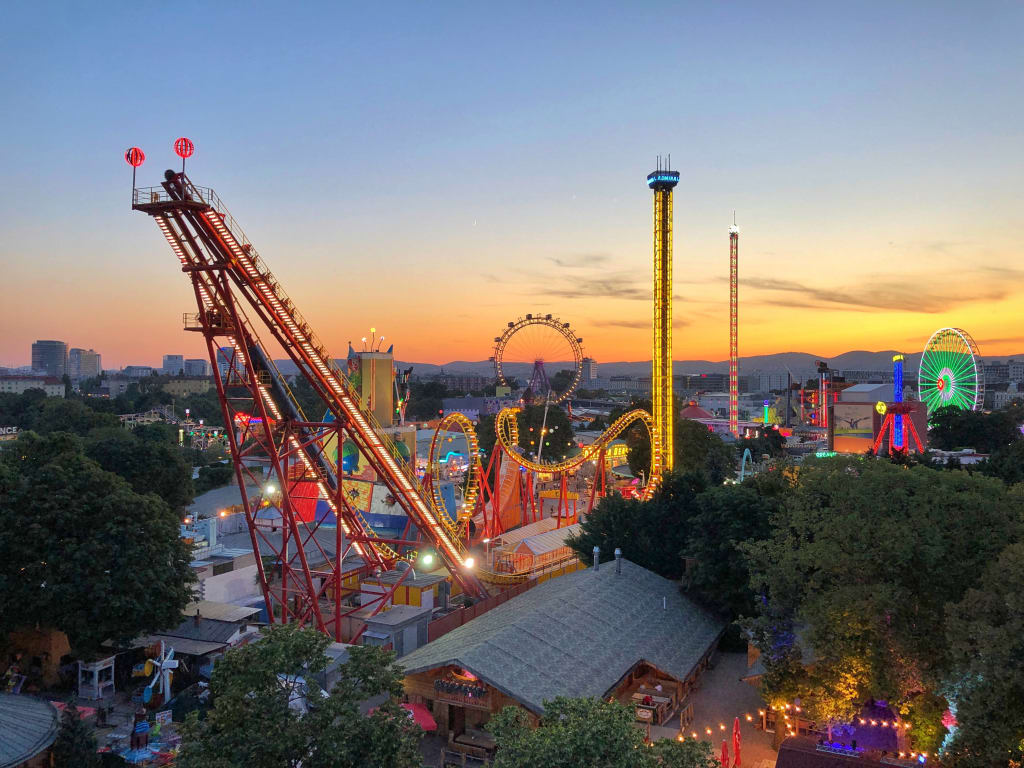
Amusement rides are no longer just feats of mechanical ingenuity; they have become immersive works of art. The seamless convergence of precision engineering and artistic vision has redefined the purpose and perception of thrill attractions. Today’s roller coaster and drop tower are not simply machines; they are storytelling devices, kinetic sculptures, and architectural marvels—all at once. This sophisticated fusion elevates the ride experience beyond adrenaline, embedding emotion, theme, and narrative into the structure itself.
The Mechanized Backbone of Modern Thrill
At the heart of every amusement ride lies a complex array of mechanical systems. These are not static constructs but dynamic entities in perpetual motion, operating within strict tolerances under extreme stress. The roller coaster exemplifies this principle: a choreographed procession of wheels, rails, and restraints governed by Newtonian dynamics and electromechanical controls. It is a study in managed chaos.
Modern ride systems incorporate linear synchronous motors, hydraulic launch mechanisms, and magnetic braking systems. Their designs accommodate not only speed and gravity but also intricate g-forces sculpted to provoke a specific psychological response. In a high-banked turn, the angle of inclination is calculated with millimetric precision to deliver the exact blend of lateral force and weightlessness. The coaster becomes a mechanized ballet of centripetal force and momentum.
The drop tower operates under a similar mechanical philosophy but with a vertical vector of engagement. Riders are hoisted skyward by pulley systems or motor-driven chains, often enveloped in silence or suspenseful audio. The descent—often at terminal velocity—is governed by magnetic or pneumatic braking systems designed to provide abrupt, yet controlled, deceleration. Here, the sensation of freefall is engineered to flirt with physiological limits.
Sculptural Engineering: Form as Function
Beyond functionality, the structural form of amusement rides has become a medium for artistic expression. Each ride silhouette is a deliberate design, often tailored to harmonize with its surroundings or contrast them dramatically. Structural members are curved, twisted, and colorized to create visual interest and anticipation before the first rider ever boards.
Architectural flourishes—such as spires, canopies, and themed exteriors—transform utilitarian frameworks into visual landmarks. Themed roller coaster installations evoke ancient ruins, interstellar voyages, or steampunk machinery. These are not decorative afterthoughts; they are integral to the ride’s identity. A roller coaster that mimics a dragon’s spine, winding through castles and ravines, tells a story long before the first drop.
The drop tower, too, evolves from mere tower to monumental obelisk or futuristic monolith. Structural components are sometimes concealed within themed façades or made transparent to emphasize height and exposure. Lighting systems embedded into the superstructure can create dynamic color transitions that mirror the emotional arc of the experience—from calm ascent to climactic release.
Integration of Sensory Elements
Modern amusement rides do not rely on motion alone. They employ a range of sensory effects to deepen immersion. Integrated lighting, soundscapes, wind machines, and scent dispensers collaborate to craft a complete sensory profile. Each element is orchestrated with precision timing and mechanical interfacing.
Consider the multi-sensory environment within a dark ride-coaster hybrid. Projection mapping overlays dynamic imagery onto physical surfaces, while synchronized speakers deliver spatial audio that reacts to ride movement. When the train dives into a subterranean cavern, the combination of wind blasts and sulfur scents simulate an active volcano. These enhancements are programmed into the ride control systems, operating with faultless timing to maintain illusion and continuity.
In a drop tower, LED arrays pulse with increasing intensity during the ascent. The ambient soundtrack transitions from foreboding echoes to sharp percussive hits. At the peak, the sound drops to silence—a void that accentuates the coming plummet. These sensory components are not ancillary; they are engineered co-dependencies of the ride’s mechanical design.
Simulation and Virtualization in Design
Behind the scenes, the path from concept to construction is underpinned by advanced simulation technologies. Computer-aided design (CAD), finite element analysis (FEA), and computational fluid dynamics (CFD) allow engineers to pre-visualize stress loads, air resistance, and material fatigue. Animators and visual designers work in parallel, embedding artistic motifs directly into the structural plans.
Dynamic simulation software can predict the real-time behavior of a coaster train, factoring in rider mass, wind speed, and thermal expansion. This allows for iterative fine-tuning of track geometry and timing sequences long before steel is fabricated. In the case of a drop tower, simulations ensure that braking forces stay within human tolerance levels, even under worst-case mechanical scenarios.
Human Factors and Emotional Engineering
Engineering without regard to the rider experience is obsolete. Modern ride design integrates human factors engineering—ergonomics, motion comfort, visual perception—to maximize emotional engagement while maintaining safety. Every seat restraint, shoulder harness, and viewing angle is tested for psychological and physiological response.
Thrill is not accidental; it is manufactured. For instance, roller coaster track sequencing is developed to mimic a narrative arc: slow build, rising tension, climax, and resolution. Each hill, turn, and inversion plays a role in this dramaturgy. Designers manipulate surprise elements such as false drops, sudden lateral shifts, and pitch-black tunnels to punctuate the storyline.
In drop towers, the moment of suspense just before release is scientifically optimized. Timing algorithms randomize the drop to prevent rider habituation, extending the thrill even across multiple rides. The human body becomes part of the system, a responsive sensor array that amplifies the feedback loop of design.
The Symbiosis of Team Disciplines
The creation of these modern marvels is a collaborative convergence of diverse disciplines: structural engineers, industrial designers, theme artists, control system programmers, and safety analysts. No one field dominates; each informs the other in a feedback-rich development cycle.
Art drives the thematic direction and aesthetic coherence. Mechanics bring that vision into kinetic reality. Storyboarding teams map the narrative trajectory of the ride. Control engineers translate that map into sequences of timed commands and feedback loops. It is not a linear production line but a recursive, iterative development ecosystem.
Conclusion: Mechanical Canvas of Imagination
Amusement rides are no longer mere entertainments; they are mechanical canvases, designed with the rigor of engineering and the soul of artistry. Each roller coaster track, every drop tower ascent, is a testament to what can be achieved when function and form are given equal weight.
The fusion of mechanics and art within this realm is not just an industry trend—it is a paradigm shift. As technologies evolve and creative boundaries expand, the possibilities for new forms of thrill and storytelling grow exponentially. In this space, gravity, speed, and steel are not just tools—they are brushstrokes in a kinetic masterpiece.
About the Creator
Beston Amusement Rides
As a leading amusement facility manufacturer, we provide safe and interesting amusement equipment to customers around the world, including roller coasters, Ferris wheels, pirate ships and so on.
Website:https://bestonamusementrides.com/
Keep reading
More stories from Beston Amusement Rides and writers in Journal and other communities.
Recommended Family-Friendly Rides in Amusement Parks
Amusement parks have long been synonymous with thrilling experiences, creating cherished memories for families across the world. When planning a trip to one of these expansive entertainment hubs, it’s essential to choose rides that are both enjoyable and safe for all members of the family. While there is no shortage of extreme thrill rides, a select group of attractions cater specifically to families, ensuring that even the youngest visitors can experience the excitement of an amusement park without feeling overwhelmed. This article explores some of the most popular and family-friendly rides found at amusement parks, providing insights into their appeal, design, and suitability for all ages.
By Beston Amusement Rides9 months ago in Journal
The goals I did not achieve
Every writing goal I made for the year is a wash. It has been this way for a while, but I think it's important to be open about my failures and the reality of how life can get in the way. This is especially true considering the several times I have posted on Vocal about my writing goals, how I was changing my approach, and where I was hoping to be for the upcoming year. I will probably do that again in a couple months, but for now, it is time to acknowledge where I am today.
By Kay Husnick23 days ago in Journal
NEW YORK RISES – WHEN THE AMERICAN STREET DEFIES THE ARMED STATE
The silence of New York was not an absence of sound, but a presence of weight, an atmospheric density that heralded the storm long before the first drop of anger fell on the pavement of Manhattan. In this month of January 2026, the metropolis did not merely cease breathing to the rhythm of profit; it changed its very nature. Under a leaden sky, whose hue recalled cold metals and irrevocable administrative decisions, a human tide took over the canyons of concrete. This was not a riot, it was not a scream, it was a march. A slow, granitic, almost liturgical advance, where every step seemed to weigh a ton of mute demands. There was a particular gravity in this crowd, the kind that distinguishes anger that has long ripened in the shadows from the blind rage that evaporates with the first police charge. Faces were landscapes of determination, marked by the cold but heated by an inner conviction that nothing seemed able to dent.
By Laurenceau Porte6 days ago in Journal




Comments
There are no comments for this story
Be the first to respond and start the conversation.