
Egyptian Pound vs. US Dollar: A Story of Two Currencies
A Deep Dive into Economic Dynamics and Currency Trends

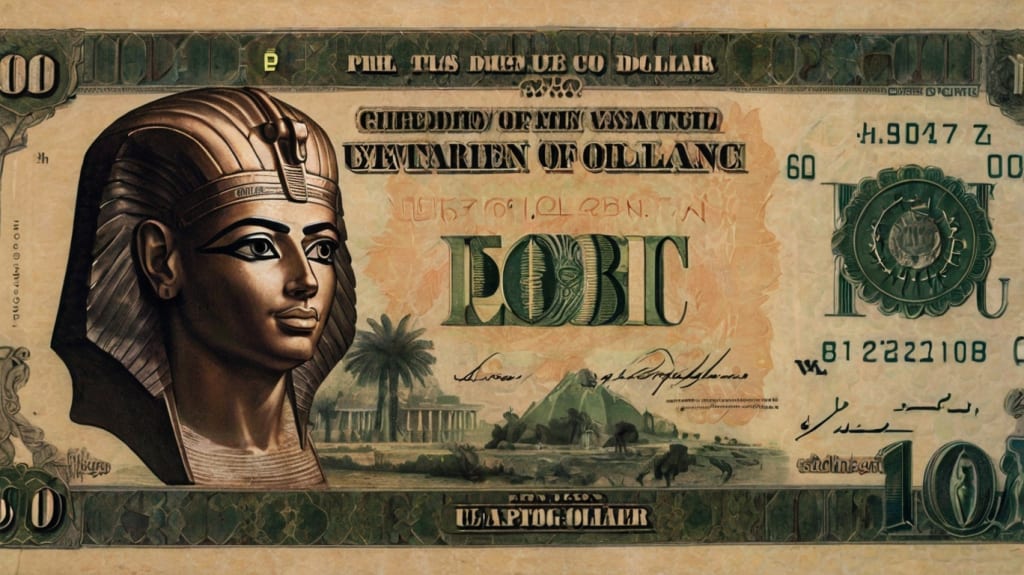
When you think about money, it’s easy to assume that all currencies are created equal. But in reality, the Egyptian Pound (EGP) and the US Dollar (USD) couldn’t be more different. Let’s dive into their histories, the numbers driving their economies, and what all of this means for investors and everyday people alike.
A Quick Look at Their Histories
Egyptian Pound (EGP)
The Egyptian Pound was born in 1834, replacing the piastre. For a long time, the EGP was pegged to the British Pound, and later to the USD. In 2016, everything changed when the Egyptian government decided to let the pound float. This move caused the currency to lose over 50% of its value overnight. Why? The government wanted to stabilize the economy and attract foreign investors—a tough pill to swallow, but necessary for long-term growth.
US Dollar (USD)
The USD’s story is one of global dominance. It became the world’s reserve currency in 1944 after the Bretton Woods Agreement. That means most countries hold dollars in their reserves because it’s seen as a safe and reliable currency. Today, over 60% of global foreign exchange reserves are held in USD.
Economic Drivers: Numbers Tell the Story
Egypt’s Economy in Numbers
GDP:Egypt’s GDP stood at $476 billion in 2023, making it the third-largest economy in Africa.
Inflation:Inflation hit 35.6% in 2023, one of the highest rates in decades. This makes everyday items like bread and gas significantly more expensive.
Foreign Reserves: As of late 2023, Egypt’s foreign currency reserves were around $34 billion, a slight recovery from previous years but still vulnerable.
Tourism Revenue:Tourism brought in $13 billion in 2022, a major boost for the economy.
Remittances:Egyptians working abroad sent home $31.5 billion in 2022, providing much-needed foreign currency.
The US Economy in Numbers
GDP:The US boasts a GDP of $26.9 trillion (2023), the largest in the world.
Inflation:After peaking at 9.1% in mid-2022, inflation cooled to around 3.7% in 2023 thanks to aggressive Federal Reserve policies.
Unemployment Rate: A low 3.9% in late 2023, reflecting a strong labor market.
Trade:The US exported goods worth $2.1 trillion in 2022, with imports exceeding **$3.3 trillion**.
Federal Reserve Reserves:The US holds over $8 trillion** in foreign exchange and gold reserves.
Exchange Rates: What’s the Cost of a Dollar?
Egyptian Pound (EGP)
Right now, 1 USD equals about 30 EGP, but that’s not the full story. Back in 2016, before the float, 1 USD was just 8.88 EGP. That means the pound has lost over 70% of its value in less than a decade. For Egyptians, this makes imported goods like electronics and cars ridiculously expensive.
US Dollar (USD)
The USD’s strength is often measured by the US Dollar Index (DXY), which compares it to six other major currencies. In 2023, the DXY hovered around 103.5, reflecting steady demand despite global economic turbulence.
Why Do These Currencies Matter?
The Egyptian Pound: A Local Player
The EGP is mostly used within Egypt. It’s what you need to pay for your koshary or a ticket to the Pyramids. But outside Egypt? Forget it. Most global markets won’t even trade it. That’s a problem for international investors who want liquidity and stability.
The US Dollar: A Global Giant
The USD is the king of currencies. Whether you’re buying oil in Saudi Arabia or gadgets in China, dollars are the go-to. In fact, **88% of global forex trades in 2022** involved the USD. It’s not just money; it’s a symbol of trust and power.
Investment Prospects: Where to Put Your Money?
Investing in the Egyptian Pound
Pros:
High Returns (If You’re Lucky):During economic reforms, the EGP can bounce back, offering speculative gains.
Emerging Market Growth:Sectors like natural gas and renewable energy show promise.
Cons:
High Risk:Inflation at 35%? That’s a red flag for most investors.
Limited Liquidity: Good luck trading the EGP outside Egypt.
Investing in the US Dollar
Pros:
Stability: The USD is a safe haven during crises. Even in a recession, the dollar’s value tends to hold.
Global Access:You can invest in USD-backed assets like Treasury bonds or the S&P 500.
Cons:
Lower Returns: Safe investments often mean lower yields.
Dependent on Fed Policy: If the Federal Reserve lowers interest rates, the dollar could weaken.
The Bigger Picture: Everyday Impact
If you’re an Egyptian earning in EGP, imported goods are now luxuries. A smartphone priced at $500 might cost you **15,000 EGP**. On the flip side, if you earn in USD and visit Egypt, your money goes a long way. A dinner that costs $50 in New York might only set you back $15 in Cairo.
For investors, it’s a tale of risk versus reward. The EGP offers high-risk, high-reward opportunities in a developing market. The USD, meanwhile, is your go-to for safety and stability.
Final Thoughts
The Egyptian Pound and the US Dollar are more than just currencies; they’re reflections of their economies. The EGP tells the story of a nation striving for growth amidst challenges, while the USD remains a symbol of global economic leadership. Whether you’re an investor, a traveler, or just someone curious about the world, understanding these currencies can open your eyes to the forces shaping our global economy.
About the Creator
Mi Gazette
Mi Gazette is a business focused platform offering insightful articles and resources designed to help entrepreneurs and business professionals.
Keep reading
More stories from Mi Gazette and writers in Journal and other communities.
Innovation in Egypt’s Salt Industry: How Tradition Meets Modern Transformation
Salt has been part of Egypt’s story since the beginning of civilization. Ancient Egyptians used it to preserve food, power trade routes, and support early industries. Although salt seems modest, it has shaped daily life, economies, and local communities for thousands of years.
By Mi Gazette2 months ago in Journal
Einstein’s Early Struggle: The 1895 Swiss Federal Polytechnic Entrance Exam and Lessons in Talent and Perseverance
In 1895, a 16-year-old Albert Einstein faced a setback that many might have seen as a sign of failure: he failed the entrance exam for the Swiss Federal Polytechnic in Zurich. While this moment is often remembered as a youthful stumble in the life of one of history’s greatest scientific minds, it offers profound insights into the nature of talent, learning, and perseverance. Einstein’s experience reminds us that early academic challenges do not define one’s potential, and that success often comes from persistence and leveraging one’s strengths.
By Salaar Jamali3 days ago in Journal
Wild Card Weekend Recap: What Happens Now?
I think I figured out why I love Wild Card Weekend so much. It's because it's the first playoff anything of the calendar year. The NFL season starts in the fall, and once upon a time, the champion was crowned either on or slightly before New Year's. The evolution of the NFL schedule has resulted in the playoffs starting just into the New Year, and currently, the final week of the season falls on the first weekend of the New Year, with Wild Card Weekend coming a week after that. So yes, chronologically, the NFL's Wild Card Weekend serves as the first playoff anything of the calendar year.
By Clyde E. Dawkins8 days ago in Unbalanced




Comments
There are no comments for this story
Be the first to respond and start the conversation.