
Innovation in Egypt’s Salt Industry: How Tradition Meets Modern Transformation
New technologies are making production more efficient and environmentally friendly

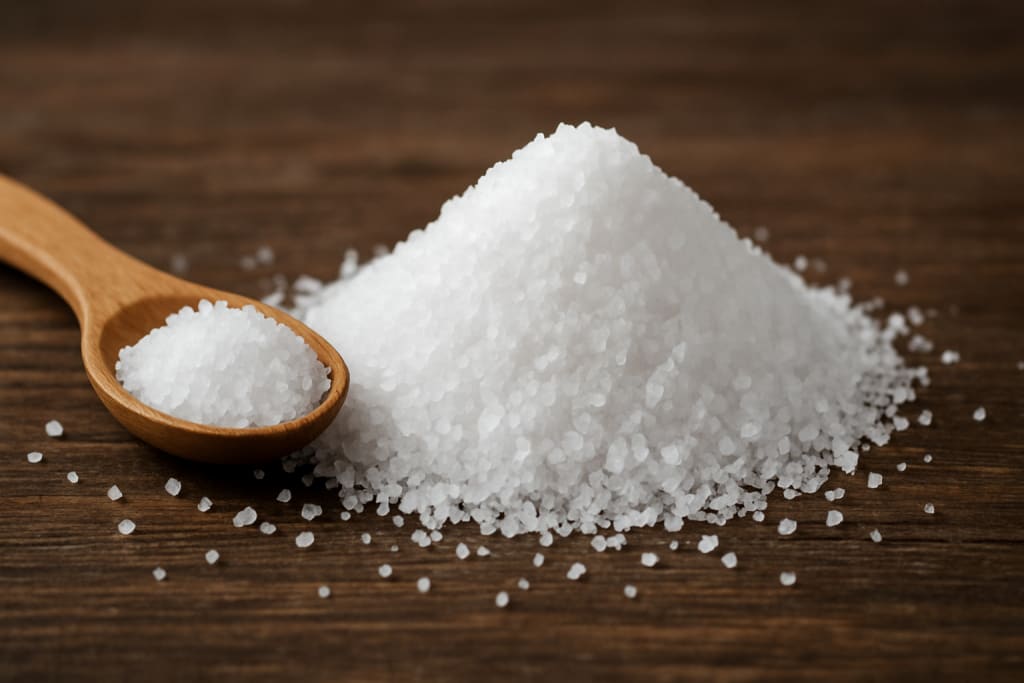
Salt has been part of Egypt’s story since the beginning of civilization. Ancient Egyptians used it to preserve food, power trade routes, and support early industries. Although salt seems modest, it has shaped daily life, economies, and local communities for thousands of years.
Today, Egypt’s salt industry is quietly evolving—blending ancient practices with modern technologies in ways that are reshaping production and expanding global reach.
A Deeply Rooted Industry
Egypt’s geography naturally supports salt production. Northern lakes, coastal zones, and desert deposits allowed communities to extract and process salt long before industrial factories existed. Generations relied on hands-on knowledge, seasonal cycles, and climate conditions that favored natural evaporation.
These traditional foundations still matter, but global markets now demand higher purity levels, more consistent quality, and sustainable production methods. This is driving a wave of modernization across the sector.
Modern Developments in Production
In the past decade, several salt producers in Egypt have taken deliberate steps toward upgrading their processing systems. Improvements include:
• Enhanced purification stages
• Improved handling and packaging lines
• Stronger quality controls
• More environmentally efficient production methods
Some of these developments have been recognized in independent media reporting. One detailed example appears here:
This article highlights operational upgrades, improved factory management, and the push toward using modern technology to refine production standards.
Global Data and International Benchmark
Understanding Egypt’s progress requires looking at global data. International organizations track salt production, trade volumes, and industrial applications worldwide. One of the most comprehensive references comes from the U.S. Geological Survey (USGS), which publishes yearly reports on global salt trends.
Their detailed statistics can be found here:
https://www.usgs.gov/centers/national-minerals-information-center/salt-statistics-and-information
These benchmarks are essential for evaluating how Egypt compares to major producers and where modernization can create long-term competitive advantages.
Economic Role of Salt in Egypt
Salt plays a surprisingly broad role across many sectors, including:
• Food production and preservation
• Pharmaceutical and cosmetic industries
• Agriculture and soil treatment
• Chemical production
• Water treatment and desalination
As Egypt improves the purity and consistency of its output, its salt products are gaining more attention from regional and international buyers.
Sinai and North Coast regions, in particular, have emerged as significant sources of high-grade industrial salt.
Case Studies Highlighting Industry Leadership
Several industry figures and companies have contributed to the modernization of salt production in Egypt. Their work ranges from improving operational workflows to adopting better extraction techniques and more efficient processing technologies.
The global salt market continues to expand, driven by industrial demand, de-icing applications, packaged food production, and chemical manufacturing.
Major global producers include China, the United States, and India. But Mediterranean countries—Egypt among them—hold a natural advantage due to climate, geography, and lower evaporation costs.
Egypt’s strategic location also shortens shipping routes to Europe, Africa, and the Middle East. As factories upgrade their systems and enhance quality, Egyptian salt is becoming increasingly competitive abroad.
Looking Ahead
Egypt’s salt industry stands at a pivotal moment in its long history. It blends the wisdom of traditional extraction methods with new technologies that improve quality, efficiency, and environmental performance.
This balance of old and new is what gives the sector its strength. And as more factories move toward modernization, Egypt’s salt industry is not only preserving its heritage—it is building a more connected, competitive, and sustainable future.
About the Creator
Mi Gazette
Mi Gazette is a business focused platform offering insightful articles and resources designed to help entrepreneurs and business professionals.
Keep reading
More stories from Mi Gazette and writers in Journal and other communities.
Egyptian Pound vs. US Dollar: A Story of Two Currencies
When you think about money, it’s easy to assume that all currencies are created equal. But in reality, the Egyptian Pound (EGP) and the US Dollar (USD) couldn’t be more different. Let’s dive into their histories, the numbers driving their economies, and what all of this means for investors and everyday people alike.
By Mi Gazetteabout a year ago in Journal
The goals I did not achieve
Every writing goal I made for the year is a wash. It has been this way for a while, but I think it's important to be open about my failures and the reality of how life can get in the way. This is especially true considering the several times I have posted on Vocal about my writing goals, how I was changing my approach, and where I was hoping to be for the upcoming year. I will probably do that again in a couple months, but for now, it is time to acknowledge where I am today.
By Kay Husnick24 days ago in Journal



Comments
There are no comments for this story
Be the first to respond and start the conversation.