
Dr. Muhammad Yunus and a Vision for a Better World
Three Zero

RoadMap
Dr. Muhammad Yunus, a Nobel Peace Prize laureate and the pioneer of microfinance, has spent decades championing innovative solutions to combat poverty and create a more inclusive economy. While he is best known for founding Grameen Bank and introducing microcredit to the world’s poorest communities, one of his most compelling contributions in recent years is his "Three Zeros" theory—a visionary roadmap toward a fairer, more sustainable future.
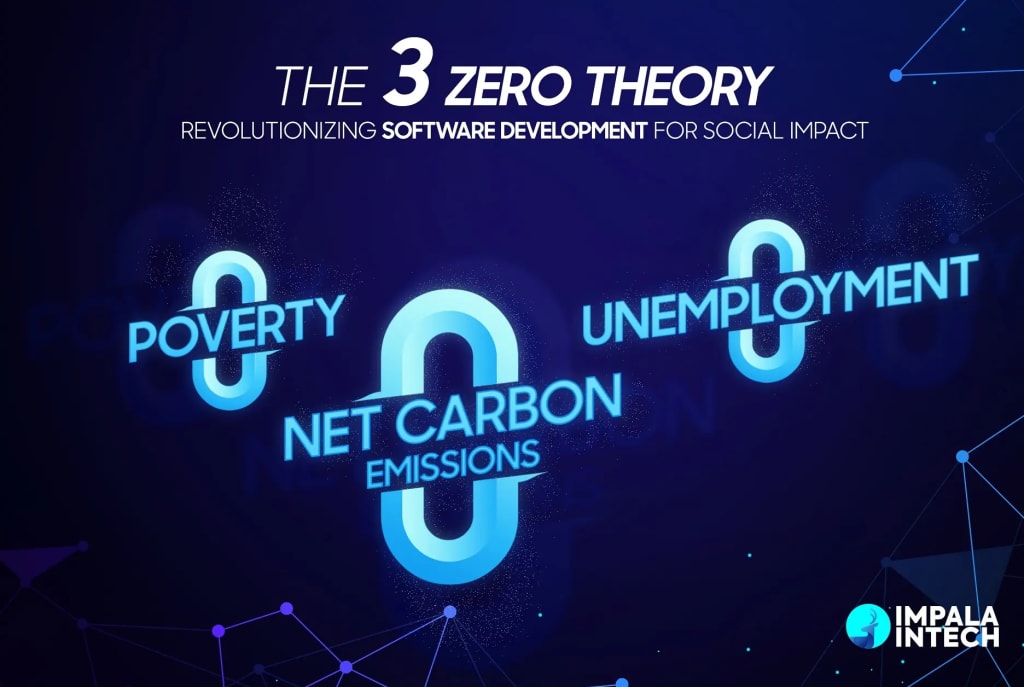
At the heart of Yunus’s vision are three bold goals:
Zero Poverty
Zero Unemployment
Zero Net Carbon Emissions
These “Three Zeros” are not just slogans; they represent an interconnected framework that challenges the current capitalist system and encourages the rethinking of social and economic priorities. Let’s explore each component of the theory, the underlying ideas, and its potential impact on global development.
Zero Poverty
Dr. Yunus is of the opinion that flawed systems that do not serve the majority of people artificially create poverty, which is not a natural state. He argues that if we design those systems differently, poverty can be eliminated.
His journey began with the creation of microcredit, small loans offered to the poor—especially women—without collateral. People are given the ability to become self-sufficient through entrepreneurship with this strategy. Grameen Bank, which he founded in Bangladesh in 1983, has lent billions of dollars to millions of borrowers, helping families escape the cycle of poverty.
Yunus’s approach is based on trust, dignity, and opportunity, rather than handouts. He stresses that the poor aren't helpless; they just don't have access to financial services and social networks. When given a chance, they can—and do—thrive.
Beyond microcredit, Yunus advocates for "social businesses"—enterprises that prioritize social impact over profit. In order to address social issues in a way that is financially viable, these businesses reinvest profits to advance their mission. This model shows that business can be a powerful tool for ending poverty by providing an alternative to traditional charities and profit-driven corporations.
Zero Unemployment
The second component of the Three Zeros theory is zero unemployment. Yunus believes that a narrow understanding of what it means to work and contribute to society is the root cause of unemployment, not a lack of jobs. Employment is only viewed through the prism of hiring, wage labor, and productivity metrics in conventional economic systems. Yunus challenges this notion. He is of the opinion that everyone is born with an entrepreneurial spirit. Children are not born to be job seekers—they are born with creative potential. Yet, our education systems and societal structures often condition them to aim for jobs, not to create them.
Yunus advocates "self-employment," encouraging individuals to become entrepreneurs rather than job seekers, in order to achieve zero unemployment. Through access to capital (via microcredit), mentorship, and supportive ecosystems, people can build their own small businesses, serve their communities, and create employment for others.
Yunus also calls for a redefinition of education, advocating for curricula that nurture creativity, problem-solving, and entrepreneurial thinking from a young age. In his ideal system, young people would graduate with the confidence and skills to start their own social businesses—empowered to solve real-world problems rather than merely join the workforce.
Zero Net Carbon Emissions
As a direct response to the climate crisis, Yunus's theory has zero net carbon emissions as its third and final goal. Yunus argues that economic growth should not come at the cost of environmental destruction. In fact, he believes that businesses and governments must take full responsibility for reversing climate change and protecting the planet for future generations.
This part of the theory is closely tied to the concept of social business. Yunus envisions businesses that tackle climate change directly—whether by developing clean energy solutions, promoting sustainable agriculture, or reducing waste through innovative design. Importantly, these businesses are not driven by profit but by their environmental mission.
He also urges global collaboration. Climate change knows no borders, and its consequences disproportionately affect the poorest communities—those least responsible for the problem. Yunus has often emphasized the importance of equity in climate action, ensuring that solutions are inclusive and justice-oriented.
To support this transition, Yunus calls for government incentives, investment in green technologies, and a shift in consumer behavior. His approach to sustainability is both grassroots and systemic: empower local communities to adopt green practices while pushing for top-down reforms in energy, transportation, and manufacturing.
Refuting Conventional Capitalism Yunus believes that the profit-maximizing model of capitalism is fundamentally flawed, which is the foundation of the Three Zeros theory. He argues that this system concentrates wealth, exploits resources, and ignores the social and environmental costs of doing business.
Instead, Yunus proposes a "new civilization" where social business plays a central role—one that balances economic, social, and environmental goals. He envisions a world where wealth is distributed more equitably, where business serves humanity, and where the planet is protected rather than exploited.
This is not a utopian dream, he insists, but a feasible alternative. Already, social businesses are emerging around the world, tackling issues from healthcare to education, clean energy to food security. Many of these initiatives were inspired by Yunus's teachings and are proof that the Three Zeros theory can be applied in real-world settings.
The Path Forward
Dr. The Three Zeros theory proposed by Yunus presents a daring and transformative vision for the future. It challenges us to reevaluate the function of business, define success, and reimagine the realm of possibility. It appeals to young entrepreneurs, policymakers, activists, and anyone who believes that a better world is not only necessary but achievable.
Achieving zero poverty, zero unemployment, and zero net carbon emissions is a colossal challenge, but Yunus is optimistic. He is of the opinion that humanity possesses the courage, compassion, and creativity necessary to rethink our systems. The tools are in our hands—what we need now is the will to use them.
The Three Zeros theory serves as both a critique and a guide as the world confronts systemic failures, climate emergencies, and growing inequality. It serves as a reminder to all of us that business can be a force for good, that no one is too poor to help, and that we all have a duty to protect our common home.
Conclusion
Dr. Muhammad Yunus’s Three Zeros theory is more than an economic model—it’s a call to action. By striving for zero poverty, zero unemployment, and zero net carbon emissions, we move toward a world where opportunity, dignity, and sustainability are accessible to all. It challenges the status quo, inspires innovation, and most importantly, gives us hope that a better future is within reach.
About the Creator
Monir Khan
Wellcome
Keep reading
More stories from Monir Khan and writers in Journal and other communities.
Dr. Muhammad Yunus
Dr. Muhammad Yunus: A Visionary Leader for Inclusive Development Dr. Muhammad Yunus is a world-renowned economist, social entrepreneur, and winner of the Nobel Peace Prize. He is also known as the "Banker to the Poor." His leadership has transformed not only the financial landscape of Bangladesh but also influenced global conversations around poverty, social justice, and economic inclusivity. Dr. took on political leadership during times of national crisis, starting with the Grameen Bank. Yunus exemplifies a rare blend of visionary thinking and grassroots action.
By Monir Khan10 months ago in Journal



Comments
There are no comments for this story
Be the first to respond and start the conversation.