
Diplomacy Amid Discord: U.S. and China Resume Trade Talks in Geneva
As tariffs escalate under Trump’s second term, Washington and Beijing seek common ground in the face of mounting economic strain

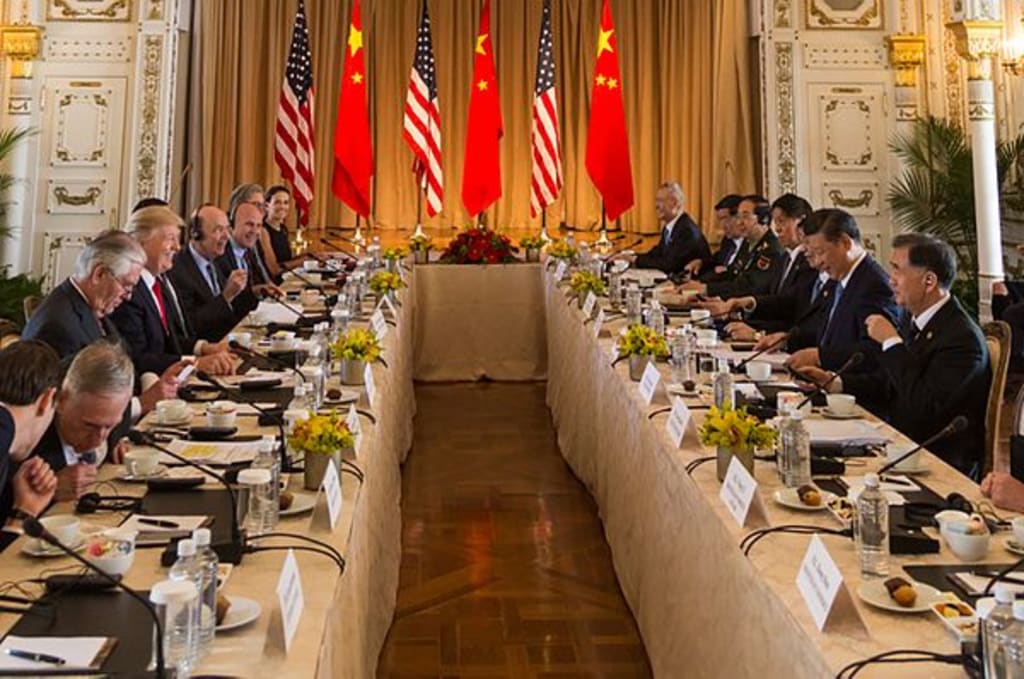
In a long-awaited step toward easing tensions between the world’s two largest economies, the United States and China have resumed high-level trade negotiations in Geneva. This move comes after months of tariff escalations initiated by U.S. President Donald Trump during his second term in office. With both nations feeling the economic and geopolitical consequences of a renewed trade war, the Geneva talks represent a critical opportunity to reset a fraught bilateral relationship.
A Trade War Reignited
The current standoff began in early 2025, when President Trump reimposed broad tariffs on Chinese imports—an echo of the aggressive trade stance that defined his first term. Framing the move as necessary for “economic security” and as a punitive measure over the illicit flow of fentanyl into the U.S., Trump placed a 10% tariff on a wide range of Chinese goods. The announcement was met with swift retaliation from Beijing, which imposed similar tariffs on key American exports including crude oil, natural gas, coal, and agricultural machinery.
The tit-for-tat measures quickly escalated. By April, the U.S. had raised tariffs on Chinese imports to a cumulative 145%, while China responded with 125% tariffs on American goods. These policies have disrupted global trade flows, weakened investor confidence, and led to measurable economic damage. American industries such as agriculture, energy, and manufacturing have been particularly hard hit, while Chinese exports to the U.S. have dropped sharply, down over 20% compared to the previous year.
Geneva: A New Diplomatic Front
Despite the intense rhetoric and economic brinkmanship, both sides have shown signs of willingness to negotiate. The Geneva talks, spearheaded by U.S. Treasury Secretary Scott Bessent and Chinese Vice Premier He Lifeng, are the first formal diplomatic engagement since the re-escalation of the trade war.
Held in a neutral diplomatic environment, the discussions aim to lower tensions, stabilize bilateral relations, and explore the possibility of rolling back some of the most damaging tariffs. President Trump, while maintaining a hardline public stance, has indicated that he is open to reducing tariffs to 80%—provided that China makes “meaningful concessions.” However, Chinese officials have been quick to stress that the U.S. must show sincerity by eliminating unilateral measures and approaching negotiations as equals.
“We are not opposed to dialogue, but any talks must be grounded in mutual respect and fairness,” said a statement from China’s Ministry of Commerce ahead of the talks.
Early Friction in the Talks
Although the talks signal a willingness to engage, the first sessions have not been without friction. According to diplomatic sources, the Chinese delegation briefly walked out of the opening session due to disagreements over the negotiation agenda and the U.S.'s refusal to commit to any immediate tariff relief.
President Trump, in a characteristically bold tone on social media, expressed confidence in a deal. “I like President Xi, and I believe we’ll make a FAIR and STRONG deal for both sides. But we won’t back down unless we get results!” he wrote. Still, officials close to the negotiations urge caution, noting that significant gaps remain on key issues such as technology transfers, intellectual property, and drug enforcement measures related to fentanyl.
Global Repercussions and Strategic Implications
The renewed trade conflict has had ripple effects across the global economy. Stock markets in the U.S., Europe, and Asia have experienced increased volatility, and supply chains are under stress due to the unpredictability of tariffs and trade policies. In response to U.S. pressure, China has sought to diversify its trade portfolio, forging closer economic ties with nations in Asia and Europe.
In March, trade ministers from China, Japan, and South Korea held a summit to discuss a trilateral free trade agreement, signaling Beijing’s strategy to insulate itself from U.S. economic leverage. Meanwhile, American businesses are lobbying the White House to resolve the conflict, warning that sustained tariffs could lead to job losses and price hikes for consumers.
A Long Road Ahead
While the Geneva talks represent a hopeful turn in U.S.-China relations, analysts caution against over-optimism. The Trump administration’s continued framing of tariffs as both an economic lever and a political tool—particularly for funding domestic tax cuts—suggests that a complete rollback is unlikely.
Moreover, the deep-rooted strategic competition between the two powers, especially in areas like AI, semiconductors, and security, remains unresolved. The conflict over trade is just one aspect of a larger geopolitical rivalry that will continue to shape international relations in the coming decades.
In conclusion, the Geneva talks may not deliver an immediate breakthrough, but they offer a vital opportunity to rebuild dialogue and reduce the risk of further escalation. As the world watches closely, the outcome of these negotiations will have far-reaching consequences not just for the U.S. and China, but for the entire global economy.
About the Creator
Md.Abdullah Basher Araf
Welcome! I’m a writer driven by curiosity, creativity.I’m exploring global affairs, reflecting on personal experiences, or analyzing culture, I aim to craft stories that resonate, inform, and leave a lasting impact.
Keep reading
More stories from writers in Journal and other communities.
The Trouble with /My/ Time
Today is supposed to be my fresh start to a new week, but I am still reeling with the realization that my private property means absolutely nothing to my children's father, that my parenting time and my personal plans are irrelevant enough to him to risk our child going without the prescription drink he needs - just because said adult's schedule is the sole valuable one?, and that there is likely nothing I can do to stop this behavior from simply continuing.
By The Schizophrenic Mom3 days ago in Journal
My New Book is Finally Here
My poetry collection Beautiful and Brutal Things is done. It's actually done and finally published over 270 pages. Over a year of my life went into this book. More than a year, really. Long days at my computer, sometimes seven days a week because I couldn't stop even when I probably should have. Then two months of editing that felt harder than the writing itself. But it's finished, and I'm still standing, and the book is real.
By Tim Carmichael3 days ago in BookClub



Comments (1)
you worte a good article