
Did You Sign Away Freedom Of Speech For A Paycheck?
Some Of You Have!


Ratings for the internet are all over the place when it comes to protection at home, parental controls, and what the industry sees as safe vs unsafe. Sadly, work ratings are much less understandable. We've all see NSFW (Not Safe For Work). Most of the time the NSFW ratings are attached to scandalous photos, porn sites, and some risque humor posts. There are other things to consider both at work and at home.
FACEBOOK-NSFW?
Have you ever used Facebook at work? Does your company or employer have a social media policy? If you work for any kind of government agency or body then it probably has a slightly restrictive social media policy and you probably have been issued a copy to study. In the age of free speech not being what it once was, your social media use and posts can get you into trouble at work and when you're off the clock.
This is especially troublesome for members of police agencies. In January of this year, a Kissimmee, Florida police officer was terminated over posts about the George Floyd riots and the attack at the US Capitol Building. When a citizen sent a complaint about the posts into the department the Chief agreed that he deserved to be fired for violating the departments' social media policy.
While social media policy may hinder a member of a government body from voicing their opinions or feelings about social issues, it's important to note that the policies are provided to new employees in their hiring packets. It's an all too frequent occurrence, people around the country venting their frustrations with social issues on their personal accounts and then being held to account for them in their professional lives.
In June of 2020 an officer in Savannah, Ga was fired over a Facebook post that community activists say was racist. In his firing, he was cited for violating their department policies prohibiting disrespectful speech against any race and using the internet to harass or oppress others. His posts addressed the term "Privilege". While they're no longer available online they were screen-captured and later circulated on social media.
"Privilege is wearing $300 Beats headphones while living on public assistance."
The post also cites people "living in public subsidized housing where you don't have a water bill," and the ability to protest "anything that triggers you," as examples of privilege. While there may be some that agree and some that disagree with his views, the question of saying them in an open forum gives questions about whether he can perform his job in an unbiased manner. Regardless of anyone's personal beliefs, in the police department policy manuals, he violated the oath of office, ethics and conduct rules as well as social networking and internet use policies. Simply put, he gave up his right to say whatever he wanted wherever he wanted when he became a representative of something bigger than himself.
We all have our own beliefs, but as the court's side with these terminations, it's imperative for us as users of social media to remember what our obligations are in this world.
At work use of social media is most definitely a policy issue. Nobody wants to find their employees ignoring their duties because of Facebook or Twitter. But, how do you police the issues of internet usage in today's workplace? Everybody gets a break and if you're a full-time employee you have a lunch or dinner hour. Then, inevitably, there are the desk employees who spend eight hours a day bouncing between their desks and different duties they might have.
I sat in a staff meeting, and this was many years ago when the Sheriff arrived and presented each member of the command staff with what was nearly a thousand pages of screencaps from our computers. These ranged from personal social media pages to publications in law enforcement and corrections. Some ranged from online shopping to gaming sites. In some cases, and yes, I was surprised by it, it ranged from youtube videos to pornographic sites.
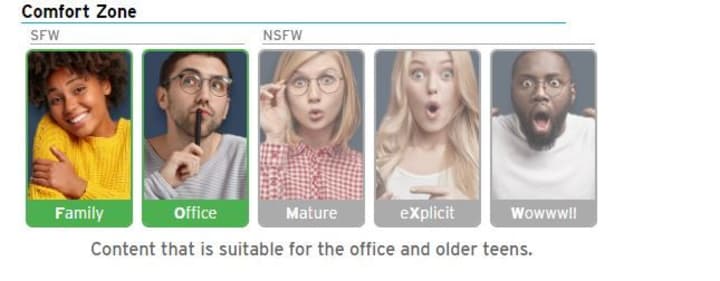
Over time, workplaces have come to grips with the addiction to the internet that we see today. It has affected all age groups to a point and with varying degrees. I remember on a slow night I sat and looked at tactical gear for two hours of my day, simply because everything else was done. There was nothing left for me to accomplish until the end of the day. I still had to be there and it was the graveyard shift. Knowing what they could do to watch our use was a gift that I cherished. However, some people still continued to abuse the internet. So, when your thinking about your internet use at work, think about the ratings and comfort zone compared to where it is you're at.
TWITTER-IS IT ANY SAFER?
While Twitter may seem safer and less invasive because of its short format messages and slightly less interaction than Facebook, we've seen a great deal about Twitter this past couple of years. Twitter showed us the insides of a presidency we dare not speak of. It's become every bit as notorious as Facebook because of President Donald Trumps' use of the platform to spread messages to his followers. Much like President Obama, President Trump utilized social media to engage his followers in his vision.
At work, on a work computer, the network administrators can access your Twitter once you've left and see who your followers are, or worse, who you follow. As companies become more embroiled in social issues and politics, do you follow the right people? Are your opinions ones that line up with the company or employers' beliefs? Social media shows who in the public eye you align with, what political parties you're paying attention to, and what message boards, blogs, or pages that you read. Thus, your employer knows if you're been visiting the sites expounding on the theories of stolen elections, a coming race war, Trump's comings, and goings, as well as many other issues that are deemed conspiratorial.
The rating system that we use should be obvious but they're generally not. We've grown up in a world where the first amendment, freedom of speech, like all our other freedoms, have been ingrained into us. We actually believe that the freedom of expression, of speech, is absolute. What we've learned, if nothing else, is that speech can incite. It can be a call to arms in an ever-growing world of activists and anarchists. For some time people have been answering the call, running the streets in front of our news cameras, and creating chaos. Had President Trump chose his words more carefully, maybe the Capital Building wouldn't look like it does.
Conclusion
Before posting to the internet, in any fashion, we need to be cognizant of the fact that this is no longer the same America that we lived in 20, 30, even 40 years ago. Times have changed and with the times, not all of the practices. We now have this vast communication ability where anyone can share their thoughts, opinions, triumphs, hardships, and personal stories online. Many of us at some point will work for an employer that will have very specific rules about how we are perceived by the public. Those policies will stretch to the use of the internet and what we can and can't do as an employee of that employer.
About the Creator
Jason Ray Morton
Writing has become more important as I live with cancer. It's a therapy, it's an escape, and it's a way to do something lasting that hopefully leaves an impression.
Keep reading
More stories from Jason Ray Morton and writers in Journal and other communities.
It's Another Monday
Mondays-We All Hate Them Like Garfield, we all hate Mondays. It's the official end of that glorious two days of freedom and our escape from the grind of the world. The morning commute, waking up two hours earlier than the last two days, the inevitable rush of work, and meetings. God, the meetings. They start before we've had a chance to really get our brains going. They drag on at times, sometimes until lunch. Then bosses wonder why we didn't get anything else done on Monday.
By Jason Ray Morton 5 years ago in Journal
The Rise of Electric Aircraft in Business Aviation: A Sustainable Future
The aviation industry has long been known for its significant environmental impact, with business aviation contributing to a large share of emissions from private aircraft. However, as sustainability becomes a more pressing issue, the business aviation sector is looking to electric aircraft as a potential solution. With advancements in electric propulsion systems, blockchain and battery technology, electric aircraft are poised to revolutionize business aviation, offering a cleaner, more efficient alternative to traditional jet fuel-powered aircraft. In this blog, we will explore the rise of electric aircraft in business aviation and how they promise to shape a more sustainable future.
By Beckett Dowhan5 days ago in Journal


Comments
There are no comments for this story
Be the first to respond and start the conversation.