
Did Trump Urge Zelenskyy to Drop Crimea and NATO Ambitions Ahead of Washington Summit with European Leaders?
Trump Urges Zelenskyy to Drop Crimea and NATO Ambitions Ahead of Washington Summit with European Leaders

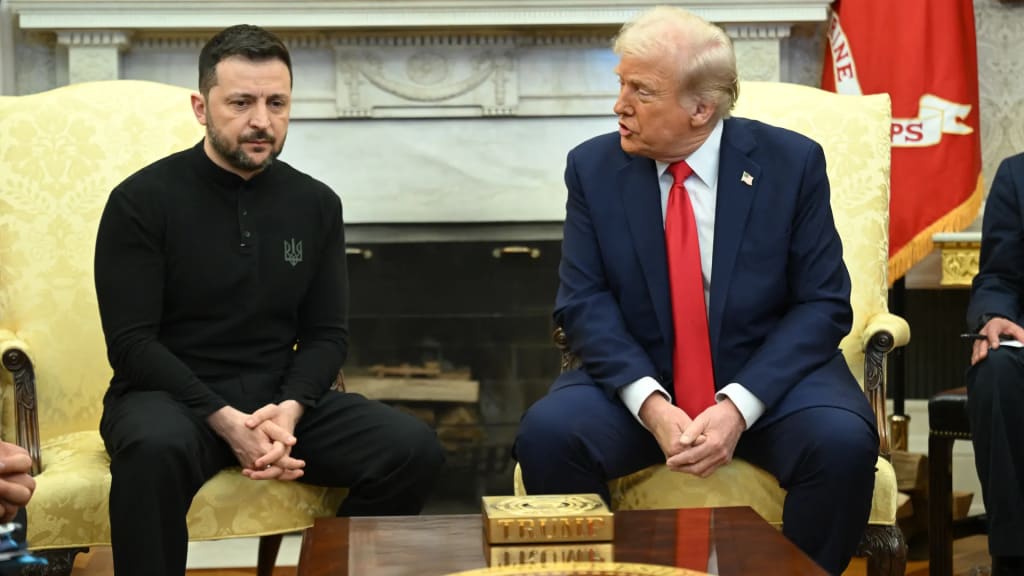
In a dramatic escalation of rhetoric ahead of critical Washington talks with European leaders, former U.S. President Donald Trump has called on Ukrainian President Volodymyr Zelenskyy to drop his nation’s ambitions of joining NATO and to give up its claim to Crimea. Trump argued that doing so could “end the war almost immediately,” a statement that has sparked international debate and alarm across Western capitals.
The comments, posted on Trump’s Truth Social platform, come just hours before a high-stakes White House meeting between Trump and Zelenskyy, followed by a broader summit involving leaders from Britain, France, Germany, Italy, Finland, the European Union, and NATO.
Trump’s Statement: “End the War Almost Immediately”
Trump’s direct appeal was framed as a solution to the ongoing Russia–Ukraine war, now in its third year. Writing online, he declared:
“President Zelenskyy of Ukraine can end the war with Russia almost immediately, if he wants to, or he can continue to fight. No getting back Obama-given Crimea (12 years ago, without a shot being fired!), and no going into NATO by Ukraine. Some things never change!!!”
This statement is loaded with political and historical weight:
Trump refers to Crimea as “Obama-given Crimea,” referencing the 2014 annexation by Russia, which occurred under former U.S. President Barack Obama’s administration.
He asserts that NATO membership for Ukraine is a “non-starter,” echoing a longstanding Kremlin demand.
The claim that Ukraine could “end the war almost immediately” by abandoning NATO and Crimea implies concessions heavily favorable to Moscow.
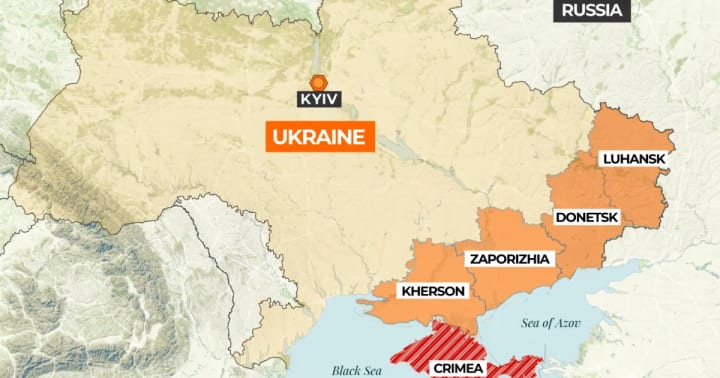
Background: Crimea, NATO, and Ukraine’s War with Russia
To understand the implications of Trump’s statement, it’s crucial to revisit two of the war’s most contentious issues: Crimea and NATO expansion.
The Annexation of Crimea (2014)
In February 2014, following Ukraine’s Euromaidan revolution, Russian forces annexed Crimea in a move widely condemned as illegal under international law. While Moscow claimed Crimea voted in a referendum to join Russia, Western governments considered the vote a sham conducted under military occupation.
Since then, Ukraine has pledged to reclaim Crimea, insisting it is sovereign Ukrainian territory. The peninsula remains at the heart of Kyiv’s national identity and Moscow’s strategic ambitions, housing the Black Sea Fleet and serving as a crucial military hub.
NATO Membership: Ukraine’s Long-Term Goal
Ukraine’s desire to join NATO has been a flashpoint for years. While NATO has expressed support for Ukraine’s sovereignty, actual membership has been postponed repeatedly due to:
Fears of escalation with Russia
Concerns about Ukraine’s governance and corruption
The principle that NATO does not admit countries with ongoing territorial disputes
For Russia, Ukraine in NATO is an existential red line. Putin has framed it as a direct security threat, using it as partial justification for the 2022 full-scale invasion.
Zelenskyy’s Response: Unity and Resilience
Arriving in Washington, Zelenskyy struck a defiant yet diplomatic tone. Writing on Telegram and X (formerly Twitter), he said:
“I am grateful to the president of the United States for the invitation. We all equally want to end this war swiftly and reliably. I hope that our shared strength with America and with our European friends will compel Russia to real peace.”
This statement highlights two key themes of Zelenskyy’s diplomacy:
Unity with Western allies against Russian aggression
Commitment to a “real peace” — one that does not include surrendering Ukraine’s sovereignty or territory
European Leaders’ Concerns
Diplomats from Britain, France, Germany, Italy, Finland, and the EU are attending the Washington summit with the clear intent to reaffirm support for Ukraine’s sovereignty.
Their position is largely unified:
No recognition of Crimea as Russian territory
Opposition to forced territorial concessions
Continued support for Ukraine through financial aid, weapons, and sanctions against Russia
UK Prime Minister Keir Starmer praised Trump’s stated efforts to pursue peace but stressed:
“No settlement could be reached without Ukraine’s full involvement. Any peace deal must not undermine international law or Ukraine’s right to self-defense.”
Starmer also urged tougher sanctions on Russia, signaling Europe’s commitment to pressure Moscow economically while backing Kyiv militarily.
Trump’s Alaska Summit with Putin
These Washington talks follow Trump’s controversial summit with Vladimir Putin in Alaska last week. While critics labeled the meeting a win for Moscow, Trump insisted it had made “big progress” on Russia relations.
Trump’s special envoy, Steve Witkoff, revealed one of the more surprising outcomes:
Putin had agreed, for the first time, to consider U.S. and European protection for Ukraine under a system modeled on NATO’s Article 5 collective defense principle.
This would effectively create a security guarantee outside of NATO, a potential compromise between Russia’s opposition to Ukrainian NATO membership and Ukraine’s demand for security assurances.
Russia’s Position: Security Guarantees for Moscow
Russia’s envoy to international organizations in Vienna, Mikhail Ulyanov, reiterated Moscow’s long-held view:
“Any future peace deal must include security guarantees not only for Kyiv but also for Moscow.”
This reflects Russia’s insistence that NATO expansion eastward must halt and that Moscow’s security concerns be formally recognized in any future settlement.
The Stakes of the Washington Summit
The Washington summit could become a defining moment for the trajectory of the war. Several possible outcomes are being discussed:
Trump Pressures Ukraine to Concede Crimea and NATO
This would be a major victory for Russia but would risk fracturing the U.S.–European alliance.
European Leaders Hold Firm
They could block any proposal involving territorial concessions, keeping pressure on Trump to align with NATO’s traditional stance.
A New Security Framework Outside NATO
A compromise deal offering Ukraine protection without formal NATO membership could emerge.
Stalemate and Continued War
If no agreement is reached, Ukraine will continue receiving Western military support, prolonging the conflict.
International Reactions and Implications
Ukraine’s Perspective
Surrendering Crimea or abandoning NATO ambitions would be seen as a betrayal of national sovereignty.
Such concessions could damage Zelenskyy’s domestic support and embolden Russia.
Europe’s Perspective
Territorial concessions could set a dangerous precedent, signaling to authoritarian regimes that aggression pays off.
Maintaining transatlantic unity is vital to Europe’s security architecture.
U.S. Perspective
Trump’s stance reflects a more transactional approach to foreign policy, focused on ending wars quickly rather than sustaining long-term commitments.
His critics argue it could undermine U.S. credibility and embolden adversaries.
Historical Parallels: Peace Through Concession vs. Resistance
Throughout history, great powers have faced the dilemma of whether to appease aggressors or stand firm.
Munich Agreement (1938): Britain and France conceded Czechoslovak territory to Hitler in hopes of “peace for our time.” It failed, leading to World War II.
Korean Armistice (1953): The U.S. accepted a divided Korea, creating a fragile peace that holds to this day.
Cold War NATO Expansion: Standing firm against Soviet pressure helped preserve European security for decades.
The Ukraine war may now stand at a similar historical crossroad.
Conclusion: A Critical Test for Ukraine, Europe, and U.S. Leadership
Trump’s demand that Ukraine abandon Crimea and NATO ambitions places Zelenskyy in an impossible position: choose between sovereignty and peace. European leaders are expected to push back, reaffirming that any settlement must respect international law and Ukraine’s territorial integrity.
The Washington summit will test not only the future of Ukraine’s war with Russia, but also the strength of the transatlantic alliance and the credibility of Western commitments.
As the world watches, the question remains: will peace be pursued at the cost of Ukraine’s sovereignty, or will the U.S. and Europe hold firm against Russian aggression?
About the Creator
Omasanjuwa Ogharandukun
I'm a passionate writer & blogger crafting inspiring stories from everyday life. Through vivid words and thoughtful insights, I spark conversations and ignite change—one post at a time.
Keep reading
More stories from Omasanjuwa Ogharandukun and writers in Journal and other communities.
‘100 Foot’ Waves Reportedly Heading for the U.S. as Hurricane Erin Approaches
The Atlantic hurricane season has once again reminded us of its raw, untamed power. As Hurricane Erin barrels toward the United States, meteorologists warn that giant waves—some reaching up to 100 feet—could impact parts of the East Coast. While the storm itself has weakened from Category 5 to Category 3, experts caution that its oceanic force remains capable of creating hazardous surf, rip currents, and storm surge conditions long before landfall.
By Omasanjuwa Ogharandukun5 months ago in Journal
No Power or Water and -19°C: Kyiv Seeks Relief from Russian Strikes and Cold
Kyiv is facing a winter of unprecedented hardship, as Russian missile strikes continue to ravage the city’s infrastructure while plummeting temperatures push residents to the brink. With temperatures dropping as low as -19°C, the capital of Ukraine is struggling to provide basic necessities like heat, electricity, and water to millions of its citizens, highlighting both the human cost of war and the resilience of a population under siege. The ongoing Russian attacks have targeted critical infrastructure, leaving swathes of Kyiv without electricity and water for days at a time. Energy facilities, power grids, and water treatment plants have been repeatedly hit, exacerbating the already severe winter conditions. For residents, the combination of cold weather and a lack of utilities has created a life-threatening situation. Families are relying on makeshift heating methods, from wood stoves to improvised electric heaters, while authorities scramble to provide temporary shelters and emergency relief. Local authorities in Kyiv are under immense pressure to respond. City officials have activated emergency protocols, opening warming centers and providing water trucks for areas cut off from the municipal supply. Volunteers are delivering fuel and blankets, while international organizations have pledged aid, though logistics remain challenging in a city facing ongoing military threats. The Ukrainian government has emphasized the need for international support, calling on allies to provide both humanitarian assistance and diplomatic pressure to prevent further attacks on civilian infrastructure. The humanitarian impact of this crisis is profound. Hospitals are operating under strained conditions, with some forced to rely on generators to maintain critical care, including for patients undergoing dialysis, neonatal care, or surgery. Schools have had to adjust schedules or temporarily close, further disrupting the lives of children. Residents report that basic tasks, such as fetching water, preparing meals, or keeping children warm, have become daily struggles. The psychological toll is also evident, as families cope with fear, uncertainty, and the constant threat of further attacks. The cold itself is a formidable adversary. Temperatures of -19°C are well below freezing, putting vulnerable populations—particularly the elderly, children, and those with preexisting health conditions—at significant risk. Frostbite, hypothermia, and respiratory illnesses are rising concerns. Medical experts warn that the combination of physical hardship, stress, and lack of access to health services could have long-term health consequences for the population if the crisis persists. Despite the dire situation, the spirit of Kyiv’s residents has shown remarkable resilience. Community initiatives have sprung up, with neighbors helping each other stay warm, share supplies, and look after those most vulnerable. Local businesses and NGOs have coordinated relief efforts, setting up temporary shelters and food distribution points. International media have highlighted these stories of solidarity, illustrating how ordinary citizens continue to support one another even amid the dual threats of war and winter. The broader geopolitical context cannot be ignored. Analysts note that targeting civilian infrastructure in winter is a calculated strategy, designed to demoralize populations and strain government resources. Kyiv’s ability to maintain essential services, mobilize emergency response, and keep residents alive under these conditions has become a critical factor in the ongoing conflict. Meanwhile, global attention to the humanitarian crisis has pressured both governments and organizations to respond more effectively, emphasizing the intersection of warfare, human rights, and climate challenges. The situation in Kyiv also underscores the importance of energy security and infrastructure resilience. Experts argue that rebuilding efforts in Ukraine will need to focus not just on restoring utilities, but on creating systems that can withstand both military and environmental threats. Investments in decentralized energy, emergency water supply systems, and community preparedness could mitigate the impact of future crises. As Kyiv faces this harsh winter, the city’s residents and leaders are navigating a precarious balance between survival and resistance. Relief efforts continue, but the combination of freezing temperatures and ongoing attacks means that every day presents a new challenge. The story of Kyiv is one of both vulnerability and courage, reflecting the human cost of conflict and the extraordinary lengths communities go to preserve life and dignity in the face of adversity. For the world watching, Kyiv’s crisis is a stark reminder that war does not pause for winter. It also underscores the urgent need for global solidarity, humanitarian aid, and robust infrastructure planning, to ensure that populations under siege are not left to endure freezing nights in darkness and silence.
By Fiaz Ahmed Brohi6 days ago in Journal
Miss Persephone's Manual to a Seemingly Ordinary Life
Miss Persephone was found at the dining table, her blue eyes swollen, her tears arriving and retreating like the tides of the ocean. Earlier that day, her family had visited her in the retirement home where she had lived for eight years. It was her eightieth birthday.
By Imola Tóth5 days ago in Fiction


Comments
There are no comments for this story
Be the first to respond and start the conversation.