
Designing the Invisible Layer That Decides Everything: The Hidden Workings of Governance, Incentives, and Control
How Hidden Mechanics Shape Governance, Incentives, and Institutional Power

Most people believe institutions run on what’s written about them: the documents, the rules, the ownership charts, the crisp lines and signatures that make everything look official.
But institutions don’t behave the way they look on paper.
They behave the way people do: through incentives, timing, relationships, pressure, silence, and opportunity.
There is the structure you can see — and then there is the structure that actually decides.
Every institution begins as an idea. Then it becomes a document. And eventually, it becomes a behaviour.
And that behaviour is almost never determined by the document itself.
The Life a Structure Has After It’s Built
Once a company or foundation or partnership begins to interact with the world — with its people, with its money, with its risks — something interesting happens. It develops a second life. A quiet one. One that isn’t written anywhere, yet influences everything.
This second life is what separates organisations that merely exist from organisations that actually shape their surroundings.
And to understand that second life — what I call the shadow layer — I want to start in an unexpected place:
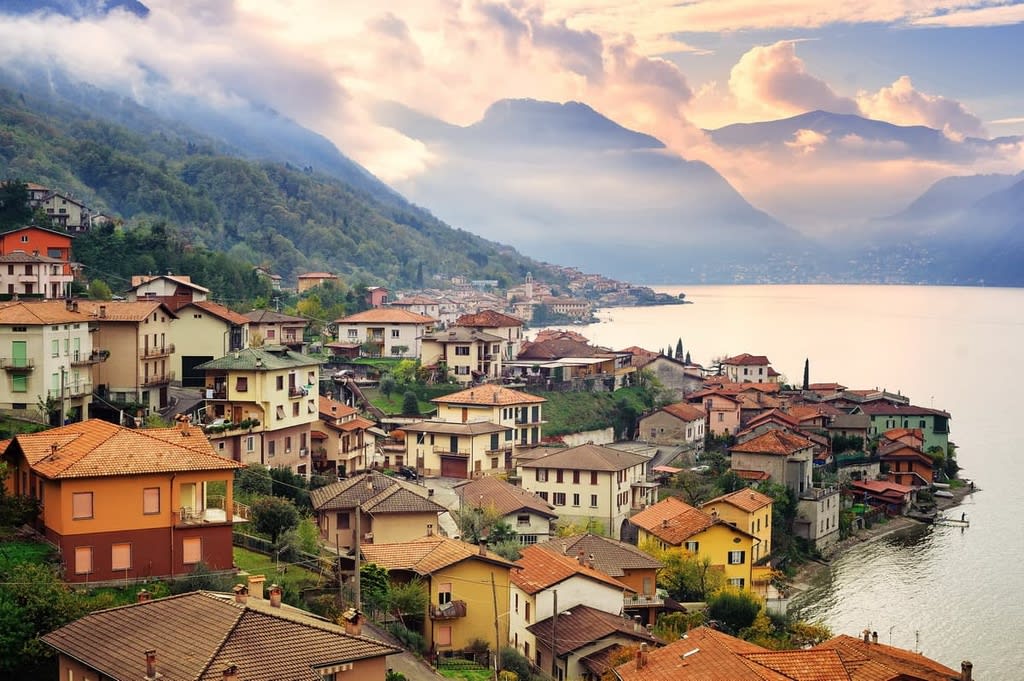
A tiny village in northern Italy.
Lanzo d’Intelvi.
A quiet community between Milan and Lugano, with homes priced around €2,000 per square meter. It looks small, peaceful, uneventful. Yet it is perfectly positioned to anchor structures — legal, financial, and strategic — that reach far beyond its borders.
Lanzo is a reminder that influence is not about size.
It’s about structure.
And structure always casts a shadow.
The Part You Can’t See Is the Part That Decides
Every institution lives in two worlds:
1. The world on paper.
The formal life: the documents, the filings, the official roles.
2. The world in motion.
The real life: who has information first, who can say “not yet,” who holds the purse strings, who decides the timing.
The world on paper tells you what the institution claims to be.
The world in motion tells you what the institution really is.
Most founders, investors, and even many lawyers focus on the visible world — ownership percentages, voting rights, organisational charts.
But these things merely record power.
They rarely create it.
Power is created in the shadow layer:
• in the rights that stop something from happening,
• in the agreements that control where money flows,
• in the information someone receives before everyone else,
• in the sequence of decisions that quietly determine the outcome.
It is subtle, quiet, sometimes invisible — but always decisive.
This is the layer where institutions truly come alive.
So What Lives in the Shadow Layer?
The shadow layer is not one document or one clause. It’s the interaction of many mechanisms:
1. Shareholders’ Agreements
These are not technical documents. They are the real constitution of a company. They decide who actually has leverage, who can exit, and who can’t be ignored.
2. Veto Power
People think power means “I can do something.”
Real power is often “I can stop you from doing it.”
3. Cash Flow Corridors
Money flows determine behaviour more reliably than votes. Whoever controls those flows controls the incentives that shape every decision.
4. Information Asymmetry
The person who sees the numbers first almost always sets the narrative.
5. Governance Choreography
Power is not in the vote — but in the preparation for the vote: who drafts first, who reviews first, who sets the agenda, who controls timing.
Together, these elements form the invisible architecture behind every decision an institution makes.
Why Italy — And Why Lanzo — Matter So Much
Italy is often described as slow, formal, overly rigid.
But in strategy, rigidity is a gift.
Rigid systems are predictable.
And predictable systems let you build structures that behave exactly as you designed them.
Italian law rewards precision: clear agreements, defined roles, stable rules.
And because everything is deeply formalised, what you write is what gets enforced.
This makes small footholds — like an apartment in Lanzo d’Intelvi — disproportionately powerful.
A €90,000 apartment becomes:
• a legal presence in a stable EU jurisdiction
• a bridge between Italy and Switzerland
• a foundation for holding companies, IP vehicles, or family structures
• a place where agreements are respected and intentions matter
Lanzo turns small assets into big leverage.
It transforms architectural design into institutional behaviour.
Influence Is One Thing. Longevity Is Another.
Everything in the shadow layer explains how structures influence their environment.
But influence is only one dimension of good architecture.
The next question is deeper:
How does a structure protect itself when the environment changes?
When politics shift.
When markets move.
When laws tighten.
When people inside the institution evolve.
Influence determines what your structure can do.
Resilience determines whether it survives.
Behind every shadow layer lies a deeper layer still — the layer built for continuity.
And that is where the next edition begins.
Originally published on my LinkedIn newsletter, The Quiet Advantage.
About the Creator
Maroun Abou Harb
As a Corporate & Commercial Counsel, I design legal and corporate structures that allow founders, investors, and family offices to protect, scale, and control their assets across borders.
Keep reading
More stories from Maroun Abou Harb and writers in Journal and other communities.
How to visit sacred sites in Bangkok
When you think of Bangkok, what comes to mind is a vibrant destination with plenty of modern experiences. The top things to do there include shopping and dining experiences. However, the City of Angels has more in store for its visitors. Picture towering buildings adorning ancient designs enveloped in a natural setting within an urban environment. This is how you would witness the impressive temples in Bangkok. Here is a guide to explore them.
By Jeewanthi Armstrong7 days ago in Journal




Comments
There are no comments for this story
Be the first to respond and start the conversation.