
Designing Container Gantry Cranes with Anti-Tipping Measures
Safe and stable container handling solutions
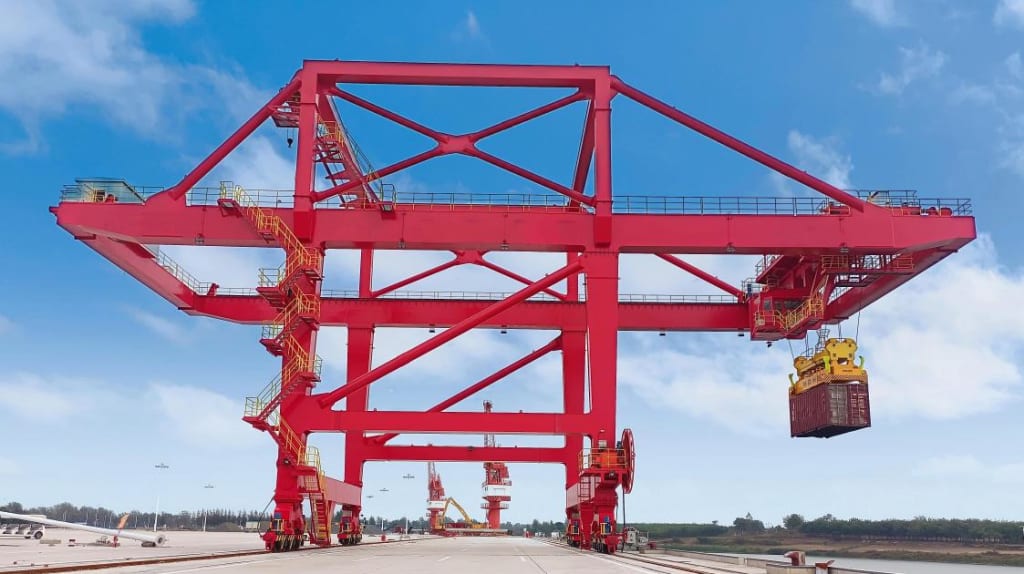
Container gantry cranes are the backbone of intermodal logistics, providing the muscle needed to load and unload shipping containers efficiently. These massive machines operate under extreme dynamic conditions, including heavy lifting, high winds, fast movements, and sudden starts or stops. With their significant height, weight, and moving loads, container gantry cranes - especially rubber tyred gantry (RTG) cranes and rail-mounted gantry (RMG) cranes - must be designed with robust anti-tipping measures to ensure safe and stable operations. This article explores the structural, mechanical, and control system design strategies involved in preventing tipping incidents in container gantry cranes.
Why Anti-Tipping Measures Are Crucial
Tipping is one of the most catastrophic events that can occur during crane operation. It can damage equipment, disrupt port operations, and, most importantly, lead to serious injury or loss of life. Container gantry cranes, due to their high center of gravity and long spans, are particularly vulnerable to tipping under certain conditions, such as:
- Uneven load distribution
- High wind forces
- Sudden braking or acceleration
- Poor ground or track conditions
- Operator error during sharp turning (for RTGs)
Implementing anti-tipping measures is not just a safety requirement - it's a fundamental aspect of structural integrity and operational reliability in modern crane design.
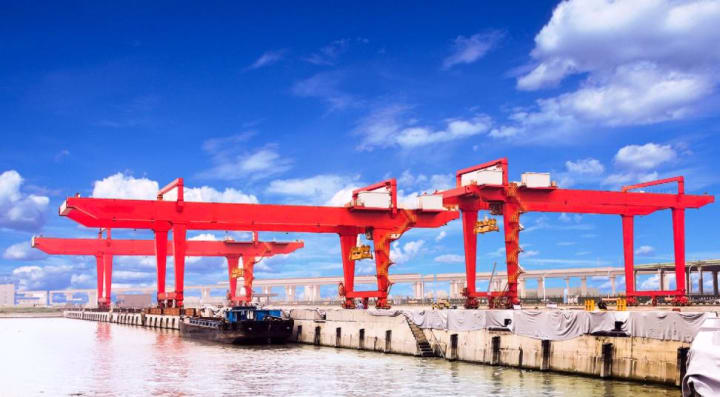
Key Design Factors Influencing Crane Stability
1. Low Center of Gravity
A low center of gravity reduces the crane’s tendency to overturn when subjected to lateral forces. During the design process, engineers:
Strategically place heavy components (e.g., motors, transformers) lower in the structure
Use ballast or counterweights in the lower frame sections
Design the crane with a wide base to maximize stability
For rail mounted gantry cranes, the fixed rail layout allows for a wider, more stable support frame. For mobile RTG cranes, engineers must balance stability with maneuverability, making the design more challenging.
2. Wider Wheelbase and Tread Width
One of the simplest yet most effective anti-tipping measures is to increase the crane’s footprint:
Wheelbase (longitudinal): Extending the distance between the front and rear wheels helps distribute loads more evenly and enhances tipping resistance along the direction of travel.
Tread width (lateral): A wider wheel span provides greater resistance to tipping during sharp turns or in windy conditions.
Care must be taken not to exceed allowable dimensions for port operations, but within those limits, maximizing the base width significantly enhances tipping resistance.
3. Wind Load Resistance Design
Wind is a major external force acting on tall, slender structures like gantry cranes. For container handling, crane designers must:
Analyze maximum expected wind speeds (both operational and parked)
Use aerodynamic profiling to minimize wind drag
Incorporate storm locking devices to anchor cranes during high winds
Specify automatic anemometers and wind alarms that halt crane operations above safe thresholds
Design the crane's steel structure to resist overturning moments generated by lateral wind loads
For example, during typhoon conditions in coastal terminals, cranes are locked in a parked position with storm pins to prevent tipping.
Mechanical & Control System Measures
Anti-Twist and Anti-Sway Systems
Container cranes often handle swinging and twisting loads. If the container or trolley sways too far in one direction, it can create unbalanced dynamic forces:
Anti-sway systems use sensors and control algorithms to stabilize load movement using active or passive damping.
Anti-twist systems prevent containers from rotating unpredictably, ensuring load alignment and preventing lateral force build-up.
These systems help maintain the load’s position within safe boundaries, reducing the chance of uneven tipping forces.
Smart Braking and Acceleration Control
Rapid starts and stops can generate strong inertia forces that shift the crane’s load distribution abruptly, potentially tipping the crane:
Variable Frequency Drives (VFDs) enable smooth acceleration and deceleration of the trolley and crane movement
Programmable Logic Controllers (PLCs) manage coordinated motions and limit jerks
Load sensors monitor real-time force distribution to alert the system of any imbalance
These control technologies prevent sudden shifts in the center of mass, keeping the crane in a balanced state.
Automatic Steering Correction for RTG Cranes
Rubber tyred gantry cranes, being mobile, face unique challenges when making turns:
Differential steering systems manage wheel speeds to ensure smooth cornering
Automatic alignment systems help maintain straight travel paths along container rows
Tipping prevention algorithms adjust speed or steering angle when dangerous tipping thresholds are approached
Advanced steering logic with real-time feedback is essential in reducing tipping risk during directional changes.
Operational and Installation Considerations
Ground and Rail Condition Monitoring
Uneven ground or poorly maintained rail tracks can destabilize a crane:
RTG cranes require stable and leveled operational surfaces to prevent tilting during movement.
RMG cranes must operate on precisely aligned and level tracks with secure anchoring points.
Design provisions should include load distribution plates, real-time leveling sensors, and warning systems for irregularities.
Overload Protection Systems
If a crane is subjected to a load beyond its rated capacity, the risk of tipping increases dramatically. To mitigate this:
Overload protection systems prevent hoisting if the load exceeds safe limits
Load cells and strain gauges monitor lifting force in real time
Interlocks are used to restrict crane functions if unsafe conditions are detected
These measures protect both the crane’s structure and its stability.
Case Study Example: Anti-Tipping RTG in Windy Terminal
In one container terminal located along a typhoon-prone coastline, Aicrane supplied an RTG crane designed with several anti-tipping features:
Wind locks and storm brakes with redundancy
Low-profile structural design to minimize wind drag
Wider wheel tread and low-placed counterweights
Load sway control integrated with GPS-based travel alignment
The crane maintained stable operations even during wind gusts of 60+ km/h and has had zero tipping incidents since commissioning.
Conclusion
Tipping is a serious risk for container gantry cranes, particularly due to their tall structure, heavy dynamic loads, and outdoor working conditions. Designing with anti-tipping measures is not optional—it is fundamental to operational safety, asset protection, and regulatory compliance.
Through a combination of smart structural geometry, advanced control systems, and predictive safety features, modern gantry cranes can operate efficiently and safely in even the most challenging environments. Whether for mobile RTG cranes or fixed RMG systems, the principles of anti-tipping design should be integrated from the earliest design stages to ensure long-term success.
About the Creator
Aicrane01
Welcome to the Aicrane Blog, your practical guide to lifting solutions. Discover articles covering overhead cranes, gantry cranes, winches, steel structures, boat lifts, and more.
Website: https://steelmillcranes.com/
I Stopped Chasing Motivation and Focused on Systems.
Motivation feels good. It also fades fast. You wake up inspired one day and stuck the next. I learned this the hard way. I waited for the right mood before I worked. Progress stayed slow. Results stayed random. Everything changed when I stopped chasing motivation and built systems instead.
By Wilson Igbasia day ago in Journal


Comments
There are no comments for this story
Be the first to respond and start the conversation.