
Designing an E-commerce Website: Tips and Best Practices for Boosting Conversions
Maximize your sales and customer satisfaction through effective e-commerce design.


Nexcess, a web hosting company, recently published a piece that imagines the e-commerce stores that historical figures might have in 2023 if they were still with us. For example, Biggie Smalls would own a jelly brand called “Spread Love” with iconic flavor names - Everyday Struggleberry and All The Marma-ladies.
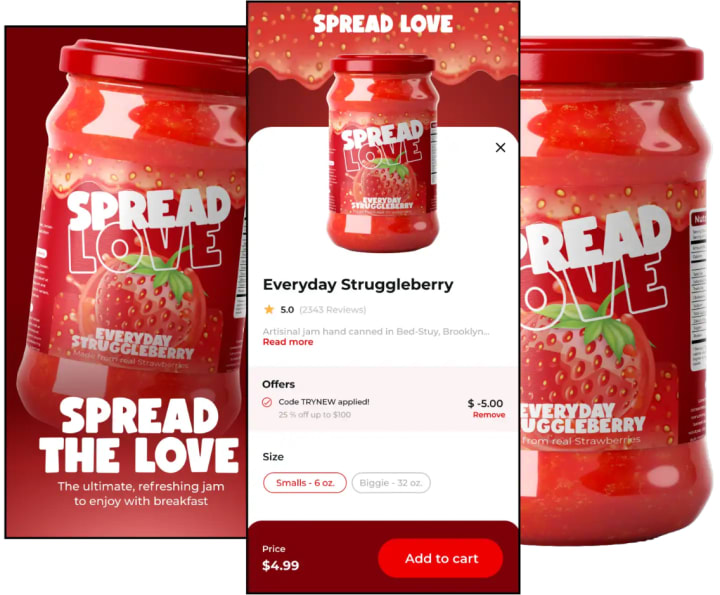
I loved exploring the different images and descriptions, and it got me thinking about the most important factors when designing an e-commerce website. In today's digital age, having a strong online presence is crucial for any business, especially those in the e-commerce industry.
Your website is often the first point of contact between you and your potential customers, so it's essential to make a great first impression. Designing an e-commerce website that's both visually appealing and user-friendly can significantly impact your conversion rates and ultimately lead to more sales. There are several things to keep in mind during the design process:
Keep it Simple
When it comes to designing an e-commerce website, less is often more. While it's tempting to include lots of flashy graphics and animations, a cluttered website can overwhelm users and cause them to abandon their shopping carts. Instead, focus on creating a clean and simple design that allows your products to shine.
Use plenty of white space to break up your content and make it easier to read. Choose a clean and easy-to-read font for your headlines and body text, and limit your color palette to just a few complementary colors. By keeping your design simple, you'll make it easier for users to navigate your site and find what they're looking for.
Make Navigation Intuitive
One of the most critical aspects of e-commerce website design is making navigation intuitive. Users should be able to find what they're looking for quickly and easily, without having to click through multiple pages or menus.
To achieve this, organize your products into categories and subcategories, and include a search bar that allows users to search for products by name, category, or other relevant criteria. Use breadcrumb navigation to help users keep track of where they are on your site and make it easy to go back to previous pages.
Make sure your menu is easy to access and visible on every page of your site. Use clear and descriptive labels for your menu items, and consider adding dropdown menus to help users find what they're looking for more quickly.
Optimize for Mobile Devices
With more and more users browsing the web on their smartphones and tablets, it's essential to design your e-commerce website with mobile users in mind. Your site should be fully responsive, meaning it should automatically adjust to fit the screen size of the device it's being viewed on.
To optimize your site for mobile devices, use large, easy-to-click buttons and links, and make sure your text is large enough to read on smaller screens. Use images and videos sparingly, as they can slow down your site's load time on mobile devices.
Consider implementing a mobile-specific menu that makes it easy for users to navigate your site on smaller screens. Use a mobile-first approach to design, meaning you start by designing for the smallest screen size and work your way up.
Use High-Quality Images
When it comes to e-commerce, images are everything. High-quality product images can help users make purchasing decisions and can even increase the perceived value of your products.
Use high-quality images that showcase your products from multiple angles and in different contexts. Consider including product videos that show your products in action or highlight their unique features.
Make sure your images are optimized for the web, meaning they're compressed to reduce their file size without sacrificing quality. This will help your site load faster, which can improve your conversion rates.
Use Calls-to-Action
Calls-to-action (CTAs) are an essential part of e-commerce website design. CTAs are buttons or links that encourage users to take a specific action, such as "Add to Cart" or "Buy Now."
To make your CTAs effective, use action-oriented language that tells users exactly what will happen when they click the button. For example, "Add to Cart" is more effective than "Learn More" because it clearly communicates that the user will be adding an item to their shopping cart.
Make your CTAs stand out by using a contrasting color or bold text. Place your CTAs in prominent locations on your site, such as next to product images or at the bottom of product descriptions.
Build Trust
Trust is a crucial factor in e-commerce, and building trust with your potential customers can significantly impact your conversion rates. There are several ways to build trust on your e-commerce website, including:
- Including customer reviews and ratings for your products.
- Displaying trust badges, such as SSL certificates or payment logos.
- Offering a secure checkout process and displaying security seals.
- Providing clear and detailed product descriptions and shipping information.
- Offering a clear return policy.
By building trust with your potential customers, you can increase the likelihood that they'll make a purchase on your site.
Test and Iterate
Finally, it's essential to test and iterate your e-commerce website to improve your conversion rates continuously. Use A/B testing to test different versions of your site, such as different CTAs or page layouts, and track your conversion rates to see which version performs better.
Pay attention to your analytics to see which pages have high bounce rates or low conversion rates, and make changes accordingly. Continuously improving your site can lead to significant increases in your conversion rates over time.
In conclusion, designing an e-commerce website that's both visually appealing and user-friendly is crucial for boosting conversions and increasing sales. By keeping your design simple, making navigation intuitive, optimizing for mobile devices, using high-quality images, using calls-to-action, building trust, and testing and iterating your site, you can create a site that's optimized for conversion and can help you achieve your e-commerce goals.
About the Creator
Gracie Talarico
I help business leaders navigate digital transformation with insight and expert analysis on digital trends to help modernize their businesses and prepare for the future.
Keep reading
More stories from Gracie Talarico and writers in Journal and other communities.
The Role of Technology in Streamlining AML-KYC Compliance
In recent years, Anti-Money Laundering (AML) and Know Your Customer (KYC) compliance have become increasingly important for businesses, especially businesses. AML-KYC compliance regulations aim to prevent financial crimes such as money laundering, terrorist financing, and fraud. Failure to comply with these regulations can lead to severe consequences, including legal and reputational damage, monetary fines, and loss of business.
By Gracie Talarico3 years ago in Journal
~ Fired ~
— Ai Intrusion ~ Are you Next ~ Is Ai Evolution after your job? — Few workplaces haven't been affected. Ai is in supermarkets, at doctors' offices, and even monitoring farms. I just can't think of anything this machine is not getting into, can you? For instance: Education ~ Law and Tech jobs will one day have a major influence or be taken over by these inanimate machines, with accuracy and vigor. From mechanics' diagnoses to a wide variety of everyday jobs, including fast food workers, with this input having the ability to cut their unnecessary work hours. I'm certain all of us have been touched by this with our short stories and colorful headings, have you? Even comments are very questionable 'Non-Robot' insertions.
By Jay Kantora day ago in Journal


Comments
There are no comments for this story
Be the first to respond and start the conversation.