
Gold Dives 6% and Silver Crashes 12%, Extending Sell-Off After Historic Plunge
A violent reversal in precious metals shocks global markets and forces investors to rethink traditional safe havens

Introduction
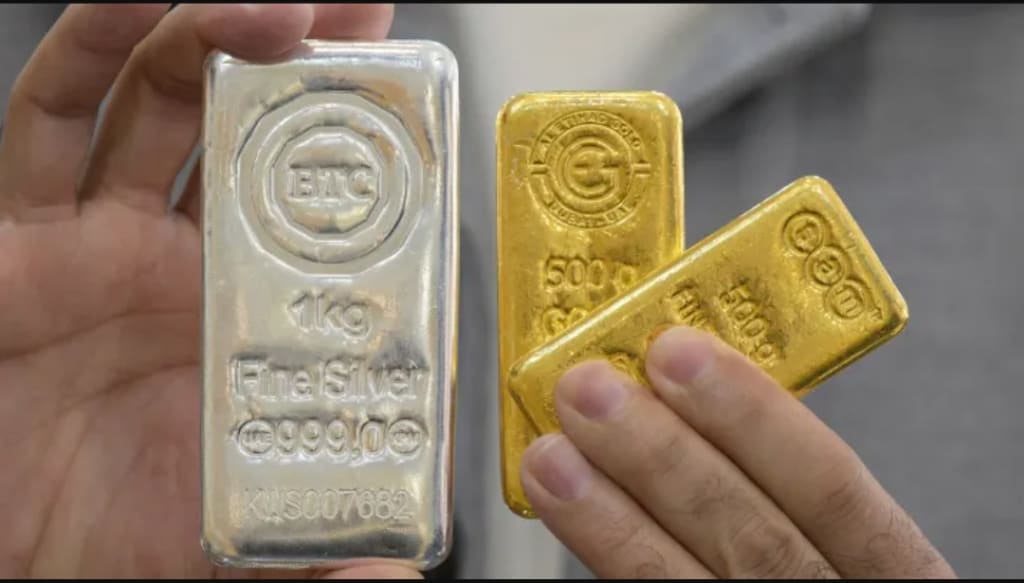
Gold and silver — long considered pillars of financial safety — have suffered one of their most dramatic collapses in modern market history. Gold plunged 6% while silver crashed 12%, extending a brutal sell-off that followed an earlier historic plunge across precious metals markets. The sudden reversal erased months of gains in just days and rattled investors who had relied on these metals as protection against inflation, geopolitical tensions, and currency instability.
What makes this downturn especially alarming is not just its scale, but its speed. Prices fell so rapidly that many traders were caught off guard, triggering forced liquidations and deepening losses. The episode has raised serious questions about volatility, speculation, and whether precious metals still function as reliable safe-haven assets in today’s fast-moving financial environment.
A Historic Collapse in Precious Metals
The sell-off began after gold and silver reached record or near-record highs earlier this year. Strong demand from investors, central banks, and speculative traders had pushed prices sharply higher. However, the rally proved fragile.
During the initial plunge, gold recorded its steepest intraday drop in decades, while silver experienced one of the largest percentage collapses ever seen in a single trading session. The most recent decline — gold down another 6% and silver sliding 12% — confirms that the sell-off is not a one-day event but a broader market reset.
Silver, which tends to be more volatile than gold due to its industrial use, was hit especially hard. Its sharp fall amplified panic across commodity markets and contributed to wider risk-off sentiment globally.
Why Did Gold and Silver Suddenly Crash?
There is no single trigger behind the collapse. Instead, several powerful forces converged at the same time.
1. Shifting Interest Rate Expectations
A major driver was the growing expectation that interest rates in the United States will remain higher for longer. Rising yields strengthen the U.S. dollar and make non-yielding assets like gold and silver less attractive. When investors can earn higher returns from bonds or cash, precious metals often lose appeal.
2. Stronger U.S. Dollar Pressure
The U.S. dollar surged as investors repositioned portfolios. Since gold and silver are priced in dollars, a stronger dollar makes them more expensive for international buyers, reducing demand and pushing prices lower.
3. Margin Requirement Hikes and Forced Selling
Exchanges increased margin requirements for futures trading in precious metals. This forced leveraged traders to either add more capital or liquidate positions. Many chose to sell, accelerating the downward spiral and intensifying losses.
4. Speculative Excess and Technical Breakdown
Before the crash, both metals were heavily overbought. Technical indicators signaled that prices had moved far beyond sustainable levels. Once key support levels broke, automated trading systems and stop-loss orders kicked in, magnifying the decline.
How Big Is the Damage?
The scale of the sell-off is staggering:
Gold is now trading well below its recent peak after losing more than 6% in a single extended move
Silver has shed over 12%, following an even steeper earlier collapse
Billions — possibly trillions — of dollars in market value have been wiped out across bullion, futures, ETFs, and mining stocks
What’s especially notable is that precious metals showed greater volatility than many equity markets, challenging their reputation as stable assets during periods of uncertainty.
Ripple Effects Across Global Markets
The collapse in gold and silver did not occur in isolation. Its impact spread quickly:
Stock markets weakened, particularly in Asia and Europe, as investor confidence declined
Commodity-linked currencies fell alongside metals prices
Mining companies and metals ETFs suffered heavy losses
Other speculative assets also faced selling pressure as investors rushed toward cash
The episode highlighted how deeply interconnected global markets have become — stress in one asset class can rapidly spill into others.
Are Precious Metals Losing Their Safe-Haven Status?
Despite the dramatic fall, not all analysts believe this marks the end of gold and silver as safe havens. Some argue the move represents a technical correction rather than a fundamental collapse. Central banks continue to hold gold as a long-term reserve, and geopolitical risks remain elevated worldwide.
However, silver faces a more uncertain outlook due to its reliance on industrial demand, which can weaken during economic slowdowns.
For many investors, the real lesson is that even traditional hedges are vulnerable to extreme volatility when speculation and leverage dominate market behavior.
What Could Happen Next?
Several scenarios are now in play:
Prices may stabilize once forced selling subsides
Gold could rebound if inflation fears or geopolitical tensions intensify
Further declines are possible if interest rates stay high and the dollar remains strong
Historically, sharp corrections in precious metals have often been followed by recoveries — but timing remains uncertain.
Conclusion
The latest plunge — with gold diving 6% and silver crashing 12% — marks one of the most dramatic chapters in precious metals trading in decades. It underscores how quickly sentiment can change and how vulnerable even “safe” assets can be in modern financial markets.
Whether this sell-off proves to be a temporary correction or the beginning of a longer-term shift, it has already reshaped investor thinking. In an era of rapid monetary changes and global uncertainty, gold and silver are no longer immune to turbulence — and the definition of a safe haven may be evolving before our eyes.
About the Creator
Asad Ali
I'm Asad Ali, a passionate blogger with 3 years of experience creating engaging and informative content across various niches. I specialize in crafting SEO-friendly articles that drive traffic and deliver value to readers.
The 2026 Tech Landscape: Who Are the Real Leaders in Digital Innovation?
The technology sector in 2026 is crowded. For a business owner looking for a digital partner, the noise can be deafening. There are thousands of agencies promising "Digital Transformation," "Custom Software," and "AI Integration." But as any experienced CTO knows, not all agencies are created equal. Hiring a massive corporate firm for a lean startup project is a mistake. Conversely, hiring a cheap boutique agency for enterprise-grade security is a disaster waiting to happen.
By Mahnoor Qureshiabout 10 hours ago in Journal
Off the Book
It ended like every other stupid idea. Badly, and alone. I’m researching digital confession ethics, he said. A tech ethicist. He gestured at floating data I couldn’t see then pulled out a physical notebook. Actual paper, fountain pen. He held it up like he was showing me scripture.
By Nicky Frankly3 days ago in Fiction



Comments
There are no comments for this story
Be the first to respond and start the conversation.