
Demystifying 5 Must Read Non-fiction Books for Your Life and Business in Simple Words: Part-01
These are proven truths and science that will certainly transform your lives and businesses. It is really fun to understand and apply these in practical lives. Let's explore in the simplest and quickest way.

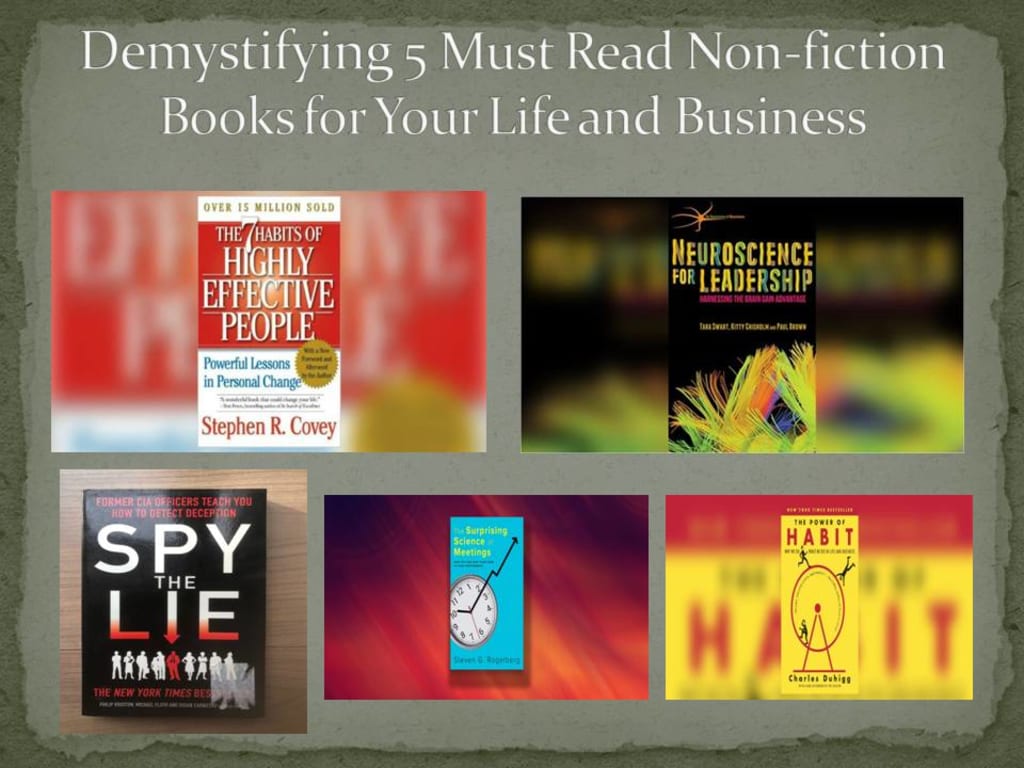
7 Habits of Highly Effective People by Stephen R. Covey
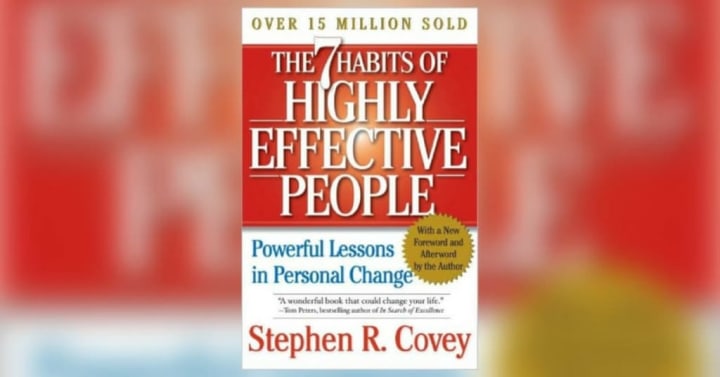
For an effective life, we have to learn and practice the seven habits in every sphere of our lives. We live an effective life when we can achieve more in terms of prosperity, health, happiness and peace in our short lives. Habits are activities that we do repeatedly and these are hundreds in number. But for effective living, there are proven principle-based 7 habits. These are "Be proactive", "Begin with the end in mind", "Put the first thing first", "Think win-win", "First try to understand then to be understood", "Synerzise", "Sharpen the Saw". These are essential habits for right-living. At any point in our life, we can practice these habits and start to live properly except for the only challenge of paradigm-shifting. Paradigm shifting is only possible when can discover our own paradigm, pinpoint the flaws and feel the necessity to change that with all our efforts, energy and willpower.
Click here and read the full article to grasp the main ideas.
The Power of Habits by Charles Duhigg

The whole text is an in-depth scientific study of Habits, the tasks that we do every day. Careful awareness of habits is essential to change the existing ones with more productive ones, resulting in more effectiveness in our personal, business and work lives. The study of habits is complete science discovered in 1991 at MIT through an unanticipated incident of detecting the portion in the brain known as Bassal Ganglia of a patient who came to the hospital for emergency treatment. There are three essential elements that form any habit i.e a cue, routine and reward. A cue turns an activity into a routine work for the craving of the rewards. A cue in an activity is the life-blood of a habit as it creates the primary craving into the brain, which forces a person to repeat the pattern over and over again before it gets fully embedded into our brain. The science behind good or bad habit formation is all the same. In similar ways, craving for an activity starts into a famous scientist's and a drug addict's brain.
Click here and read the full article to grasp the main ideas.
Neuroscience for Leadership: Harnessing the Brain Gain Advantage by T. Swart, Kitty Chisholm, Paul Brown
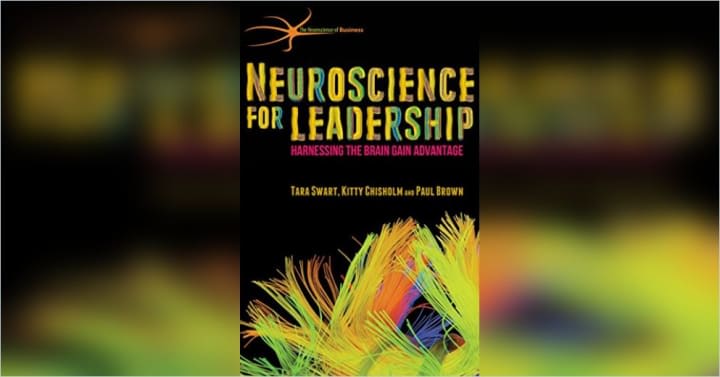
Once Leadership was to get the work done by folks with money. The more one works, the more money one gets. But time has changed. Along with money, now the companies also take care of their health, happiness and peace. This is no doubt a more human approach than the previous one. If we dig down the concept a bit more, nowadays, companies design their work environment in such a way that every single activity evokes positive emotions and feelings among the employees, ensuing their wellbeings. Negative emotions, feelings and actions thereby are set aside so carefully that it guarantees the prosperity of both the employer and its employees. there is no doubt about the untapped potentials of Neuroscience which the companies will certainly discover and implement in their workplaces. To understand neuroscience, we need to deeply understand our emotions, feelings, neurotransmitters, hormones, the effect of these on our thoughts and actions etc.
Click here and read the full article to grasp the main ideas.
Spy the Lie: Former CIA Officers Teach You How to Detect Deception by Philip Houston, Michael Floyd and Susan Carnicero

Deception or lie is very common in our life and each of us experiences these regularly. Failing to handle those properly means monetary and other types of losses. But if we can follow certain techniques or methodologies, we can manage deception in much better ways. The methodologies described in this book are based on the question-answer method. While asking carefully chosen questions, two factors, timing and cluster have to be meticulously monitored. A cluster is the combination of verbal and non-verbal responses together.
Click here and read the full article to grasp the main ideas.
The Surprising Science of Meetings: How You Can Lead Your Team to Peak Performance by Steven Rogelberg

Meetings are essential. We need meetings for communications, attachments, sharing thoughts, taking others' opinions, coordinating and making sure that everything is taking place as planned with everybody’s equal participation. But bad meetings eat up time, money and productivity. For example, in 2014, ineffective meetings cost the US economy almost $ 1.3 trillion which is 8.3 percent of their total GDP. But most of the time, leaders cannot easily get rid of conventional meetings because of not knowing better ways to deal with those or not finding any scientifically proven new techniques. Moreover, bad meetings bring more bad meetings, resulting in a natural way in an organization. The main purpose of this book is to reduce time wasted in unnecessary meetings and remove the bad ones with the help of scientifically proven techniques.
Click here and read the full article to grasp the main ideas.
Thanks a lot for reading this article. If you love this, please leave me a heart. Tips are not necessary but a great encouragement to create more.
Below are Our Facebook Communities. Please like, read and share your works here,
The International Readers' and Writers' Community of The Vocal Media
The Vocal Readers and Writers Group
Moshiur Rahman Author Page on Facebook
Return to the Magazine
About the Creator
Moshiur Rahman
My mother tongue is not English. But I like to imagine, think and write in English just because it is my passion and I love to do that.
Keep reading
More stories from Moshiur Rahman and writers in Journal and other communities.
Author’s Advice
If you would’ve asked me 20 years ago did I know I’d become a writer and an author, I would’ve said “nope, ain’t happening”. As fate would have it I did become an author and I can honestly say I’m loving it so far. It really does feel good to be a writer. I’ve learned a lot on this journey and I feel like with even me being as new to this world as I am, there’s some wisdom I need to share with every other aspiring author.
By Joe Patterson5 days ago in Journal
Is Australia’s Outback Way the Loneliest Road in the World?
Across the vast interior of Australia lies a road that captures the imagination of travelers, explorers, and adventurers alike. Known as the Outback Way, this rugged route stretches approximately 2,700 kilometers from the coastal city of Laverton in Western Australia to Winton in Queensland. Because of its isolation, vast empty landscapes, and limited population along the route, many travelers describe it as the “loneliest road in the world.” But is this reputation truly deserved?
By Irshad Abbasi 2 days ago in Journal




Comments
There are no comments for this story
Be the first to respond and start the conversation.