
Demis Hassabis warns about AI: "The risk of a catastrophic scenario is not zero"
The scientific vision and optimism of the DeepMind director coexist with concerns about emerging threats and the need for responsible management

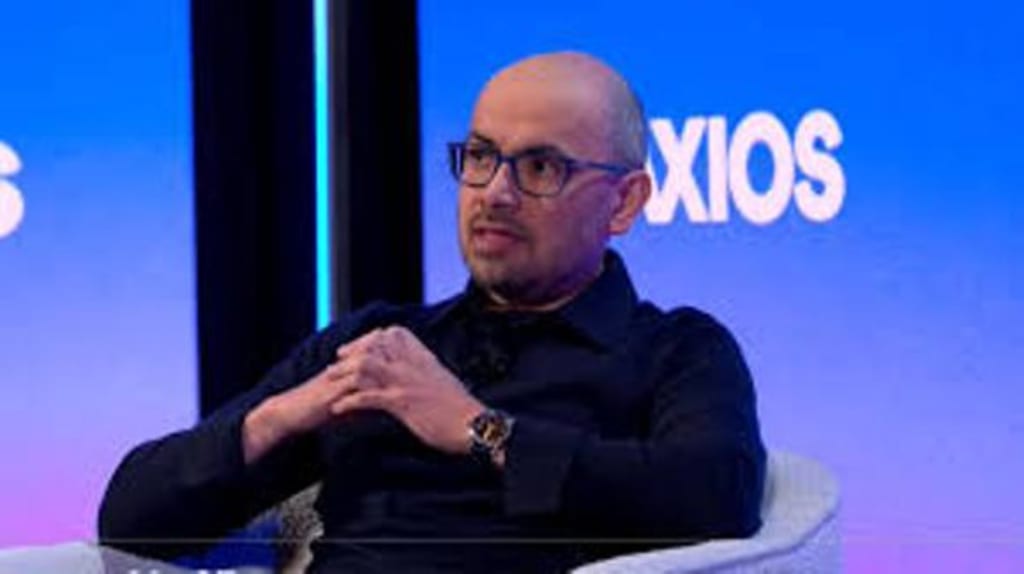
Demis Hassabis, CEO of Google DeepMind and a central figure in the development of artificial intelligence globally, shared his scientific vision for the immediate future of this technology at the Axios AI+ summit in San Francisco, discussing the advancements he anticipates and the AI risks he considers priorities. In a conversation with Mike Allen, co-founder of Axios, Hassabis championed the scientific method as the essential compass for guiding AI progress and emphasized the need to combine experimental rigor, world-class engineering, and robust infrastructure to remain at the forefront of the field.
“The scientific method is the most important idea humanity has ever had,” Hassabis stated in the interview, as reported by Axios. “Modern civilization depends on this approach: experimentation, updating hypotheses, precision. It’s not only applicable to science, but also to everyday life and business. At DeepMind, that rigor gives us an advantage as a research and engineering organization.”
Regarding immediate advancements, Hassabis highlighted multimodality as one of the most promising areas of development. “Gemini, our foundational model, has been multimodal from the start: it processes images, video, text, and audio, and now it can generate those same types of output,” he explained. “We’re seeing some very interesting cross-pollination thanks to that capability. For example, our latest image model, Nano Banana Pro, demonstrates astonishing visual understanding and can create accurate infographics.”

According to the executive, the next 12 months will see significant progress in the integration of video and language, as well as in the evolution of so-called world models, such as Genie 3, which allows for the generation of interactive videos in which the user can navigate as if in a coherent simulation.
Regarding the deployment of universal agents and assistants, Hassabis stated: “We want Gemini to become a universal assistant, present not only on computers or phones, but also on devices like smart glasses. The goal is for it to be useful in daily life, to be consulted multiple times a day, and to improve both productivity and personal life.” Although he acknowledged that current agents cannot yet reliably complete complex tasks, he expressed his conviction that “in a year we will see agents much closer to that goal.”
Hassabis's optimism about the potential of AI coexists with an explicit concern about the associated risks. “The best-case scenario is one of radical abundance: solving humanity's greatest problems, from clean energy to diseases, and entering a post-scarcity era,” he told Axios. “But even in that world, questions arise about human purpose if technology solves all challenges. In addition, there are well-known risks: malicious actors using AI for harmful purposes, or systems that, as they approach artificial general intelligence (AGI), deviate from human objectives.”
When asked about the possibility of catastrophic scenarios, Hassabis was clear: “The risk of a catastrophic scenario is not zero, so we must dedicate significant resources to mitigating it.”

Among the specific dangers he mentioned were the creation of pathogens by malicious actors, the use of AI in cyberattacks, and the excessive autonomy of systems. “As agents become more autonomous, the possibility of them deviating from their original instructions increases. Therefore, the industry must ensure that systems remain within established limits,” he warned. “The market will reward the most responsible providers, but there is always the possibility that AI could exceed those boundaries if it is mismanaged. No one can quantify that risk precisely, but it is real and deserves attention.”
Regarding the global race for AI supremacy, Hassabis stated that “the United States and the West are still ahead in the most advanced systems and benchmarks, although the advantage over China is now measured in months, not years.” According to the executive, algorithmic innovation remains the West's strong point, while Chinese competitors excel at keeping pace with the state of the art.
Addressing the prospect of AGI (artificial general intelligence), Hassabis did not hesitate to offer a concrete estimate: “I think we are five to ten years away from achieving AGI, although my standard is high. We define AGI as a system that exhibits all human cognitive capabilities, including invention and creativity. Current models are impressive in some respects, but they still lack continuous learning, long-term planning, and deep reasoning. We will likely need one or two major breakthroughs, in addition to scalability, to reach that point.”

Regarding the social impact and human adaptability, Hassabis expressed confidence in the resilience of the species. “Our brains evolved to be hunter-gatherers, and yet we have adapted to modern civilization and technology. I firmly believe in human adaptability. We are the only evidence of the existence of general intelligence in the known universe, so we should be able to adapt indefinitely,” he reflected in the conversation with Axios. He also suggested that complementary technologies, such as brain-computer interfaces, could help humanity keep pace with AI.
In his concluding remarks, Hassabis addressed the competition for AI talent and the future of work in the sector. “The war for talent has intensified, but at DeepMind we look for people who are driven by the mission. The best scientists and engineers want to work on the most advanced and impactful projects,” he stated. Regarding the future of work, he emphasized that adaptability and creativity will remain essential.
Hassabis's vision, presented at the Axios event, is based on the conviction that human intelligence is, so far, the only evidence of general intelligence in the universe. This uniqueness, according to the scientist, is the foundation of his unwavering confidence in humanity's ability to reinvent itself and thrive in the age of artificial intelligence.
About the Creator
Omar Rastelli
I'm Argentine, from the northern province of Buenos Aires. I love books, computers, travel, and the friendship of the peoples of the world. I reside in "The Land of Enchantment" New Mexico, USA...
Keep reading
More stories from Omar Rastelli and writers in Journal and other communities.
Google is regaining its leadership in artificial intelligence, according to Geoffrey Hinton.
Google's progress in artificial intelligence development has begun to surpass OpenAI, according to renowned industry pioneer Geoffrey Hinton, who believes the tech company is reclaiming the leadership it held for years.
By Omar Rastelliabout a month ago in Journal
Federal government consulting services checklist for agency leaders?
When internal systems begin missing deadlines and compliance demands increase faster than teams can manage, federal leaders face more than a resource issue. They face a challenge in getting results. Federal government consulting services step in to solve this by offering operational clarity, strong vendor oversight, structured planning, and measurable execution. Yet not every consulting provider delivers what agencies truly need. Some bring confusion. Others fail to follow through. So how can you tell which consulting partner will actually support your mission and not slow it down? This checklist helps agency leaders focus on what matters, eliminate guesswork, and choose partners that drive real outcomes.
By Brandon Honey7 days ago in Journal




Comments
There are no comments for this story
Be the first to respond and start the conversation.