
Customizing Care, Fighting Back | Pancreatic Cancer Precision Medicine Market to Expand Rapidly by 2030
For every stakeholder in the fields of clinical care, biotechnology development, and oncology investment, the message is clear – the future is written in the code of the DNA molecule.

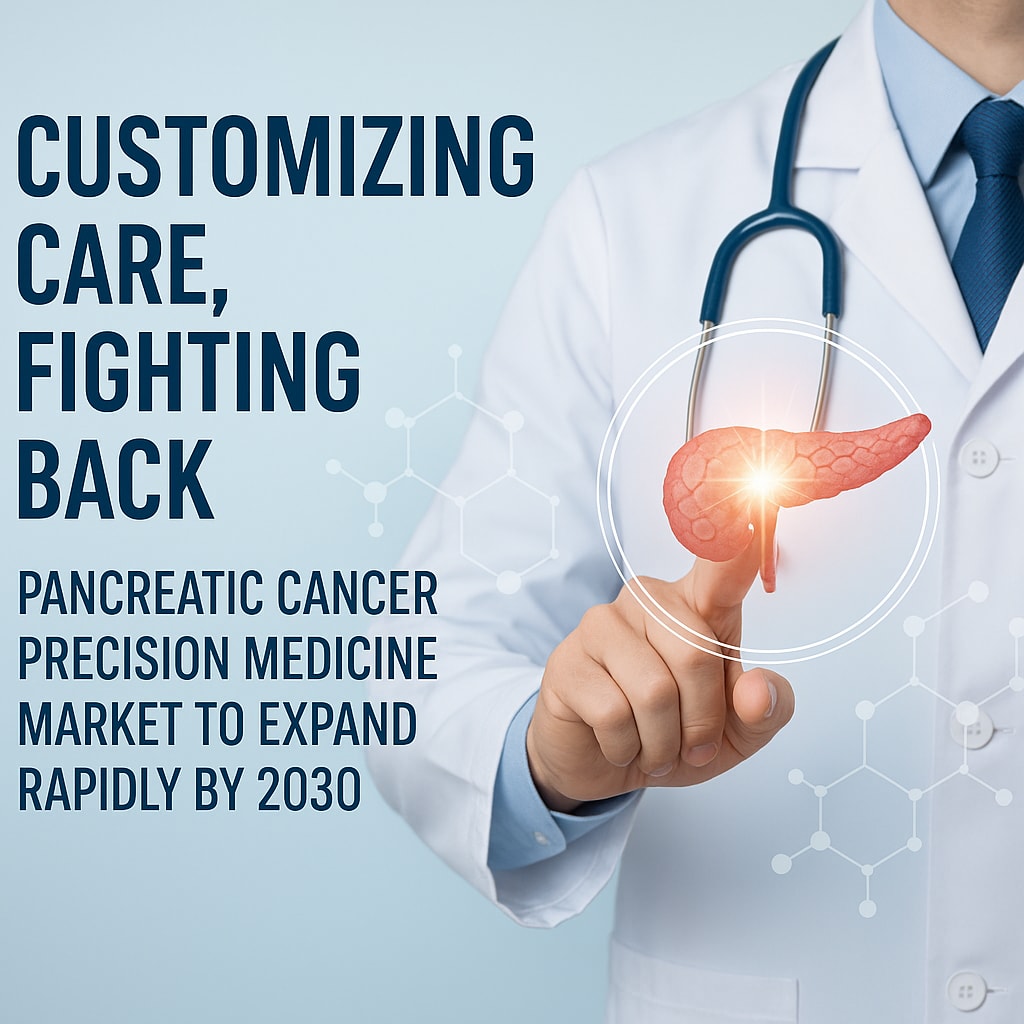
The Pancreatic Cancer Precision Medicine Market is poised to gather significant momentum, driven by advancements in genomics, targeted therapies, and liquid biopsy technologies. Pancreatic cancer, one of the most lethal malignancies characterized by late diagnosis and limited treatment options, is now being approached with a paradigm shift towards personalization and molecular-guided care.
Key Insights on Precision Medicine for Pancreatic Cancer
Pancreatic cancer is often diagnosed at an advanced stage with a dismal five-year survival rate of less than 10%. The aggressive nature of the disease, resistance to traditional therapies, and lack of early detection methods make it a leading cause of cancer mortality. Precision medicine offers a new narrative, where treatments are selected based on the genetic and molecular characteristics of each patient to optimize therapeutic efficacy and extend survival.
Market Trends for Precision Oncology in Pancreatic Cancer
Here are some of the major market trends for pancreatic cancer precision medicine:
1. Genomic Profiling for Actionable Mutations
Oncologists are increasingly relying on next-generation sequencing (NGS) technologies to identify actionable mutations such as KRAS, BRCA, PALB2, and CDKN2A in pancreatic tumors. This enables them to select targeted therapies or enroll patients in relevant clinical trials.
2. Liquid Biopsy and Non-Invasive Biomarkers
The use of liquid biopsies, which analyze circulating tumor DNA (ctDNA) and other biomarkers in blood, is gaining traction. It offers safer and faster methods for early detection, disease monitoring, and patient stratification than tissue biopsies alone.
3. FDA Approvals and Therapeutic Landscape
The recent approvals of PARP inhibitors like Olaparib for BRCA-mutated pancreatic cancer and the emergence of immunotherapy regimens in combination with chemotherapy have set the stage for multiple molecularly-tailored treatment regimens. There is a large and growing pipeline of targeted therapies and combination approaches in the pipeline.
4. AI and Predictive Modeling for Treatment Planning
Artificial intelligence algorithms are being applied to massive data sets derived from genomic sequencing and clinical outcomes to uncover patterns and predict responses to specific therapies. This helps accelerate drug development and optimize individualized treatment plans.
Market Size & Growth Forecast: 2025 to 2030
The Precision Medicine Market for Pancreatic Cancer is projected to grow at a CAGR of over 19.2% from 2025 through 2030. This high growth rate is attributed to several key factors. Genomic sequencing and biomarker development are becoming more prevalent in oncology clinics. Regulatory approvals of novel targeted therapies and companion diagnostics are increasing. Rising investments and collaborations in R&D for pancreatic cancer are driving innovation and clinical trials. In addition, supportive reimbursement policies for precision oncology solutions are expanding their adoption and coverage.
Region-Wise Insights for Pancreatic Cancer Precision Oncology
1. North America: Mature Market and Innovations
North America dominates the market for precision oncology in pancreatic cancer, led by the United States. There is robust R&D, extensive genomic sequencing infrastructure, and a high rate of clinical trial enrollment here. Precision therapy approaches are well-integrated into the care continuum, aided by early adoption, supportive regulatory and reimbursement policies, and higher patient awareness and advocacy.
2. Europe: Emerging Technologies and Patient Access
European countries like the UK, France, Germany, and Italy make up the second-largest market. There are advancements in biomarker discovery, increasing clinical trial activity, and supportive policies for patient access to precision medicine. However, payer restrictions and heterogeneous adoption are restraining the uptake.
3. Asia-Pacific: Rapid Growth but Barriers to Adoption
Asia-Pacific presents the highest growth potential with countries like China, India, Japan, South Korea, and Australia showing expansion. There is rising access to advanced cancer care, investments in molecular diagnostics, and patient demand. However, affordability and infrastructure constraints in less developed regions remain challenges.
The Pancreatic Cancer Precision Medicine Market Overview
Precision medicine in pancreatic cancer refers to the customization of cancer care based on the genomic, molecular, and biomarker profile of individual tumors. The goal is to enhance treatment response rates and prolong patient survival through targeted approaches. Pancreatic cancer is known for its heterogeneity, complex tumor biology, and limited treatment options. Precision medicine seeks to overcome these challenges by matching therapies to patients’ unique characteristics.
Drivers and Opportunities for Precision Medicine in Pancreatic Cancer
Here are some of the major opportunities for precision medicine in pancreatic cancer treatment:
1. Genomic Sequencing and Biomarker Development
Technological advances in next-generation sequencing (NGS) have enabled comprehensive genomic profiling of pancreatic tumors to uncover novel driver mutations and potential drug targets.
2. Liquid Biopsy and Non-Invasive Testing
Liquid biopsy approaches for isolating circulating tumor DNA (ctDNA) and biomarkers from blood are gaining momentum as faster and safer methods for early detection, patient stratification, and monitoring.
3. FDA Approvals and Pipeline Expansion
Approvals of targeted therapies and companion diagnostics for actionable mutations have spurred a growing pipeline of novel agents with precision oncology frameworks. For example, PARP inhibitors for BRCA-mutated pancreatic cancer.
4. Collaborative R&D and Biomarker Validation
Academic centers, pharma companies, and diagnostic developers are collaborating to identify and validate biomarkers, and develop companion tests to help guide therapy selection in pancreatic cancer.
Limitations and Challenges in Precision Oncology
The following factors represent some of the key challenges for pancreatic cancer precision medicine:
Tumor Heterogeneity: Pancreatic tumors exhibit complex genomic and molecular heterogeneity, making them difficult to treat with a one-size-fits-all approach.
Limited Early Detection Methods: Most patients are diagnosed at an advanced stage when the disease is less responsive to therapy. New screening methods are needed.
High Cost of Genomic Testing: Cost and insurance coverage of comprehensive genomic profiling limit access to precision medicine in some regions and populations.
Future Projections: Growth of Pancreatic Cancer Precision Medicine Market by 2030
As medical science and technology continue to unravel the genomic complexity of pancreatic cancer, precision medicine is rapidly transforming the standard of care at every stage from diagnosis to treatment monitoring. The growing ability to leverage genetic information and integrate data-driven insights into clinical decision-making empowers oncologists with a new armamentarium of targeted therapies to take the fight to this disease.
We anticipate the Pancreatic Cancer Precision Medicine Market to grow and mature significantly by 2030 as personalized medicine becomes the cornerstone of oncology practice. By harnessing cutting-edge technologies and fostering collaboration across the ecosystem, there is real hope of finally turning the tide against pancreatic cancer and offering patients real options for long-term survival and quality of life.
About the Creator
Silvie Karson
Passionate storyteller exploring the world of trends. With a background in digital marketing, I craft compelling narratives that inform and inspire. Whether diving into deep-dive features, growth analysis, or trend analysis.
Keep reading
More stories from Silvie Karson and writers in Journal and other communities.
Enhancing Drug Delivery, Naturally | Pharmaceutical Lipid-Based Excipients Market Set for Steady Expansion by 2030
The global pharmaceutical lipid-based excipients market is expected to continue its growth momentum in the coming years. The lipid-based excipients offer unique properties that enable improved solubility, enhanced bioavailability, and natural formulating options. The excipients category is emerging as a major enabler of next-generation therapeutics in the pharmaceutical industry.
By Silvie Karson7 months ago in Journal
The goals I did not achieve
Every writing goal I made for the year is a wash. It has been this way for a while, but I think it's important to be open about my failures and the reality of how life can get in the way. This is especially true considering the several times I have posted on Vocal about my writing goals, how I was changing my approach, and where I was hoping to be for the upcoming year. I will probably do that again in a couple months, but for now, it is time to acknowledge where I am today.
By Kay Husnick24 days ago in Journal
Russia Claims Ownership of Oil Assets It’s Developing in Venezuela
How Moscow’s energy ties in Caracas are shaping geopolitics amid U.S. pressure Russia has recently made a forceful declaration that the oil assets it is developing in Venezuela are legally and unquestionably its own, intensifying a geopolitical tug-of-war over one of the world’s most oil-rich nations. This claim comes amid heightened tensions between the United States and Russia, sparked by U.S. actions in Venezuela and disagreements over who controls the country’s massive energy resources. �
By Fiaz Ahmed Brohi5 days ago in Journal



Comments
There are no comments for this story
Be the first to respond and start the conversation.