
Introduction:
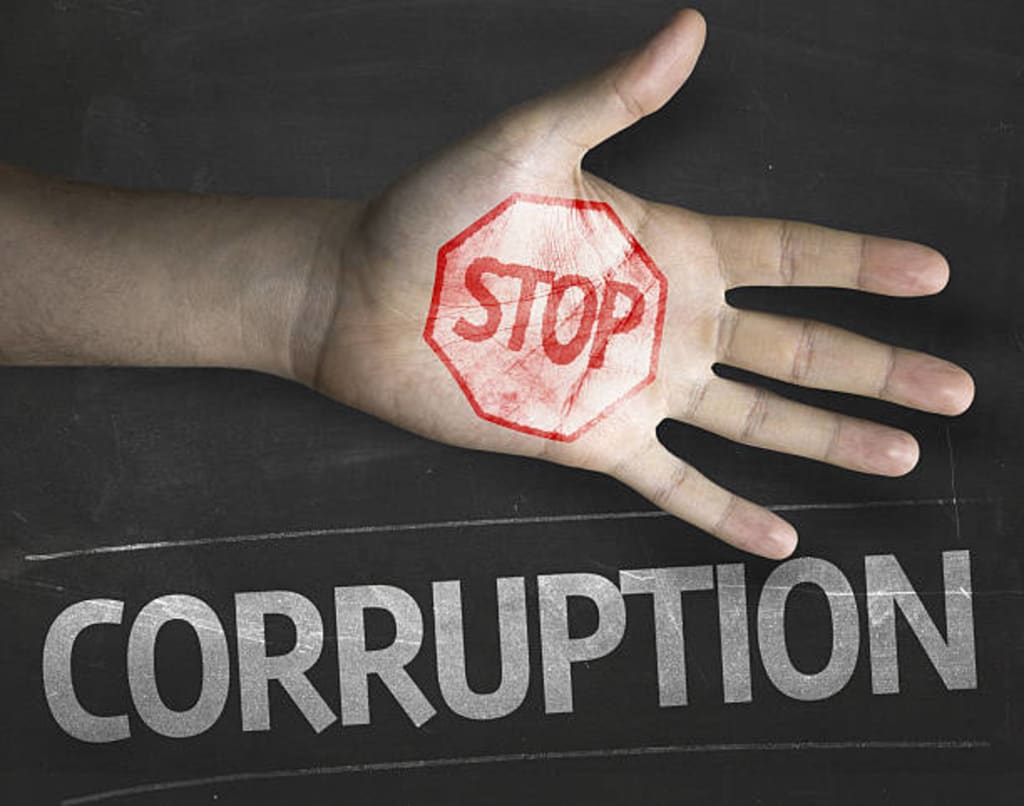
Corruption is a grave societal ill that plagues nations across the globe, and Ghana is no exception. However, in Ghana, there exists a peculiar paradox where corruption is often referred to as "grace." This unique terminology sheds light on the complex cultural, historical, and socio-economic factors that contribute to the acceptance and normalization of corrupt practices within Ghanaian society. Understanding this phenomenon is crucial to addressing corruption effectively and fostering a culture of transparency, accountability, and good governance.
Cultural Perspective:
To comprehend why corruption is referred to as "grace" in Ghana, one must consider the cultural context. Ghanaians have a long-standing tradition of communal support and reciprocity known as "obroni bi nni hɔ a, na yɛte" (when one hand washes the other). This cultural value places emphasis on mutual assistance and favors, which, in its distorted form, can be easily exploited as a justification for corrupt acts. The concept of "grace" often carries positive connotations in Ghanaian society, further blurring the lines between legitimate acts of reciprocity and corrupt practices.
Historical Legacy:
Ghana's historical legacy also plays a significant role in shaping the perception of corruption as "grace." During the colonial era, Ghanaians experienced oppressive rule, economic exploitation, and unequal treatment. This fostered a sense of resentment towards established systems, leading to a disillusionment with the concept of fairness and the perception that engaging in corruption was an act of reclaiming what was unjustly taken. The remnants of this historical experience continue to influence Ghanaian attitudes towards corruption today.
Socio-economic Factors:
Socio-economic factors contribute to the perpetuation of corruption as "grace" in Ghana. Widespread poverty, income inequality, and limited economic opportunities create a sense of desperation and a belief that corrupt practices are necessary for survival or advancement. The lack of access to basic services, such as healthcare and education, further exacerbates this perception, as individuals feel compelled to bribe officials to secure these essential resources. In such circumstances, corruption becomes an unfortunate means to navigate a broken system.
Lack of Effective Institutions:
Ghana's struggle with corruption is also intertwined with the presence of weak institutions and a lack of effective enforcement mechanisms. Inadequate legislation, limited capacity within the judiciary, and insufficient law enforcement contribute to a culture of impunity. When corrupt individuals face little to no consequences for their actions, it further reinforces the notion that engaging in corruption is an acceptable and consequence-free path to success.
Changing the Narrative:
Breaking free from the cycle of corruption as "grace" requires a multi-faceted approach. Firstly, there is a need for widespread awareness campaigns and education programs to debunk the misconception that corruption is a form of grace or acceptable behavior. Emphasizing the detrimental impact of corruption on society and the economy is crucial in shifting public opinion.
Additionally, strengthening Ghana's institutions is vital. This includes implementing comprehensive anti-corruption legislation, improving the capacity of law enforcement agencies, and fostering an independent judiciary to ensure that those engaged in corrupt practices are held accountable.
Furthermore, promoting transparency, accountability, and merit-based systems in both public and private sectors is essential. Encouraging a culture of integrity and ethical conduct through education, public campaigns, and exemplary leadership will help reshape societal norms and perceptions.
Conclusion:
The reference to corruption as "grace" in Ghana underscores the complexity of the issue and the need for a comprehensive approach to combat it. Combining efforts to address cultural norms, historical legacies, socio-economic factors, and institutional weaknesses is crucial for lasting change. By promoting transparency, accountability, and good governance, Ghana can reshape the narrative surrounding corruption and create boundaries more possible put an end.
Thank you for reading, don't forget to share.
About the Creator
author_rauf
Writer & analyst.
Keep reading
More stories from author_rauf and writers in Journal and other communities.
Rise of Digitization in Africa
Title: The Rise of Digitization in Africa: Unlocking a Continent's Potential. Introduction: Africa, a continent once known for its vast landscapes and diverse cultures, is now making its mark on the global stage with the rapid rise of digitization. In recent years, Africa has experienced a technological revolution, leveraging digital innovations to drive economic growth, improve governance, and empower its people. With a growing number of digital entrepreneurs, innovative start-ups, and a surging young population, Africa is harnessing the power of technology to overcome longstanding challenges and unlock its full potential.
By author_rauf3 years ago in Journal
The goals I did not achieve
Every writing goal I made for the year is a wash. It has been this way for a while, but I think it's important to be open about my failures and the reality of how life can get in the way. This is especially true considering the several times I have posted on Vocal about my writing goals, how I was changing my approach, and where I was hoping to be for the upcoming year. I will probably do that again in a couple months, but for now, it is time to acknowledge where I am today.
By Kay Husnick24 days ago in Journal
Diary of Anony Elle
If you read the last post, forgive me… I was rambling. See, I have a plan! I have learned that perfection is not needed to start that plan. So, I just started it. I am committed and I will not allow my circumstances to deter me like I have many times before. Not this time. This time I am focused, dedicated, and willing to do everything that I need to do to achieve the outcome my babies and I deserve. I now know who I am, who they are, and what I am up against. I do not plan on being nice anymore, now that I know how stupid nice is. I do not wonder if they love me (“they” will be revealed soon) and I know who my enemies are; so I no longer have limits.
By Anony Elle5 days ago in Journal


Comments
There are no comments for this story
Be the first to respond and start the conversation.