
Common Hurdles in Athletic Programs and How to Fix Them
Desmond Gumbs

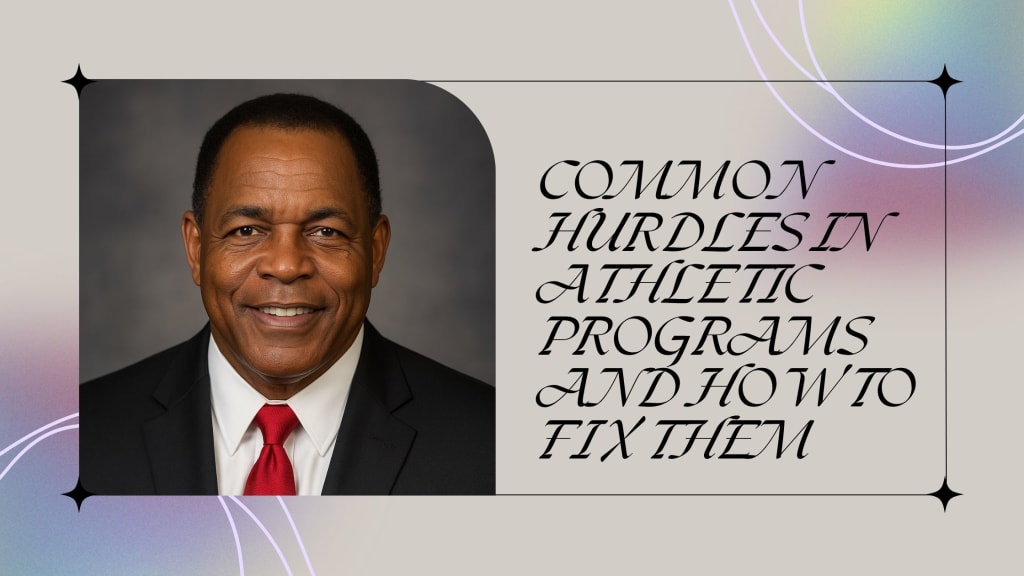
Building a successful athletic program is a complex undertaking that goes far beyond simply recruiting talented athletes and hiring knowledgeable coaches. It's about creating an ecosystem—a culture—where excellence is the standard and growth is constant. Few understand this better than Desmond Gumbs, a visionary leader whose career seamlessly blends the strategic acumen of an Athletic Director, the tactical expertise of a sports coach, and the profound insight of a life coach and motivational speaker.
During a recent conversation, I asked him about the most common points of failure he observes in athletic programs, from youth leagues to collegiate levels. He didn't just list problems; he provided a clear framework for diagnosing and solving them. For any administrator, coach, or even parent invested in the success of a team, his perspective is a masterclass in organizational leadership. Here are the most common hurdles athletic programs face and Desmond Gumbs' expert advice on how to clear them.
Challenge #1: Lack of a Unified Vision and Culture
One of the most pervasive issues, Gumbs notes, is a fractured or non-existent culture. This isn't about having posters with inspirational quotes on the wall; it's about the shared beliefs, behaviors, and standards that define the program.
The Symptom: Inconsistent Performance and Low Morale
"When a program lacks a defined culture, you see it everywhere," Gumbs explained. "You see it in the wildly inconsistent performances—a huge win one week followed by a baffling loss the next. You see it in the body language of the players, the finger-pointing after a mistake, and a general lack of joy in playing the sport." Without a unifying 'why,' teams become a collection of individuals playing for their own stats or survival, rather than a cohesive unit striving for a common goal. This leads to low morale, high turnover of both players and coaches, and a ceiling on what the team can achieve.
Desmond Gumbs' Solution: Establishing Core Values and a Team Mission
The antidote, according to Gumbs, is a collaborative process to establish a clear mission and a set of non-negotiable core values. "This can't be a top-down decree from the Athletic Director," he cautioned. "It has to be a conversation involving coaches and, most importantly, the athletes themselves."
He facilitates workshops where he asks teams questions like:
What do we want to be known for, beyond winning?
How do we treat each other when things get tough?
What are the three behaviors we will hold each other accountable for, no matter what?
The answers to these questions become the bedrock of the program's identity. Values like "Relentless Effort," "Unwavering Support," and "Extreme Ownership" become the filter through which every decision is made. This mission statement is then woven into everything—from the language used in practice to the criteria for selecting team captains.
Challenge #2: Ineffective Player Development Models
Another major hurdle is a one-size-fits-all approach to player development. Many programs focus exclusively on team-level drills and strategies, neglecting the individual growth of each athlete.
The Symptom: Stagnant Skill Growth and High Dropout Rates
"If players don't feel like they're getting better personally, they will lose motivation," Gumbs stated. This stagnation is a primary driver of burnout and dropout rates, especially in younger athletes. When a player hits a plateau and doesn't have a clear path forward, their passion for the sport can quickly fade. Coaches might see this as a lack of commitment, but Gumbs sees it as a failure of the system to provide a roadmap for individual improvement.
The Sports Coach Perspective: Implementing Individualized Training Plans
As an experienced sports coach, Desmond Gumbs champions the implementation of Individualized Development Plans (IDPs) for every athlete. This process involves:
Honest Assessment: A one-on-one meeting between the coach and player to identify 2-3 specific strengths to enhance and 2-3 weaknesses to improve.
Goal Setting: Collaboratively setting measurable goals for these areas over a specific timeframe (e.g., improve free-throw accuracy by 10% in 6 weeks).
Action Plan: Outlining specific drills, film study assignments, and strength and conditioning work the athlete will do to achieve these goals.
Regular Check-ins: Scheduled follow-ups to track progress, offer feedback, and adjust the plan as needed.
This approach empowers athletes by giving them ownership of their development. It shows them that the coaching staff is invested in their personal journey, which builds immense trust and buy-in.
Challenge #3: Poor Communication Structures
Perhaps the most destructive hurdle is the breakdown of communication. When information doesn't flow effectively between coaches, players, parents, and administration, misunderstandings fester, and a toxic environment can quickly take root.
The Symptom: Misunderstandings, Conflict, and a Culture of Distrust
"Conflict is inevitable, but combat is optional," Gumbs often says. "Poor communication turns conflict into combat." He points to common symptoms: parents confronting coaches in the parking lot, players gossiping about playing time, and coaches feeling isolated and unsupported. This breakdown creates an atmosphere of anxiety and distrust where no one can perform at their best. It undermines the very foundation of the team.
A Life Coach's Guide to a Communication Framework
Drawing on his expertise as a life coach and motivational speaker, Gumbs advises programs to proactively build a clear communication framework. This isn't about avoiding difficult conversations but about ensuring they happen in a structured and respectful way.
His framework includes:
Defining Channels: Clearly outlining who to talk to about specific issues (e.g., concerns about playing time are for the coach, logistical questions are for the team manager).
The 24-Hour Rule: A policy that requires players and parents to wait 24 hours after a game before approaching a coach with an emotional issue, allowing for a more rational conversation.
Structured Feedback Sessions: Implementing regular, scheduled meetings (like the IDP check-ins) so that feedback is an ongoing dialogue, not a confrontational event.
Parent Education: Holding a preseason meeting to set expectations for parents on their role, appropriate communication, and how they can best support the program's mission.
Challenge #4: Neglecting the Mental and Emotional Side of Sport
The final hurdle Gumbs identified is the overemphasis on physical and tactical skills at the expense of mental and emotional resilience.
The Symptom: Choking Under Pressure and Inability to Bounce Back
"You see teams with all the talent in the world fall apart in big moments," he said. "That's not a physical failure; it's a mental one." Teams that neglect mental conditioning are fragile. They can't handle adversity, they get derailed by a single bad call, and they struggle to recover from a tough loss. This mental fragility is often the invisible barrier preventing a good team from becoming a great one.
Desmond Gumbs on Forging a Resilient Mindset
As a life coach and motivational speaker, this is where Gumbs' passion truly ignites. He argues that mental skills must be coached and drilled with the same rigor as physical skills. He works with programs to integrate mental conditioning into their daily routines, including:
Pressure Drills: Creating high-stakes scenarios in practice to inoculate players against game-day stress.
Mindfulness and Breathing Exercises: Teaching athletes simple techniques to stay present, manage anxiety, and reset their focus after a mistake.
"Next Play" Mentality: Coaching a culture where the focus is always on the next opportunity, not the last mistake. This builds short memories for failure and long memories for success.
Conclusion
Overcoming these common hurdles requires a paradigm shift. It demands that leaders of an athletic program—from the Athletic Director down to the assistant coaches—think more like architects and less like firefighters. Instead of just reacting to problems, the goal is to build a foundation so strong that these issues rarely arise. By following the wisdom of Desmond Gumbs and proactively establishing a unified culture, investing in individual development, building clear communication channels, and prioritizing mental resilience, any program can transform itself from a group of individuals into a sustainable powerhouse of performance and personal growth.
About the Creator
Meet Desmond Gumbs: The Driving Force Behind Lincoln Football
Desmond Gumbs is the head football coach at Lincoln University in California. He is dedicated to making the football team even better and has a lot of experience. He leads with passion, shaping players into champions.
Keep reading
More stories from Meet Desmond Gumbs: The Driving Force Behind Lincoln Football and writers in Journal and other communities.
The Champion Mindset: Insights from Life Coach and Motivational Speaker Desmond Gumbs
In the world of high achievement—from elite athletics to the competitive business arena—talent is rarely enough. The true differentiator, according to Desmond Gumbs, is not physical skill, but a meticulously cultivated Champion Mindset.
By Meet Desmond Gumbs: The Driving Force Behind Lincoln Football4 months ago in Journal
The goals I did not achieve
Every writing goal I made for the year is a wash. It has been this way for a while, but I think it's important to be open about my failures and the reality of how life can get in the way. This is especially true considering the several times I have posted on Vocal about my writing goals, how I was changing my approach, and where I was hoping to be for the upcoming year. I will probably do that again in a couple months, but for now, it is time to acknowledge where I am today.
By Kay Husnick24 days ago in Journal
How, Too
Many people wonder how, too. You are not alone, and I am an expert. I will teach you how, too! First, you need to remit a small application fee and fill out an application describing the nature of your financial situation and how often payments will be made, as this will have great bearing on how well I teach you how, too.
By Harper Lewis3 days ago in Fiction




Comments
There are no comments for this story
Be the first to respond and start the conversation.