
Common Capacity Ranges of Overhead Cranes and Their Uses
Selecting the right crane for your lifting needs.
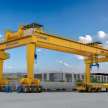

Overhead cranes play a critical role in industrial material handling, helping businesses lift, move, and position heavy loads with precision and safety. They are widely used across diverse industries such as manufacturing, construction, warehousing, mining, shipbuilding, and steel production. One of the most fundamental parameters in choosing the right overhead crane is its lifting capacity, which directly affects its design, applications, and performance.
In this article, we explore the common capacity ranges of overhead cranes, what they are typically used for, and how to select the appropriate capacity for specific applications.
Understanding Overhead Crane Capacity
The lifting capacity of an overhead crane refers to the maximum weight the crane can safely lift. It is important to never exceed this limit, as doing so may result in structural failure, operational hazards, and serious accidents.
Overhead cranes come in a variety of configurations and are designed to handle different weight ranges, from light-duty operations under 5 tons to heavy-duty lifting exceeding 100 tons. The most common types of overhead cranes include:
- Single Girder Overhead Cranes
- Double Girder Overhead Cranes
- Top Running and Underhung Cranes
- EOT (Electric Overhead Traveling) Cranes
The choice among these types depends on the required load capacity, span, lift height, and working environment.

Common Capacity Ranges and Their Applications
1. Light Duty Cranes (0.5 Ton to 5 Tons)
Typical Applications:
- Assembly lines
- Small workshops
- Equipment maintenance
- Automotive garages
- Warehouses
Light-duty overhead cranes are ideal for environments where lifting requirements are minimal or intermittent. These cranes are typically single girder and may include manual or electric hoists. They are compact, cost-effective, and easy to install.
Use Case Example:
In an auto repair workshop, a 2-ton overhead crane is often used to lift engines or transmission systems during maintenance.

2. Medium Duty Cranes (5 Tons to 20 Tons)
Typical Applications:
- Manufacturing plants
- Steel fabrication workshops
- Industrial equipment assembly
- General maintenance
- Medium-sized warehouses
Medium-duty cranes strike a balance between performance and cost. They are often used where material handling occurs several times per hour and can include both single and double girder designs.
Use Case Example:
A 10 ton overhead crane is commonly used in a structural steel fabrication shop for lifting steel plates, beams, and welded assemblies.
3. Heavy Duty Cranes (20 Tons to 50 Tons)
Typical Applications:
- Heavy machinery production
- Foundries
- Power plants
- Paper mills
- Mining operations
Heavy-duty overhead cranes are used in demanding environments requiring frequent lifting of heavy loads. These cranes are typically double girder configurations with robust hoisting mechanisms and precision controls.
Use Case Example:
In a turbine manufacturing plant, a 30-ton overhead crane may be used to transport heavy turbine components from one production stage to another.
4. Extra Heavy Duty Cranes (50 Tons to 100 Tons)
Typical Applications:
- Shipyards
- Large-scale forging operations
- Heavy equipment manufacturing
- Steel mills
These cranes are designed to handle very large and bulky items. They often incorporate multiple hoists and are customized to suit specific tasks. Structural integrity and load stability are paramount at this capacity level.
Use Case Example:
A 75 ton overhead crane might be used in a steel plant to lift ladles filled with molten metal from furnaces to casting stations.
5. Ultra-Heavy Duty Cranes (100 Tons and Above)
Typical Applications:
- Nuclear power plants
- Offshore and marine applications
- Aircraft and aerospace manufacturing
- Specialized heavy equipment handling
These cranes are usually custom-engineered for critical tasks involving massive and high-value components. Safety, redundancy, and automation are crucial features of cranes in this range.
Use Case Example:
A 200-ton crane is commonly installed in shipyards to lift ship engines or large ship blocks during the assembly of vessels.
Factors to Consider When Choosing Crane Capacity
Selecting the appropriate capacity for an overhead crane involves more than estimating the heaviest load. Consider the following:
1. Load Weight and Variability
Always calculate the maximum load to be lifted, including the weight of any fixtures or attachments. If the load varies frequently, consider using a crane with some capacity margin to ensure safety and durability.
2. Duty Cycle (Work Class)
This refers to how frequently and intensely the crane will be used. The CMAA (Crane Manufacturers Association of America) defines duty classes from Class A (light service) to Class F (continuous severe service). A higher duty class may require a higher-capacity crane even for similar load weights.
3. Span and Lift Height
Longer spans or higher lift heights may necessitate stronger girders and motors, especially for higher capacity cranes. These physical dimensions must be aligned with capacity requirements.
4. Load Distribution and Load Type
Uniform loads are easier to manage than offset or awkwardly shaped loads. If the load center of gravity is not central, additional capacity may be needed to compensate for shifting weight during movement.
5. Environment and Safety Requirements
Corrosive, explosive, or high-temperature environments require specially designed cranes. In hazardous areas, cranes must meet stringent safety certifications, which may affect the choice of capacity and components.
Importance of Proper Crane Sizing
Oversizing a crane can lead to unnecessary costs, excessive energy consumption, and inefficient space usage. Conversely, undersizing a crane compromises safety, reduces equipment lifespan, and increases the risk of operational failure.
Investing in the right capacity overhead crane results in:
- Improved operational efficiency
- Reduced maintenance costs
- Enhanced safety
- Increased return on investment
Custom Solutions and Multi-Hoist Options
For complex lifting requirements, manufacturers often offer custom-designed overhead cranes. These can include:
- Twin hoist systems for lifting long or awkward loads
- Auxiliary hoists for light-duty lifting alongside heavy hoisting operations
- Synchronized control systems for multi-point lifting
These solutions can span capacity ranges from 20 tons to over 500 tons, depending on the application.
Conclusion
Understanding the common capacity ranges of overhead cranes and their typical applications is essential for selecting the right crane system for your business. Whether you require a 2-ton crane for small parts assembly or a 200-ton crane for shipbuilding, aligning your lifting needs with the proper capacity ensures safer, more efficient operations.
When evaluating a crane solution, consider factors beyond lifting weight—such as usage frequency, working environment, and load type—to ensure optimal performance and longevity. Working with a reliable crane manufacturer or supplier can help you customize the ideal overhead crane for your specific project requirements.
About the Creator
Aicrane01
Welcome to the Aicrane Blog, your practical guide to lifting solutions. Discover articles covering overhead cranes, gantry cranes, winches, steel structures, boat lifts, and more.
Website: https://steelmillcranes.com/




Comments
There are no comments for this story
Be the first to respond and start the conversation.