
Coco Peat Manufacturing Plant Setup Cost: Business Plan, Machinery, and Cost Breakdown
Setting up a Coco Peat Manufacturing Plant involves moderate investment and presents a sustainable business opportunity in agriculture and horticulture sectors. The plant converts coconut husk into coco peat, a high-demand organic growing medium.

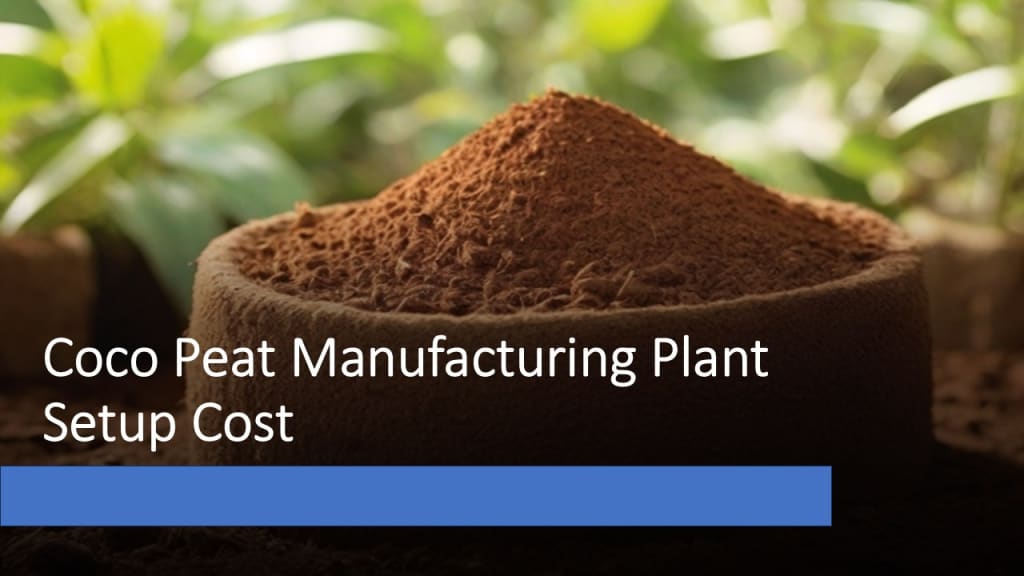
Coco peat—alternatively referred to as coir dust or coir pith—has emerged as a favored eco-conscious additive for soil enhancement and as a medium for cultivation. Driven by the rising global emphasis on hydroponics, horticulture, and organic agriculture, the appetite for premium-grade coco peat continues its upward trend. Launching a facility for its production holds significant potential for both profitability and environmental responsibility, assuming one has a solid grasp of essential elements such as startup expenses, machinery specifications, capital layout, operational overheads, and a strategically crafted business roadmap. This comprehensive guide aims to equip prospective entrepreneurs and investors with the insight needed to navigate this flourishing domain confidently.
Overview of Coco Peat Manufacturing Plant Setup Cost
The setup cost for a coco peat manufacturing plant depends on various factors, such as the scale of production, the degree of automation, location, and compliance with environmental standards. Key cost components include procurement of raw materials, installation of processing machinery, infrastructure development, workforce recruitment, and regulatory approvals. Adequate cost planning helps ensure smooth operations and sustainable profit margins.
Capital Investment Requirements
Establishing a coco peat manufacturing unit involves significant capital investment at the initial stage. The capital expenditure primarily includes:
- Land and Infrastructure:
Acquiring or leasing land with easy access to coconut husk sources is crucial. Infrastructure development covers production sheds, storage facilities for raw husk and finished products, drying yards, packing units, and administrative offices.
- Machinery and Equipment:
Investing in robust and efficient machinery is essential for producing high-quality coco peat in different forms such as blocks, briquettes, grow bags, and loose peat. The machinery cost represents a major portion of the capital investment and is influenced by the degree of automation and production capacity.
- Utilities and Support Systems:
Provision for reliable electricity, water supply, waste management, and fire safety systems forms an integral part of the capital budget.
- Licensing and Compliance:
Capital investment should also account for the expenses related to acquiring necessary licenses, environmental clearances, and quality certifications, which are vital for legal operations and market credibility.
Operating Cost Structure
In addition to capital investment, understanding the recurring operating costs is essential for financial planning. Major operating costs include:
- Raw Material Procurement:
The primary raw material, coconut husk, must be sourced continuously from coconut processing units or farms. Logistics and transportation costs should also be considered.
- Labor Costs:
Wages for skilled and unskilled workers involved in sorting, retting, drying, sieving, compressing, packaging, and quality checking contribute significantly to operating expenses.
- Maintenance and Repairs:
Routine maintenance of machinery and replacement of worn-out parts ensure uninterrupted production and prevent costly breakdowns.
- Utility Bills:
Electricity and water charges for running the machinery, cleaning, and processing add to the recurring costs.
- Packaging and Distribution:
Expenses incurred for packaging materials, labelling, storage, and transportation to distributors or direct customers must be included in the operational budget.
Coco Peat Manufacturing Plant Machinery Cost
Selecting suitable machinery directly influences product quality, production capacity, and operating efficiency. Typical machinery required in a coco peat manufacturing unit includes:
- Coconut Husk Crusher/Shredder: For breaking down raw husks into finer particles.
- Screener/Siever: To remove large fibres and produce uniform peat particles.
- Compressor/Block Making Machine: To compress loose peat into blocks, briquettes, or grow bags as per market demand.
- Drying Equipment: For reducing the moisture content to acceptable levels, ensuring longer shelf life.
- Packing Machines: To pack final products in various sizes securely and hygienically.
- Dust Extraction and Waste Management Systems: To maintain a clean and safe working environment.
The cost of machinery depends on production scale, brand reputation, energy efficiency, and after-sales support offered by equipment suppliers. Investing in reliable, automated machinery reduces manual intervention, enhances product consistency, and lowers long-term operational costs.
Developing a Solid Coco Peat Manufacturing Business Plan
A well-structured business plan lays the foundation for a successful coco peat manufacturing unit. Key elements of an effective plan include:
- Market Research:
Analyzing domestic and international market trends, identifying potential customers such as nurseries, greenhouse operators, exporters, and hydroponic growers, and studying competitors helps in defining the target market and pricing strategy.
- Production Strategy:
Deciding the product mix (blocks, loose peat, discs, grow bags) based on market demand and available technology ensures optimal resource utilization.
- Plant Layout and Workflow:
Designing an efficient plant layout minimizes material handling time, reduces contamination risks, and improves productivity.
- Financial Projections:
Detailed cost estimations, revenue forecasts, profit margins, break-even analysis, and return on investment calculations offer a clear picture of financial viability for stakeholders and investors.
- Quality Assurance and Certifications:
Adopting standard operating procedures for consistent quality, obtaining certifications like ISO, and complying with phytosanitary norms build customer trust and expand export opportunities.
- Marketing and Sales Strategy:
Developing effective branding, exploring domestic retail channels and bulk export contracts, participating in trade fairs, and leveraging digital marketing help build a strong customer base.
- Sustainability Considerations:
Implementing eco-friendly practices such as recycling wastewater, managing coir fibre by-products, and minimizing energy consumption adds value to the brand and aligns with global sustainability trends.
Setting up a coco peat manufacturing plant offers significant opportunities for sustainable business growth, especially with the rising demand for organic and eco-friendly horticulture products. Careful planning of capital investment, operating costs, and machinery procurement ensures efficient production and high product quality. Backed by a comprehensive business plan, the venture can deliver consistent returns, contribute to environmental sustainability, and meet the evolving needs of the global agricultural and horticultural sectors.
By focusing on quality, compliance, and market-driven strategies, a coco peat manufacturing unit can establish a competitive edge and build a reputable brand in the flourishing organic growing media industry.
About the Creator
Andrew Sullivan
Hello, I’m Andrew Sullivan. I have over 9+ years of experience as a market research specialist.
Keep reading
More stories from Andrew Sullivan and writers in Journal and other communities.
Hydrogen Fuel Cell Vehicles: $41.9B Market Forecast by 2033
Introduction Imagine a world where vehicles glide silently through bustling cities, emitting nothing but water vapor. Hydrogen fuel cell vehicles (FCVs) are turning this vision into reality, offering a cleaner, sustainable alternative to traditional fossil fuel-powered transportation. As global demand for eco-friendly solutions surges, hydrogen FCVs are gaining momentum, driven by technological advancements, supportive policies, and a collective push toward decarbonization. This blog dives deep into the Hydrogen Fuel Cell Vehicle Market, exploring its size, share, trends, and forecast from 2025 to 2033, with insights into technology, vehicle types, regional dynamics, regulations, challenges, and future opportunities. Whether you're an industry professional, investor, or eco-conscious consumer, this comprehensive guide will illuminate the path forward for hydrogen-powered transportation.
By Andrew Sullivan7 months ago in Journal
How Much Does It Cost to Start an Outpatient Rehab Treatment Facility
Introduction to Outpatient Rehab Facility Costs Establishing an outpatient rehabilitation treatment facility requires a nuanced understanding of both healthcare delivery and business economics. Unlike residential centers, outpatient programs typically involve lower capital intensity, yet they still demand substantial upfront investment. Costs vary widely based on geography, service scope, and regulatory rigor. A modest facility may require a few hundred thousand dollars to launch, while a comprehensive center offering multiple therapies can exceed seven figures. Prudent financial forecasting at the outset reduces fiscal turbulence later and creates a foundation for sustainable operations.
By Fida Hassain3 days ago in Journal
Wild Card Weekend Recap: What Happens Now?
I think I figured out why I love Wild Card Weekend so much. It's because it's the first playoff anything of the calendar year. The NFL season starts in the fall, and once upon a time, the champion was crowned either on or slightly before New Year's. The evolution of the NFL schedule has resulted in the playoffs starting just into the New Year, and currently, the final week of the season falls on the first weekend of the New Year, with Wild Card Weekend coming a week after that. So yes, chronologically, the NFL's Wild Card Weekend serves as the first playoff anything of the calendar year.
By Clyde E. Dawkins5 days ago in Unbalanced



Comments
There are no comments for this story
Be the first to respond and start the conversation.