
China Tightens Rare Earth Exports: What It Means for the Global Tech and Battery Industry
As China places new export controls on rare earth elements, the world faces rising concerns about the future of smartphones, EVs, and global technology supply chains.

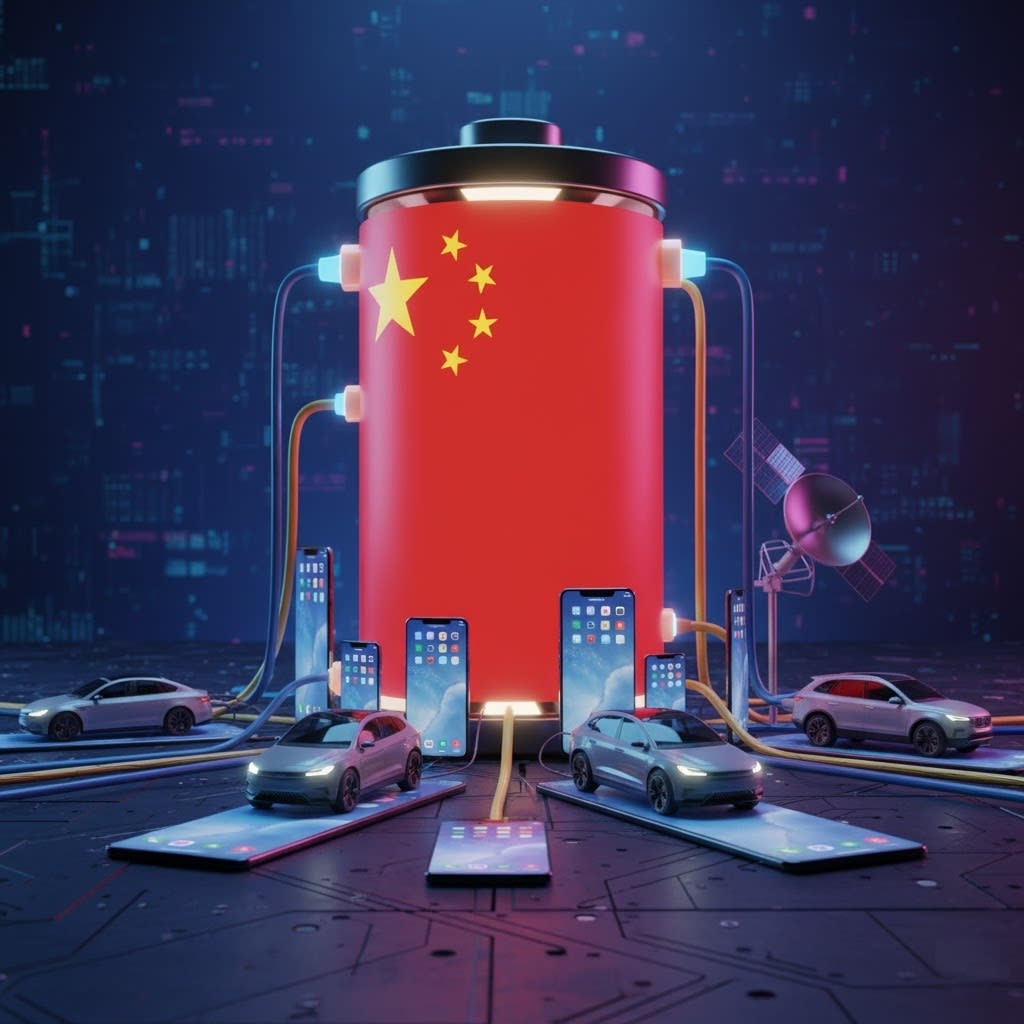
**The Hidden Power Behind Modern Technology**
Every smartphone, electric vehicle (EV), and wind turbine depends on something invisible to most people — *rare earth elements*. These are special metals like lithium, neodymium, and cobalt that power batteries, magnets, and green energy technologies. Without them, modern devices wouldn’t work.
Now, in a major move shaking the global economy, **China has announced new export controls on rare earths**, meaning stricter regulations on how these materials leave the country. This is not just a business decision — it’s a geopolitical game changer.
**Why Rare Earths Matter So Much**
Rare earth elements might sound uncommon, but they are found everywhere — inside your phone’s speaker, laptop battery, and even the engines of electric cars. They are the building blocks of the modern tech world.
The problem? **China controls around 60–70% of global rare earth production**. That means most countries — including the U.S., Japan, and those in Europe — depend heavily on China for the supply.
By tightening exports, China can influence global markets, prices, and even the speed of green energy projects worldwide.
**China’s New Move: What’s Changing?**
Under the new export control rules announced in October 2025, companies that want to export rare earth materials must now go through **stricter government approvals and licensing**. The move mainly targets high-end materials used in:
**Electric vehicle batteries**
**Semiconductors**
**Wind turbine components**
**Military technology and defense systems**
The Chinese Ministry of Commerce said the purpose is to “protect national security and industrial supply chains.” But many experts see it as a strategic response to Western restrictions on China’s own tech imports.
**The Global Impact: Who Feels It the Most**
Countries like the **United States, Japan, and South Korea** rely heavily on China’s supply for their growing EV and tech industries. These new rules could mean:
**Higher costs for battery manufacturers**
**Delays in tech production**
**Slower progress in renewable energy projects**
For example, a car company in the U.S. that makes electric vehicles may suddenly find it harder or more expensive to get the materials needed for batteries. That could increase prices for consumers and slow down the green transition.
Even companies like Apple, Tesla, and Samsung could face indirect effects because their products depend on rare earth components sourced from multiple countries connected to China’s supply chain.
**A Strategic Move in the Global Tech War**
This decision doesn’t come out of nowhere. Over the past few years, tensions have been rising between China and the West — especially over **semiconductors, 5G technology, and artificial intelligence**.
When Western countries placed restrictions on exporting advanced computer chips to China, this move by Beijing seems to be a counterpunch. By controlling rare earth exports, China is reminding the world just how much power it holds in the global technology chain.
In short: **chips may be the brain of modern tech, but rare earths are its heartbeat.**
**Can the World Reduce Its Dependence on China?**
Many countries have already started searching for alternatives. The **United States, Australia, and Canada** are investing in mining and refining their own rare earths. However, it’s not easy.
Mining rare earths is expensive, environmentally challenging, and takes years to develop. So, even with new projects starting, China is likely to remain the dominant player for at least the next decade.
Meanwhile, some companies are trying to **recycle rare earth materials** from old devices, a growing field known as *urban mining*. It’s an innovative solution, but it still produces a small percentage of what the tech world demands.
**The Bigger Picture: Green Energy at Risk**
Ironically, rare earths are essential for building a cleaner, greener future — electric vehicles, wind turbines, and solar panels all depend on them.
So while these export controls might seem like a trade issue, they actually affect global progress on **climate change and renewable energy**. If supplies tighten, clean technology might slow down just when the world needs it most.
**Conclusion: A New Era of Tech Power Politics**
China’s new export controls on rare earths are more than a policy — they’re a message. The country is signaling that it can influence the pace and cost of technological progress worldwide.
For the rest of the world, this is a wake-up call. Nations must now innovate, diversify, and find new ways to secure the materials that power the future. Because in today’s world, whoever controls the supply of rare earths holds the key to tomorrow’s technology.
About the Creator
Keep reading
More stories from Kashif Wazir and writers in Journal and other communities.
Working 40 Hours a Week Isn’t Enough: The U.S. Housing Crisis Deepens
**Introduction: The Harsh Reality of 2025 America** Imagine working **40 hours every week**, doing everything right — showing up on time, paying your bills, and trying to save — only to realize you still can’t afford a basic two-bedroom apartment.
By Kashif Wazir3 months ago in Journal
How Retrieval-Augmented Generation Services Are Transforming Enterprises at Scale
Not long ago, many AI initiatives inside large organizations struggled to move beyond pilot projects. The models looked impressive in demos, but once deployed, they often failed to deliver accurate, reliable, or up-to-date results. Hallucinations, outdated knowledge, and lack of transparency made decision-makers cautious about scaling AI across critical business functions.
By Kanak Appinventiv5 days ago in Journal


Comments
There are no comments for this story
Be the first to respond and start the conversation.