
China returns fire in Donald Trump’s trade war
China's response to the trade war that the former United States started In recent years, President Donald Trump has had a significant impact on the dynamics of the global economy.
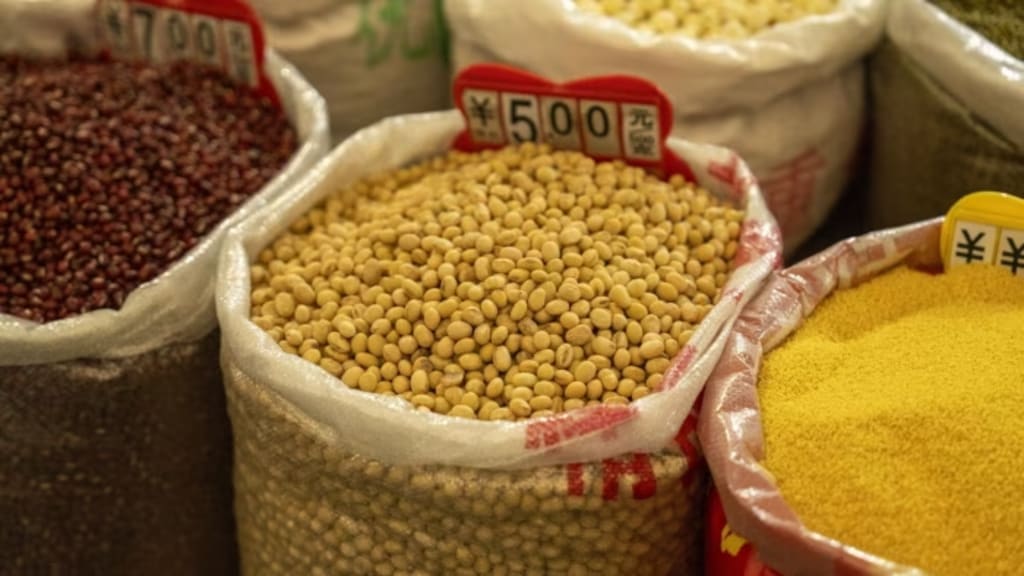
China's response to the trade war that the former United States started In recent years, President Donald Trump has had a significant impact on the dynamics of the global economy. In this trade dispute, China "returned fire" in the following key ways: 1. Retaliation with a Tariff: Matching Tariffs: China imposed its own tariffs on American goods in response to the United States imposing tariffs on Chinese goods. For instance, when the United States imposed tariffs in July 2018 on Chinese goods worth $34 billion, China immediately retaliated by imposing tariffs on equivalent amounts of American goods, including automobiles, seafood, and agricultural goods like soybeans. Escalation: China reciprocated the United States' continued increase in tariffs. The United States had imposed tariffs on by September 2018 250 billion in Chinese goods, and China had retaliated by imposing tariffs on 110 billion in American goods. 2.
Choosing Important U.S. Industries:
Agriculture: China focused on U.S. agricultural exports, particularly soybeans, which American farmers export a lot. Given the political significance of the agricultural sector in key U.S. states, this move was viewed as a strategic effort to exert pressure on Trump. Energy: China also imposed tariffs on American energy products, such as crude oil and liquefied natural gas (LNG), which were driving up U.S. exports at the time. 3. Diplomatic and economic measures: Currency Management: There were concerns that China might devalue its yuan to offset the impact of U.S. tariffs and make exports cheaper. The yuan did weaken during the trade war, which helped Chinese exporters, despite China's claim that it did not deliberately devalue the currency. China complained to the World Trade Organization (WTO) about the United States' tariffs, claiming that they were in violation of international trade rules. This was a part of China's larger plan to make itself known as a champion of the global trading system. 4. Adaptation at Home: Stimulus Measures: China implemented a variety of domestic stimulus measures to support its economy and counteract the economic impact of the trade war. These measures included cutting taxes, investing in infrastructure, and easing monetary policy. Diversification of Trade: China also wanted to diversify its trade relationships in order to reduce its reliance on the market in the United States. This included expanding trade with other major economies like the European Union and ASEAN and strengthening ties with other nations through initiatives like the Belt and Road Initiative (BRI). 5. Phase I of the Deal and the Negotiations: Talks on Trade: China and the United States had multiple rounds of talks during the trade war. As the negotiations progressed, both sides imposed and then temporarily lifted tariffs, which frequently created tension in these discussions. Phase One Agreement: The United States and China signed a "Phase One" trade agreement in January 2020. China pledged to purchase $200 billion more in U.S. goods and services over the next two years, including manufactured goods, energy, and agricultural products. The United States of America agreed to reduce some tariffs and postpone planned increases. 6. Changes in strategy over the long term: Self-Reliance: China's push for greater self-reliance in key technologies and industries was accelerated by the trade war. To lessen reliance on U.S. technology, this included increasing investment in domestic innovation, particularly in semiconductors, 5G, and artificial intelligence. Global Supply Chains: China also worked to reconfigure global supply chains, encouraging more domestic production and reducing reliance on U.S. components. This was one part of a larger plan to strengthen the economy of China against external shocks.
Conclusion: China's multifaceted response to the trade war included both immediate retaliation and longer-term strategic adjustments. China accelerated its efforts toward economic self-sufficiency and diversification as a result of the trade war, which caused significant economic disruptions and uncertainty. The Phase One agreement provided a brief respite, but many underlying issues, particularly those pertaining to technology and intellectual property, remain unresolved, raising the possibility that trade tensions between the United States and China will persist in the future.
About the Creator
solayman shahriar himel
I'm a story creator and journalist.
Keep reading
More stories from solayman shahriar himel and writers in Journal and other communities.
Trump says he and Putin will discuss land and powerplants in Ukraine ceasefire talks.
US President Donald Trump said he plans to discuss ending the war in Ukraine with Russian President Vladimir Putin on Tuesday and that negotiators had already discussed “dividing up certain assets”.
By solayman shahriar himel11 months ago in Journal
Chad Pratt on the Power of Preparation and Recovery
Distance running is often viewed as a test of stamina, but endurance alone is never the full story. Behind every strong, consistent runner is a routine built around preparation and recovery. Warm-ups and cool-downs are not optional extras. They are essential practices that protect the body, sharpen performance, and support longevity in the sport.
By Chad Pratt5 days ago in Journal



Comments
There are no comments for this story
Be the first to respond and start the conversation.