
Buner and Swat Drowned in Silence: A Tale of Flood, Fear, and Forgotten Voices
As raging waters swept through Buner and Swat, lives changed in moments—revealing both the strength of nature and the resilience of those left to rebuild from the ruins.
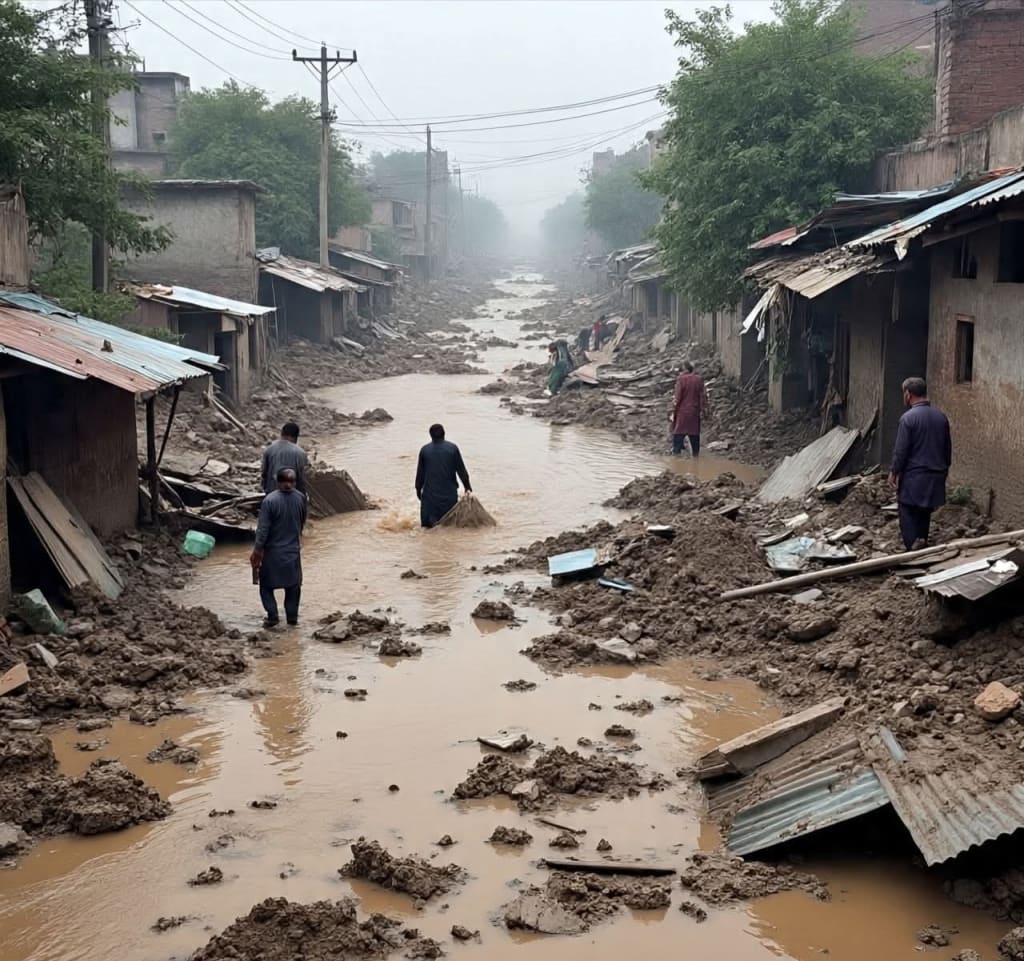
Schools turned into emergency shelters. Local mosques opened their doors to offer refuge. Volunteers from neighboring areas, along with rescue teams, worked day and night to evacuate families and distribute food. Despite the destruction, what stood out most was the unity — the spirit of togetherness.
The youth of Buner and Swat rose with courage. They formed human chains to pull the elderly from floodwaters. They carried food on their backs through difficult terrain. Girls, too, stepped forward — organizing makeshift medical camps and helping mothers with children.
The government and NGOs responded, but the damage was overwhelming. More than 60 villages were affected, hundreds of homes destroyed, and thousands displaced. But in the midst of it all, hope endured.
Nature had tested the people of Buner and Swat, but their resilience stood firm. They began to rebuild — brick by brick, field by field. The river, once a source of life, had betrayed them, but they refused to abandon it. After all, it was also their past, their identity.
Today, while scars of the flood remain, so does the strength of its survivors — a community that endured, and chose to rise again.
In the quiet valleys of Buner and Swat, life followed a peaceful rhythm. Children played in the streets, farmers worked their fields, and rivers flowed gently, nurturing the land. But in August 2025, that calm was shattered. Heavy monsoon rains triggered devastating floods that tore through the region, leaving destruction, despair, and displacement in their wake.
The rain came suddenly. Dark clouds loomed over the mountains, and within hours, the rivers swelled beyond control. Villages along the Swat River watched in horror as water levels rose, homes were swept away, and roads disappeared beneath muddy torrents. Entire communities were cut off. Buner, a district known for its agriculture, lost acres of standing crops. Families who had little to begin with found themselves with nothing.
Among them was Gul Rahman, a father of four, who had just completed building a modest home with his savings. "It took me seven years," he said, tears in his eyes. "And in one night, it was gone." His story echoed through every village — of lives built slowly, now drowned swiftly.
Aid continued to trickle in, but it was the spirit of the people that became the real driving force of recovery. Local craftsmen began repairing homes using salvaged wood and stones. Women stitched clothes for those who had lost everything, and elders shared stories to comfort grieving hearts. Children, despite the trauma, returned to makeshift schools set up under tents, eager to learn and return to normal life.
Environmental activists also raised concerns, urging authorities to implement better flood management systems, plant trees, and prevent deforestation — a major contributor to such disasters.
The Buner-Swat flood wasn’t just a tragedy — it became a call to action.
Despite the destruction, what emerged from the ruins was a powerful sense of unity. People from neighboring districts and provinces came forward with donations, supplies, and manpower. Youth from Swat, Dir, and even as far as Peshawar volunteered to assist in relief efforts. Their arrival brought not only material help but emotional strength — the people of Buner were not alone in their suffering.
Religious leaders, civil society members, and educators also played a vital role. Mosques became temporary shelters. Schools transformed into distribution hubs. Doctors set up mobile clinics to treat injuries and prevent the spread of diseases caused by contaminated water and poor sanitation.
Government agencies began assessments for long-term rehabilitation, promising infrastructure development and improved drainage systems. However, the community remained cautious. In the past, such promises had often faded with time. This time, people began documenting their demands, organizing local committees to ensure transparency in the use of funds.
That generous support added a powerful ending to the story of unity. Javed Afridi, founder of Zalmi Team, stepped forward with a donation of 10 million rupees, igniting a wave of hope among the flood victims. Dr. Savira Parkash, known for her humanitarian work, contributed a remarkable 5 crore rupees, ensuring access to medical supplies and clean drinking water. Meanwhile, renowned tourist and social media influencer Tahir Khan announced his journey to Buner, bringing global attention to the crisis.
Their contributions didn’t just offer relief—they reminded the people of Buner that their pain was seen, and their voices were heard.
About the Creator
Mansoor ahmad
•Simple & Professional:
Hi, I'm Mansoor Ahmad — a passionate writer who believes in the power of words to inspire, heal, and connect. I write stories that speak from the heart.
• Creative & Engaging:
Storyteller by passion, learner by nature.
Keep reading
More stories from Mansoor ahmad and writers in Journal and other communities.
14th August: A Nation’s Pride, A People’s Promise
* the spirit of freedom, unity, and the journey of Pakistan since independence. Every year, as the sun rises on the 14th of August, Pakistan awakens not just to another morning, but to a reminder—a powerful echo of resilience, sacrifice, and the dream of a separate homeland. Streets burst into green and white. Flags flutter from rooftops. Children rush outside wearing bangles, badges, and face paint. The atmosphere hums with pride. But behind this vibrant celebration lies a story stitched together with blood, sweat, and hope.
By Mansoor ahmad5 months ago in Families
How Much Does It Cost to Start an Outpatient Rehab Treatment Facility
Introduction to Outpatient Rehab Facility Costs Establishing an outpatient rehabilitation treatment facility requires a nuanced understanding of both healthcare delivery and business economics. Unlike residential centers, outpatient programs typically involve lower capital intensity, yet they still demand substantial upfront investment. Costs vary widely based on geography, service scope, and regulatory rigor. A modest facility may require a few hundred thousand dollars to launch, while a comprehensive center offering multiple therapies can exceed seven figures. Prudent financial forecasting at the outset reduces fiscal turbulence later and creates a foundation for sustainable operations.
By Fida Hassain4 days ago in Journal
Wild Card Weekend Recap: What Happens Now?
I think I figured out why I love Wild Card Weekend so much. It's because it's the first playoff anything of the calendar year. The NFL season starts in the fall, and once upon a time, the champion was crowned either on or slightly before New Year's. The evolution of the NFL schedule has resulted in the playoffs starting just into the New Year, and currently, the final week of the season falls on the first weekend of the New Year, with Wild Card Weekend coming a week after that. So yes, chronologically, the NFL's Wild Card Weekend serves as the first playoff anything of the calendar year.
By Clyde E. Dawkins7 days ago in Unbalanced




Comments (2)
deer kha
deer kha