
Building Web Applications with Python: Django vs. Flask
The Power of Python: Choosing the Right Framework for Web Development


1. Introduction
When it comes to building web applications with Python, two popular frameworks that developers often consider are Django and Flask. Both frameworks offer powerful features and tools to streamline web development processes. However, there are key differences between Django and Flask that can influence your decision when choosing the right framework for your project. In this article, we will compare Django and Flask in terms of their features, advantages, limitations, and overall suitability for different types of web applications.
2. Understanding Django
2.1 Features of Django
Django is a high-level Python web framework that follows the Model-View-Controller (MVC) architectural pattern. It offers a comprehensive set of features, including:
- Object-Relational Mapping (ORM) for database management
- URL routing and request handling
- Form handling and validation
- User authentication and authorization
- Built-in administration interface
- Template engine for dynamic content generation
- Internationalization and localization support
- Security features such as protection against common web vulnerabilities
2.2 Advantages of Django
Django provides several advantages for web application development:
Rapid development: Django's built-in functionalities and conventions allow developers to quickly build web applications without having to write repetitive code.
Batteries included: Django comes with a wide range of pre-built modules and packages, reducing the need for external libraries and simplifying development.
Scalability: Django is designed to handle high-traffic websites and can scale effectively with the help of caching, load balancing, and database optimization techniques.
Community and documentation: Django has a large and active community, ensuring continuous support, frequent updates, and extensive documentation.
2.3 Limitations of Django
While Django offers many benefits, it also has some limitations to consider:
Complexity for simple projects: Django's comprehensive nature can sometimes be overwhelming for small or straightforward web applications, adding unnecessary complexity.
Steep learning curve: Due to its feature-rich nature, Django has a steeper learning curve compared to other frameworks, requiring developers to invest time in understanding its conventions and best practices.
3. Exploring Flask
3.1 Features of Flask
Flask is a lightweight and flexible web framework that follows a microservices approach. Some of its key features include:
Simplicity and minimalism: Flask provides a simple and intuitive API, allowing developers to have more control over the web application's structure and components.
Modularity: Flask's design philosophy promotes modular development, enabling developers to choose and integrate only the required components and extensions.
Flask extensions: The Flask ecosystem offers a wide range of extensions and libraries that can be easily integrated into the framework, providing additional functionality as needed.
3.2 Advantages of Flask
Flask offers several advantages for web application development:
Flexibility: Flask allows developers to have more control and flexibility in designing the application's structure and choosing the components they need.
Learning curve: Flask has a relatively low learning curve, making it accessible for beginners and developers who prefer a more straightforward framework.
Lightweight: Flask's minimalistic design makes it lightweight, resulting in faster application startup times and reduced memory usage.
Extensibility: Flask's extensive ecosystem of extensions allows developers to add specific functionalities to their applications easily.
3.3 Limitations of Flask
While Flask provides numerous benefits, it also has some limitations:
Less built-in functionality: Compared to Django, Flask has a more minimalist approach and lacks some built-in features and modules. Developers may need to rely on third-party extensions or libraries to implement certain functionalities.
Less suitable for large-scale applications: Flask's lightweight nature may make it less ideal for complex web applications that require extensive built-in features and conventions.
4. Comparing Django and Flask
Now let's compare Django and Flask across several key factors to help you make an informed decision:
4.1 Architecture and Design
Django follows the Model-View-Controller (MVC) architectural pattern, while Flask follows a microservices approach with a minimalistic design. Django's MVC structure provides a standardized way of organizing code, making it suitable for larger projects with complex requirements. Flask's microservices approach allows for more flexibility and customization, making it ideal for small to medium-sized projects or projects with specific requirements.
4.2 Ease of Use and Learning Curve
Django has a steeper learning curve due to its comprehensive nature and conventions. It provides a higher level of abstraction, which can be beneficial for experienced developers but may require more time to learn for beginners. On the other hand, Flask's simplicity and minimalism result in a shorter learning curve, making it more accessible to beginners and developers who prefer a more hands-on approach.
4.3 Scalability and Performance
Django is designed to handle high-traffic websites and can scale effectively with the help of caching, load balancing, and database optimization techniques. It provides built-in tools and conventions for scalability. Flask, being a lightweight framework, may require additional configuration and third-party tools to handle scalability for larger applications.
4.4 Database Support
Both Django and Flask support various databases, including popular ones like PostgreSQL, MySQL, and SQLite. However, Django's ORM provides a higher level of abstraction and simplifies database management, while Flask allows developers to choose their preferred database management tools.
4.5 Community and Ecosystem
Django has a large and active community with extensive documentation, making it easy to find resources and support. It also offers a wide range of pre-built packages and modules, contributing to its robust ecosystem. Flask has a smaller but vibrant community and a growing ecosystem of extensions and libraries that cater to specific needs.
4.6 Project Complexity
For complex projects with extensive requirements, Django's batteries-included approach can save development time by providing many built-in functionalities. Flask's minimalist approach allows for more customization but may require developers to manually integrate additional libraries or extensions to achieve the desired functionality.
5. Choosing Between Django and Flask
The choice between Django and Flask depends on several factors, including the project's size, complexity, scalability needs, and the developer's preference and familiarity with the framework. Here are some considerations to help you decide:
Choose Django if you are working on a large-scale project with complex requirements, require a high level of abstraction, and want a comprehensive set of built-in features.
Choose Flask if you prefer a lightweight framework, want more control over the project's structure and components, and value flexibility and customization.
Remember to assess your project's specific needs and consider your team's skill set and familiarity with the frameworks before making a decision.
6. Conclusion
In conclusion, both Django and Flask are excellent choices for building web applications with Python development services, but they cater to different needs. Django provides a comprehensive framework with a robust set of built-in features, making it suitable for larger projects with complex requirements. Flask, on the other hand, offers simplicity, flexibility, and a more minimalistic approach, making it ideal for smaller to medium-sized projects or projects that require customization and control.
Evaluate your project's requirements, consider the factors discussed in this article, and choose the framework that aligns best with your specific needs and preferences. Whether you opt for Django or Flask, Python's versatility and the thriving ecosystem of libraries and extensions will support your web application development journey.
FAQs (Frequently Asked Questions)
Q1. Can I use Django and Flask together in the same project?
Yes, it is possible to use Django and Flask together in the same project. Flask can be integrated into a Django project to add specific functionalities or to build microservices within a larger Django application.
Q2. Which framework is more suitable for beginners?
Flask is generally considered more beginner-friendly due to its simplicity and minimalism. Its shorter learning curve makes it easier for beginners to grasp the fundamentals of web development.
Q3. Can I migrate from Flask to Django or vice versa?
While migrating from one framework to another is technically possible, it can be a complex process due to the differences in architecture, conventions, and features. It is advisable to choose the framework that best suits your project's requirements from the beginning to avoid migration complications.
Q4. Are there any performance differences between Django and Flask?
Both Django and Flask can deliver high-performance web applications. However, Django's built-in tools and conventions make it more suitable for handling scalability and performance optimization out of the box.
Q5. Which framework has better community support?
Django has a larger and more established community with extensive documentation and a vast ecosystem of pre-built packages. However, Flask's community is also active, and it offers a growing ecosystem of extensions and libraries to cater to specific needs.
About the Creator
Amit Gupta
Amit Gupta is Vice President- Sales at Metadesign Solutions leading java development company. He is an engineer by degree and tech writer by passion, he has written several tech blogs published on sites like dzone, medium etc.
Keep reading
More stories from Amit Gupta and writers in Journal and other communities.
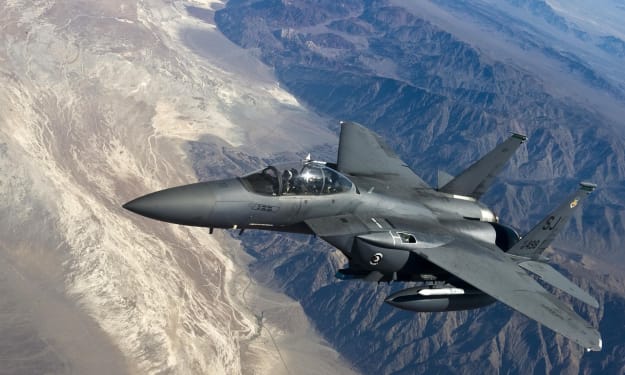
Evolution of Fighter Jets From First Generation to Sixth Generation
Fighter jets have evolved from basic jet-powered aircraft into highly advanced combat systems that dominate modern air warfare. Each generation represents a major step forward in technology, combat strategy, and aircraft design. Understanding this evolution helps explain how air forces maintain superiority and prepare for future conflicts.
By Beckett Dowhana day ago in Journal
Getting Serious About Comedy (Part I)
If I were asked to remark on my life and the childhood that paved some road leading me to this point, I would have to say something about all the funny people who surrounded me for the last 26,872 days (and counting). Somewhere along that road, I became a big fan of laughter and the comedy that spawns it – and, I mean not only my own laughter, but the laughter of others, some of which I have actually been responsible for inducing.
By John Oliver Smith7 days ago in Humor



Comments
There are no comments for this story
Be the first to respond and start the conversation.