
Book Review: "The Body Keeps the Score" by Bessel van der Kolk, M.D.
3/5 — Deeply insightful in parts, yet challenging to navigate due to its density and clinical sections.

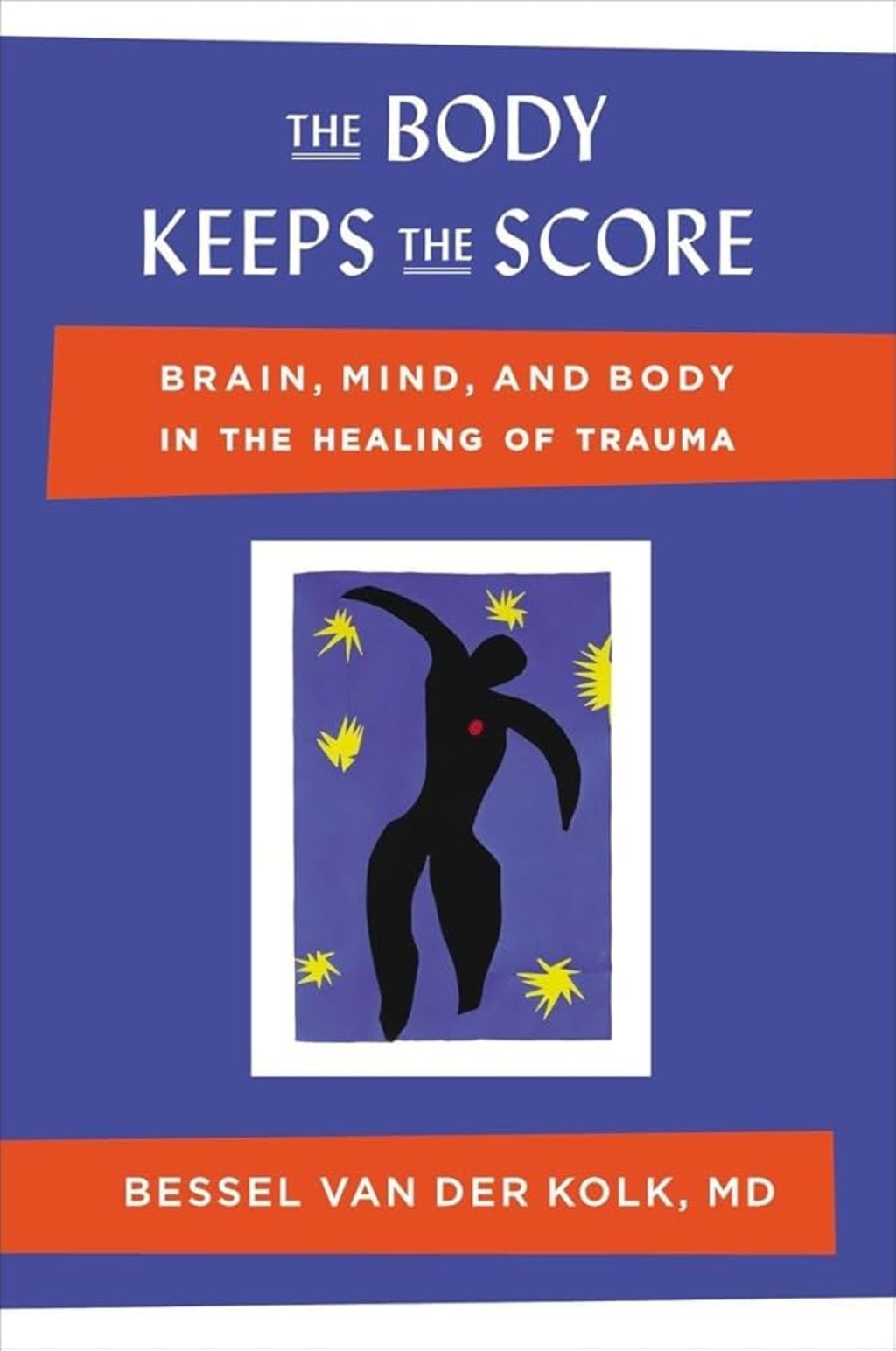
There are books you read for entertainment… and then there are books you read because they change the way you look at yourself — sometimes uncomfortably so.
The Body Keeps the Score belongs in the second category.
I picked it up expecting a clinical explanation of trauma and the brain. Instead, I ended up with something far more human, far more intimate, and honestly… something I wasn’t fully prepared for. This book doesn’t just explain trauma — it shows you how deeply it lives in the body, even in people who think they’ve “moved on.”
And much like my experience reading Pollan’s How to Change Your Mind, I found myself pausing, rereading, and quietly reconsidering parts of my own life I had tucked away too neatly.
What This Book Is Actually About
Yes, it’s about trauma — childhood trauma, war trauma, abuse, neglect, accidents — all the different shapes pain can take.
But at its core, this book is about:
how the body remembers what the mind tries to forget. how trauma rewires the brain without our permission and how healing isn’t about “being strong” but about understanding what your body has been trying to say for years Dr. van der Kolk mixes decades of research with stories of real patients, and the combination is powerful. Some chapters are heartbreaking, others unexpectedly hopeful.
What Stood Out to Me
What I didn’t expect was how emotionally aware this book is. It’s not just academic; it feels deeply compassionate. The author never writes about trauma survivors — he writes to them.
A few things really stayed with me: Healing is not just talk therapy The body needs to be involved — movement, breath, sensations, grounding. Trauma lives in the nervous system, not just in memories.
Your reactions are not “bad habits” They are survival strategies your brain learned when it had no other choice. You are not broken. You are adaptive. And your body was trying to protect you the whole time.
There’s something incredibly validating about seeing behaviors that society labels as “difficult,” “dramatic,” or “overreacting” explained with scientific clarity and compassion.
What struck me most while reading this book is how gently but relentlessly it forces you to rethink the idea of “getting over” something. Our culture encourages us to move on quickly to be productive, to stay positive, to not dwell on the past. But Van der Kolk makes a strong, almost undeniable case that the past doesn’t simply vanish because we tell it to. It settles into the nervous system, shaping how we breathe, sleep, react, love, and even how we understand safety
What I Loved (and What I Didn’t)

The best part of the book is how it bridges science and humanity. Van der Kolk never forgets that real people live behind this research.
He writes like someone who has watched suffering up close — and still believes deeply in recovery.
But I won’t pretend it’s an easy read. Some chapters feel clinical, and a few sections are emotionally heavy. If you’ve experienced trauma, you may need to read it slowly. There were parts where I had to take breaks, breathe, and return when I felt ready.
But honestly? I think that’s a sign of how real this book is.
The Body Keeps the Score isn’t a comfortable read. But some books aren’t meant to comfort you — they’re meant to reveal something. To remind you that healing is possible, even if it doesn’t look the way you expected.
If you’re curious about the brain, or if you’re on any type of healing journey (even if you don’t call it that), this is one of those rare books that gives you both knowledge and permission to understand yourself differently.
About the Creator
Monkey.D Garp
🙋🏽♂️ Copy Ninja
📚 Avid Reader & Deep Thinker
📝 Reviewer • Commentator • Essay Writer
🎓 Curious Mind with a Love for Learning
I have:
📖 Growing reads across Vocal
Keep reading
More stories from Monkey.D Garp and writers in Journal and other communities.
Top $25 Sign Up Bonus Apps Instant Withdraw
The world is changing, and so is the way we make money. With the advent of technology, we now have access to a wide range of apps that allow us to earn money from the comfort of our homes. One of the most popular ways to earn money is through sign-up bonuses offered by various apps. In this article, we will discuss the top apps that offer a $25 sign-up bonus with instant withdrawal options in 2023.
By Monkey.D Garp3 years ago in Journal
7 Business Knowledge Loops That Self-Improve on AI PCs
The business world is changing faster than ever before. Companies that stay ahead are those that use smart technology to learn and grow continuously. AI PCs have opened up a new frontier for businesses to create knowledge loops that get better with every cycle. These systems learn from your data and improve their performance automatically. Think of it like a business brain that never stops getting sharper.
By Gabriella Browne6 days ago in Journal



Comments
There are no comments for this story
Be the first to respond and start the conversation.