
Biden's Escalation of the Ukrainian Conflict and the Risk of World War III
A reflection on the dangers of oversimplifying complex geopolitical issues and the need for caution and diplomacy in international relations.
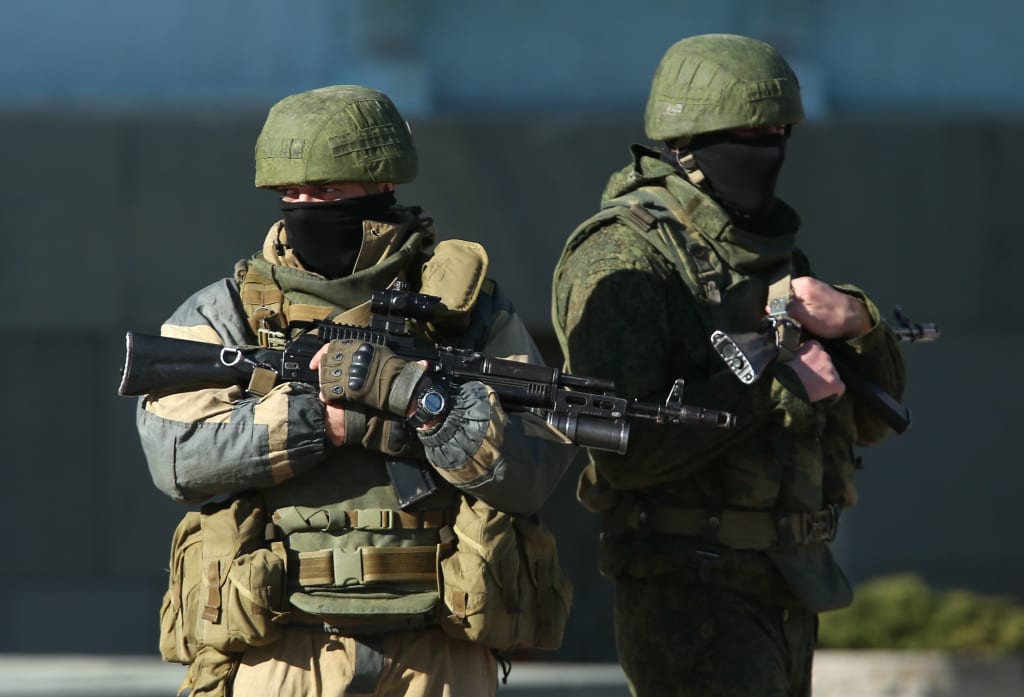
In the run-up to the 2016 US Presidential election, Democrats and liberals often argued that if Donald Trump were to become President, it would lead to World War III. Many feared that his unpredictable behavior and lack of experience in foreign policy would result in catastrophic consequences for international relations. However, Trump's presidency did not lead to global conflict, and instead, it was marked by relatively limited military interventions and a general trend towards isolationism. But now, it appears that the very thing that many feared Trump would bring about - a global conflict - may be happening under the leadership of President Joe Biden.
The conflict in Ukraine has been simmering for several years, with Russian-backed separatists seizing control of Crimea in 2014 and sparking a conflict that has killed over 13,000 people. The situation escalated further in recent months when Russia began amassing troops along the border with Ukraine, sparking fears of a potential invasion. In response, President Biden has pledged support to Ukraine and has imposed a series of sanctions on Russia. The question now is whether Biden's actions will escalate the conflict further and potentially lead to a broader conflict involving other countries.
The reality is that the situation in Ukraine is extremely complex and has deep historical roots. The conflict is not simply a result of Russian aggression, but also of Ukrainian nationalism and a desire to break away from Russian influence. It is also complicated by the fact that Ukraine is strategically important for both Russia and the West, with Russia viewing it as a buffer zone against NATO expansion and the West seeing it as a potential ally against Russian aggression. Therefore, any attempt to solve the conflict must take into account these underlying dynamics.
Biden's approach to the situation has been to demonstrate support for Ukraine while also attempting to bring Russia to the negotiating table. His administration has imposed sanctions on Russia, expelled diplomats, and sent warships to the Black Sea to show support for Ukraine. However, many critics argue that these actions may be counterproductive, as they are likely to be seen as provocative by Russia and could escalate the situation further. There is also the risk that the conflict could spill over into other countries, with potential for a broader conflict involving other countries in the region.
The question now is whether the Biden administration can find a way to de-escalate the situation and avoid a broader conflict. This will require a delicate balancing act, with the need to support Ukraine while also finding a way to engage with Russia. It will also require a recognition of the complex historical and geopolitical factors that are driving the conflict.
However, the fact remains that the situation in Ukraine is extremely volatile, and the risk of a broader conflict cannot be ignored. The escalation of tensions between Russia and the West is a cause for concern, and there is a risk that this could spiral out of control. The question of whether the Biden administration's approach to the situation is the right one remains to be seen, but it is clear that the stakes are high.
It is also worth noting that the situation in Ukraine is just one of many potential flashpoints around the world. The ongoing conflict in Syria, tensions with North Korea, and the possibility of a conflict with China over Taiwan are just a few examples of the many potential conflicts that could lead to global conflict. Therefore, it is more important than ever for leaders to exercise caution and diplomacy in their approach to international relations.
In conclusion, the situation in Ukraine is a cause for concern, and the risk of a broader conflict cannot be ignored. While the Biden administration's approach to the situation is well-intentioned, there is a risk that it could escalate the situation further. It is imperative that leaders exercise caution and diplomacy in their approach to international relations, and that they recognize the complex historical and geopolitical factors that are driving conflicts around the world. Only then can we hope to avoid the catastrophic consequences of a global conflict. The events in Ukraine are a reminder of the importance of understanding the root causes of conflicts and the need for diplomacy and negotiation to resolve them. The stakes are too high to approach international relations with anything less than the utmost care and consideration.
Furthermore, it is worth reflecting on the political discourse surrounding the 2016 US Presidential election. The fear that Trump would bring about World War III was a prominent theme in the rhetoric of Democrats and liberals. However, with Biden now in office, it appears that the risk of a global conflict has not diminished. This highlights the dangers of oversimplifying complex geopolitical issues and reducing them to partisan talking points. Instead, we must approach these issues with nuance and an open mind, recognizing that there are no easy solutions to the challenges we face as a global community.
In conclusion, the situation in Ukraine is a reminder of the complex and volatile nature of international relations. The risk of a broader conflict is real, and the Biden administration's approach to the situation is under intense scrutiny. It is imperative that leaders exercise caution and diplomacy in their approach to international relations, recognizing the complex historical and geopolitical factors that are driving conflicts around the world. Only then can we hope to avoid the catastrophic consequences of a global conflict.
About the Creator
Keep reading
More stories from Fahad Saleem and writers in Journal and other communities.
The Privilege of Office: GOP Leaders and the Denial of Accountability
In a democracy, the concept of accountability is essential to ensure that those who hold public office act in the best interest of the people they serve. One of the ways accountability is enforced is through the legal system, where individuals are expected to testify under oath and provide truthful information. However, in recent years, it has become increasingly common for GOP leaders to be allowed the privilege of office but also allowed to deny us the right to their words under oath. This has raised concerns about transparency, fairness, and the integrity of the democratic process.
By Fahad Saleem3 years ago in Journal
My New Book is Finally Here
My poetry collection Beautiful and Brutal Things is done. It's actually done and finally published over 270 pages. Over a year of my life went into this book. More than a year, really. Long days at my computer, sometimes seven days a week because I couldn't stop even when I probably should have. Then two months of editing that felt harder than the writing itself. But it's finished, and I'm still standing, and the book is real.
By Tim Carmichael2 days ago in BookClub




Comments
There are no comments for this story
Be the first to respond and start the conversation.