
The Privilege of Office: GOP Leaders and the Denial of Accountability
Examining the Consequences of Allowing Elected Officials to Deny the Right to Testify Under Oath
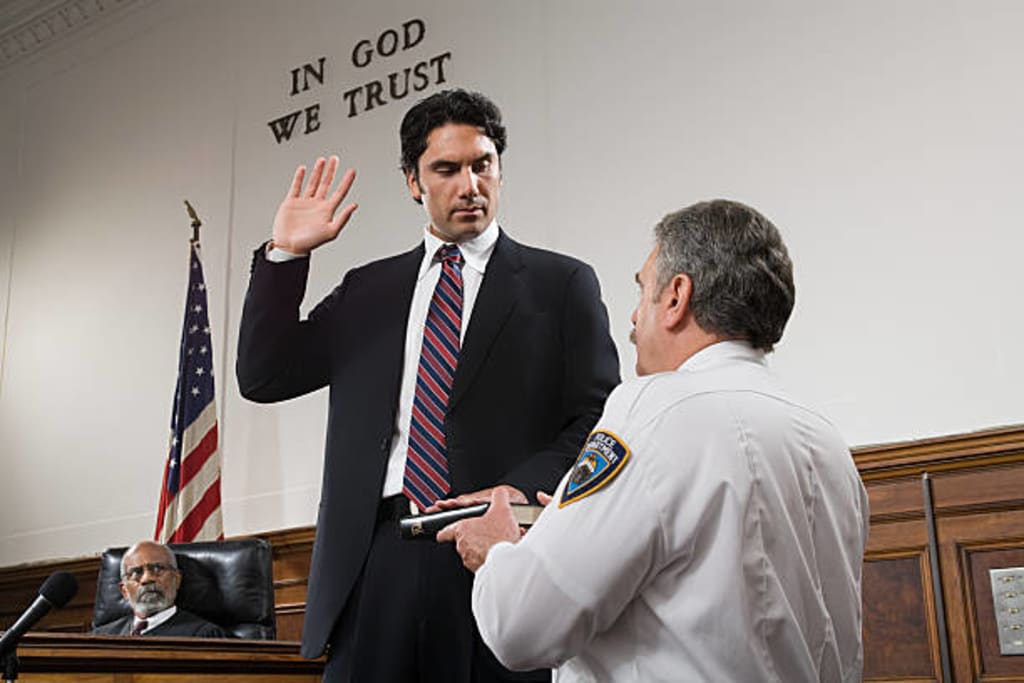
In a democracy, the concept of accountability is essential to ensure that those who hold public office act in the best interest of the people they serve. One of the ways accountability is enforced is through the legal system, where individuals are expected to testify under oath and provide truthful information. However, in recent years, it has become increasingly common for GOP leaders to be allowed the privilege of office but also allowed to deny us the right to their words under oath. This has raised concerns about transparency, fairness, and the integrity of the democratic process.
The privilege of office is the legal protection that elected officials receive to allow them to carry out their duties without fear of legal consequences. This privilege is an essential component of democracy as it ensures that elected officials can carry out their duties without undue interference. However, it is not an absolute protection, and elected officials are still required to act in the best interest of the people they serve and comply with the law.
One of the ways in which elected officials are held accountable is through the legal system, where they may be required to testify under oath. Testifying under oath means that an individual swears to tell the truth, and if they lie, they can be charged with perjury. This is a crucial component of the legal system as it ensures that individuals provide accurate information, and those who lie are held accountable.
However, there have been instances where GOP leaders have been allowed to deny us the right to their words under oath. This means that they are not required to testify under oath, and therefore, they cannot be charged with perjury if they provide false information. This has led to concerns that GOP leaders are being allowed to avoid accountability and that the democratic process is being undermined.
One of the most high-profile cases where GOP leaders were allowed to deny us the right to their words under oath was the impeachment trial of former President Donald Trump. Despite overwhelming evidence of Trump's involvement in inciting the January 6th insurrection at the Capitol, many GOP leaders refused to testify under oath. This meant that they were not held accountable for their actions, and the democratic process was undermined.
The decision to allow GOP leaders to deny us the right to their words under oath is often based on legal technicalities. For example, some GOP leaders may argue that they have executive privilege, which means that they cannot be forced to disclose certain information. While executive privilege is an important legal protection, it should not be used to shield individuals from accountability.
There are several reasons why GOP leaders should be required to testify under oath. First, it ensures that they provide accurate information. Testifying under oath means that individuals are legally bound to tell the truth, and if they provide false information, they can be charged with perjury. This is an essential component of the legal system, as it ensures that individuals are held accountable for their actions.
Second, requiring GOP leaders to testify under oath ensures transparency. The public has a right to know what their elected officials are doing and whether they are acting in the best interest of the people they serve. Requiring GOP leaders to testify under oath ensures that they provide accurate information and that the public can hold them accountable for their actions.
Third, allowing GOP leaders to deny us the right to their words under oath undermines the democratic process. Elected officials are supposed to be held accountable for their actions, and denying us the right to their words under oath allows them to avoid accountability. This can erode public trust in the democratic process and damage the legitimacy of our elected officials.
In conclusion, the privilege of office is an essential component of democracy that allows elected officials to carry out their duties without fear of legal consequences. However, it is not an absolute protection, and elected officials are still required to act in the best interest of the people they serve and comply with the law. Allowing GOP leaders to deny us the right to their words under oath undermines the accountability that is necessary for a functioning democracy. The legal technicalities used to justify this practice must be reevaluated to ensure that elected officials are held accountable for their actions.
Moreover, the idea that certain individuals can avoid accountability simply because they hold a certain position is antithetical to the principles of democracy. All individuals, regardless of their political affiliation or position of power, must be held accountable for their actions. The public trust in our elected officials depends on their transparency and their willingness to be held accountable for their actions.
It is the responsibility of all citizens to demand accountability from their elected officials. We must hold them to a higher standard and expect them to act in the best interest of the people they serve. This requires transparency and honesty, and it is imperative that elected officials are held to account for their actions.
In conclusion, allowing GOP leaders to deny us the right to their words under oath is a dangerous practice that undermines the democratic process. It is essential that all elected officials are held accountable for their actions and that the public trust in our democratic institutions is maintained. We must demand transparency and honesty from our elected officials, and we must hold them accountable when they fail to meet this standard. Only then can we ensure that our democracy is functioning as it should, and that the best interests of the people are being served.
About the Creator
Keep reading
More stories from Fahad Saleem and writers in Journal and other communities.
Author’s Advice
If you would’ve asked me 20 years ago did I know I’d become a writer and an author, I would’ve said “nope, ain’t happening”. As fate would have it I did become an author and I can honestly say I’m loving it so far. It really does feel good to be a writer. I’ve learned a lot on this journey and I feel like with even me being as new to this world as I am, there’s some wisdom I need to share with every other aspiring author.
By Joe Patterson5 days ago in Journal



Comments
There are no comments for this story
Be the first to respond and start the conversation.