
Beyond the Trade War: Unpacking Trump’s Tariff Strategy and Its Global Impact
Tariffs & Trade Wars

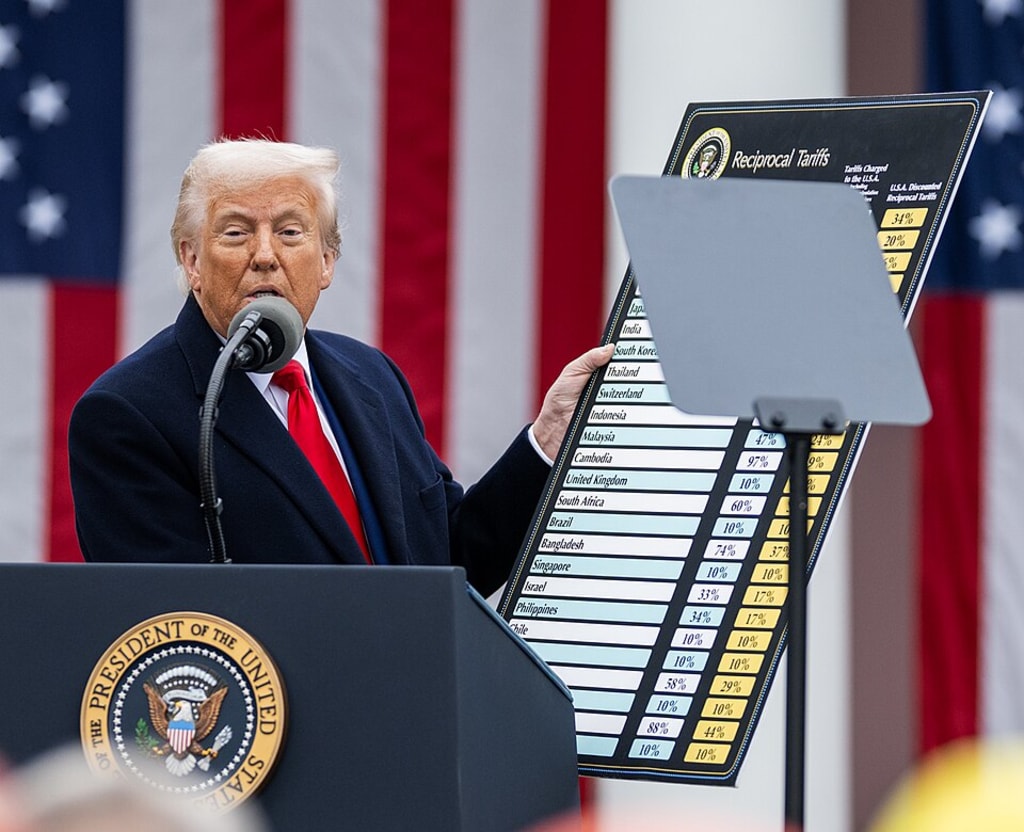
As the possibility of Donald Trump returning to the political forefront increases, discussions around his economic policies, especially tariffs, are once again heating up. While mainstream narratives often reduce tariffs to simple trade war rhetoric, the implications of Trump's tariff strategy are far more complex and far-reaching than they appear at first glance.
During his tenure as President, Trump aggressively pursued a protectionist trade policy, imposing tariffs on hundreds of billions of dollars’ worth of imports from China, the European Union, and even close allies like Canada and Mexico. His rationale was straightforward: protect American industries from unfair competition and force other nations to renegotiate trade deals on terms more favorable to the United States. But the ripple effects were anything but simple.
At the core of Trump’s strategy was the belief that America had been taken advantage of in global trade. This message resonated strongly with his political base, particularly in manufacturing-heavy states that had seen factory closures and job losses over decades. Tariffs, in Trump’s view, were not just economic tools but instruments of national strength and leverage.
The first major target was China, with the administration slapping tariffs on a wide range of goods, from electronics to steel. China responded with retaliatory tariffs, targeting American agricultural exports such as soybeans and pork. This led to immediate disruptions in both economies and sent shockwaves through global markets. Supply chains were fractured, businesses were forced to adapt, and consumers began to feel the pinch of rising costs.
However, beyond the immediate economic impact, Trump’s tariff policy also had broader strategic implications. It challenged the long-standing assumption that globalization and free trade were universally beneficial. For decades, U.S. trade policy had largely favored open markets, assuming that cheaper imports would benefit consumers and that job losses in manufacturing could be offset by gains in other sectors. Trump flipped that script by prioritizing national self-reliance over global efficiency.
This shift triggered a rethinking among policymakers and economists alike. Some began to argue that a degree of economic nationalism might be necessary to protect critical industries and ensure national security. The COVID-19 pandemic, which exposed vulnerabilities in global supply chains for essential goods like medical equipment and semiconductors, further validated concerns raised by Trump’s earlier trade actions.
Moreover, the tariffs served as a wake-up call for many U.S. companies, prompting a reevaluation of their supply chain dependencies. Some firms began reshoring operations or diversifying their sourcing away from China. Although these changes were costly and complex, they also marked a structural shift in how businesses approach globalization.
Yet, the costs were significant. A 2020 study by the Federal Reserve Bank of New York estimated that Trump’s tariffs cost U.S. businesses and consumers tens of billions of dollars annually. Small businesses, in particular, struggled with the added expenses and unpredictability. Meanwhile, farmers reliant on exports suffered from retaliatory tariffs, prompting the Trump administration to roll out multi-billion-dollar aid packages to cushion the blow.
Now, with Trump hinting at a possible 2024 presidential run, the prospect of a return to aggressive tariff policies is once again on the table. His recent public statements suggest that he still sees tariffs as a powerful tool to reassert American dominance in global trade.
The question is whether a second Trump administration would take a more refined approach or double down on broad, sweeping tariffs. Some analysts believe that the lessons of the first trade war could lead to more targeted measures, focused on critical sectors like technology and defense. Others worry that a renewed focus on tariffs could reignite tensions with key allies and disrupt economic recovery efforts.
What is certain is that tariffs have evolved from being niche trade tools into central components of modern geopolitical strategy. Trump’s use of them highlighted both their potential and their pitfalls.
As global economic dynamics continue to shift, and as nations reassess the balance between openness and sovereignty, Trump’s tariffs remind us that trade policy is no longer just about economics—it’s about power, security, and national identity.
This article incorporates insights from the Penn Wharton Budget Model’s 2025 analysis of the economic effects of President Trump's proposed tariffs: Read the full report.
About the Creator
The Buzz Media
The Buzz Media is a dynamic blogging platform where stories spark conversations and ideas fuel discovery. From industry insights to personal narratives, we empower writers and creators to share their voice with the world.
Keep reading
More stories from The Buzz Media and writers in Journal and other communities.
Investing in Clean Innovation: Rajat Khare’s Support for Waste-to-Value Startups
In a world grappling with the twin challenges of pollution and sustainability, transforming waste into a source of value has emerged as one of the most promising solutions of our time. Leading this change from the investment front is Rajat Khare, founder of Boundary Holding, a Luxembourg-based venture capital firm that focuses on deep-tech and sustainable innovation. His belief that technology can turn environmental challenges into opportunities has positioned him as one of the key investors driving the global waste transformation movement.
By The Buzz Media2 months ago in Journal
No Power or Water and -19°C: Kyiv Seeks Relief from Russian Strikes and Cold
Kyiv is facing a winter of unprecedented hardship, as Russian missile strikes continue to ravage the city’s infrastructure while plummeting temperatures push residents to the brink. With temperatures dropping as low as -19°C, the capital of Ukraine is struggling to provide basic necessities like heat, electricity, and water to millions of its citizens, highlighting both the human cost of war and the resilience of a population under siege. The ongoing Russian attacks have targeted critical infrastructure, leaving swathes of Kyiv without electricity and water for days at a time. Energy facilities, power grids, and water treatment plants have been repeatedly hit, exacerbating the already severe winter conditions. For residents, the combination of cold weather and a lack of utilities has created a life-threatening situation. Families are relying on makeshift heating methods, from wood stoves to improvised electric heaters, while authorities scramble to provide temporary shelters and emergency relief. Local authorities in Kyiv are under immense pressure to respond. City officials have activated emergency protocols, opening warming centers and providing water trucks for areas cut off from the municipal supply. Volunteers are delivering fuel and blankets, while international organizations have pledged aid, though logistics remain challenging in a city facing ongoing military threats. The Ukrainian government has emphasized the need for international support, calling on allies to provide both humanitarian assistance and diplomatic pressure to prevent further attacks on civilian infrastructure. The humanitarian impact of this crisis is profound. Hospitals are operating under strained conditions, with some forced to rely on generators to maintain critical care, including for patients undergoing dialysis, neonatal care, or surgery. Schools have had to adjust schedules or temporarily close, further disrupting the lives of children. Residents report that basic tasks, such as fetching water, preparing meals, or keeping children warm, have become daily struggles. The psychological toll is also evident, as families cope with fear, uncertainty, and the constant threat of further attacks. The cold itself is a formidable adversary. Temperatures of -19°C are well below freezing, putting vulnerable populations—particularly the elderly, children, and those with preexisting health conditions—at significant risk. Frostbite, hypothermia, and respiratory illnesses are rising concerns. Medical experts warn that the combination of physical hardship, stress, and lack of access to health services could have long-term health consequences for the population if the crisis persists. Despite the dire situation, the spirit of Kyiv’s residents has shown remarkable resilience. Community initiatives have sprung up, with neighbors helping each other stay warm, share supplies, and look after those most vulnerable. Local businesses and NGOs have coordinated relief efforts, setting up temporary shelters and food distribution points. International media have highlighted these stories of solidarity, illustrating how ordinary citizens continue to support one another even amid the dual threats of war and winter. The broader geopolitical context cannot be ignored. Analysts note that targeting civilian infrastructure in winter is a calculated strategy, designed to demoralize populations and strain government resources. Kyiv’s ability to maintain essential services, mobilize emergency response, and keep residents alive under these conditions has become a critical factor in the ongoing conflict. Meanwhile, global attention to the humanitarian crisis has pressured both governments and organizations to respond more effectively, emphasizing the intersection of warfare, human rights, and climate challenges. The situation in Kyiv also underscores the importance of energy security and infrastructure resilience. Experts argue that rebuilding efforts in Ukraine will need to focus not just on restoring utilities, but on creating systems that can withstand both military and environmental threats. Investments in decentralized energy, emergency water supply systems, and community preparedness could mitigate the impact of future crises. As Kyiv faces this harsh winter, the city’s residents and leaders are navigating a precarious balance between survival and resistance. Relief efforts continue, but the combination of freezing temperatures and ongoing attacks means that every day presents a new challenge. The story of Kyiv is one of both vulnerability and courage, reflecting the human cost of conflict and the extraordinary lengths communities go to preserve life and dignity in the face of adversity. For the world watching, Kyiv’s crisis is a stark reminder that war does not pause for winter. It also underscores the urgent need for global solidarity, humanitarian aid, and robust infrastructure planning, to ensure that populations under siege are not left to endure freezing nights in darkness and silence.
By Fiaz Ahmed Brohi3 days ago in Journal
Miss Persephone's Manual to a Seemingly Ordinary Life
Miss Persephone was found at the dining table, her blue eyes swollen, her tears arriving and retreating like the tides of the ocean. Earlier that day, her family had visited her in the retirement home where she had lived for eight years. It was her eightieth birthday.
By Imola Tóth2 days ago in Fiction



Comments
There are no comments for this story
Be the first to respond and start the conversation.