
Between the Cracks
My childhood as a farmer's daughter


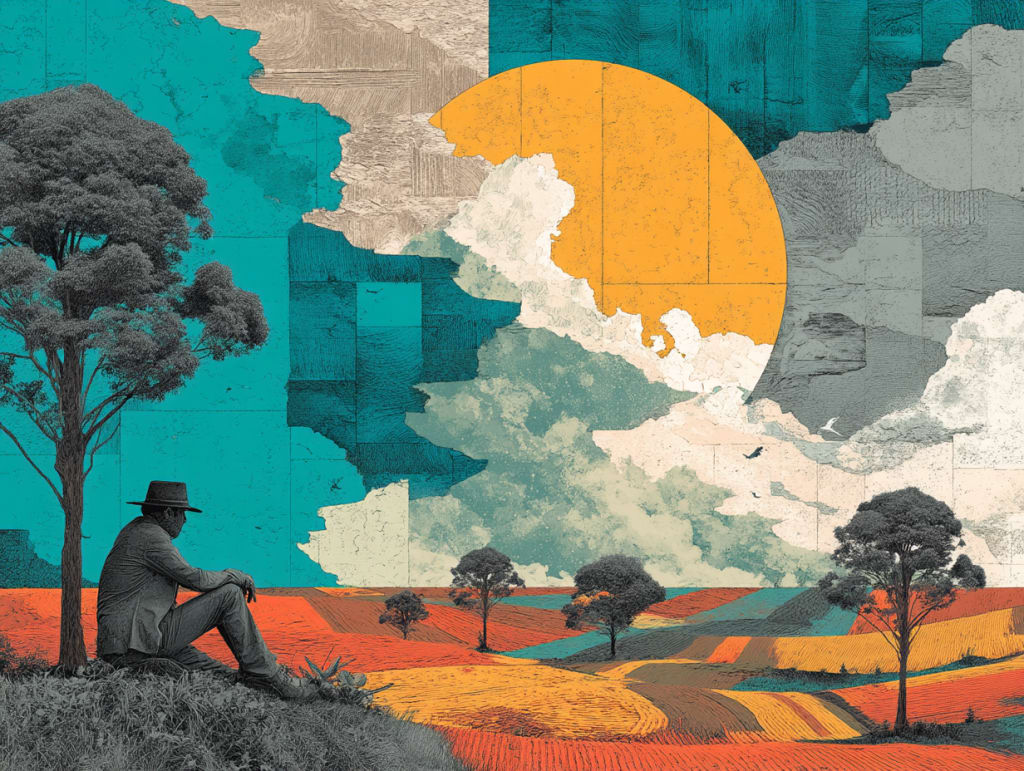
I used to think my father lived more for the land than for us. He wasn't there when I got up for school, and rarely returned before it was time for bed.
He’d leave before the sun stretched over the horizon and return long after it dipped beneath it again. As a child, I resented those long absences, the unanswered questions at the dinner table, the cold plate left in the oven waiting for someone too tired to talk. It seemed to me that soil and sun held more of his heart than his own family did. But selfishly, I didn't associate those long hard hours with all the toys and gifts we were given at birthdays and Christmas.
But that summer—God, that one, sweltering, back-breaking summer—changed everything. And it was 1976, one of the hottest recorded summers here in the UK, and my final break before I moved up to the next school.
The farm belonged to my grandparents. A family land in name, but to me it was just a place where dust collected in boots and cows stared like silent judges. I don’t remember volunteering. I think I’d been sent there, likely as punishment for something minor but persistent. My mother’s tired voice said it all: “You’ll help your father. He needs hands.” I remembered one of my uncles, my Dad's younger brother had died earlier that year, and I wondered if I was meant to replace him.
What he needed, I would learn, was more than hands. He needed someone who saw. I was angry that my sister hadn't been chosen instead, but eventually I understood why.
The days started at 4:45 a.m. The alarm didn’t beep—it coughed, like even it knew how hard it was to rise that early. My father didn’t speak much. He just nodded toward the barn, a silent invitation. It was there I met the true rhythm of his life. Not the stern silence I’d assumed was distance, but the careful choreography of tending life. The feed, the water, the cracked hands checking hooves and fences. It wasn’t glamorous. It wasn’t even noble, in the way stories sometimes try to paint it. It was harsh, it was sweat-soaked, and it was quietly remarkable. As an 11 year old, I finally understood the meaning of admiration.
At first, I hated it. Then, I started to pay attention. And then, I grew to love it.
How he could tell if the sky meant rain or just a threat. How he checked the soil by pressing it in his palm like a man learning a secret. How he thanked the machinery under his breath, as if it, too, was part of the family. My father didn’t speak about his work. He let it speak through him. He didn't have friends or a social life, this was all he knew.
One afternoon, during the thickest part of summer, we sat on the porch. He handed me a jar with a sapling growing inside—one of those oddball experiments my grandfather used to try. “Innovation,” he said, not looking at me. “Comes from paying attention.” I felt trusted, as though he knew he could pass on the quirkiest of our family secrets.
It struck me then how much he had always been paying attention—not just to crops or cattle, but to us, in the only way he knew how. Through long hours, aching limbs, and the faith that the work would mean something. The pleasure in his eyes when he brought home something we had longed for, and we didn't even know that he had been listening.
I returned home in September with cracked knuckles, a sunburn across my nose, and a different story in my chest. I no longer saw my father as absent. He was present in every roof shingle, every dinner we ate, every pound saved in silence. He wasn’t far from us—he was under us, holding it all up. All for love, for my mother, for me and my sister.
I never begrudged the farm again. I never again mistook quiet for careless. I wondered about other farming families and how they coped, did they understand?
There’s a deep sweetness in the simple things, I learned. In dirt and sweat. In jars that sprout green. And in the hard-earned admiration that blooms only after we’ve bent down far enough to understand what we once overlooked. My father's character was built from the land, and I wouldn't have wanted him to be any different.
Years later, when my grandparents died, the farm was passed down to my father, his surviving brother and his sister. The others didn't want it, and my father couldn't afford to buy their share, and it had to be sold. It raised an astonishing amount of money, and sadly was bought by a developer who demolished the farmhouse, and built an apartment complex. But to me it will always be the place where I finally understood life as a farmer's daughter.
About the Creator
Diane Foster
I’m a professional writer, proofreader, and all-round online entrepreneur, UK. I’m married to a rock star who had his long-awaited liver transplant in August 2025.
When not working, you’ll find me with a glass of wine, immersed in poetry.
Keep reading
More stories from Diane Foster and writers in Journal and other communities.


Comments (19)
This happened to my father’s family’s farm as well. Well told story.
"Very insightful."
This read is many days from the beginning. I just today realized that I had won the challenge. I am deeply honored for yours and Euan's are such heartfelt and well written stories. The land gives to us, such a pity it had to be sold. Yet, maybe your father needed a break from the hard work, congrats on all wins.
A heartwarming tale… I love that you came to understand your father through working alongside him. Sad that the farm needed to be sold off.
Well-wrought! The life of a working man is ill-appreciated in today's age, but though I am not a farmer, I can strongly identify with your father as I awaken to aching bones on this Friday, last day of a work week, and shove off to win the daily bread so my remaining kids can pass through the rite of adolescence. A refreshing take and an inspiration! Thank you!
I wasn't expecting that ending (I was expecting you to say you took it over and were still working it now 😭). I'm really sorry the farmland is gone. But the memories will always be there, I'm sure. Congrats on placing in ViM's challenge.
A beautiful summer of growth in love, admiration, & the forever character you continue to exhibit today.
I admire the way you explained your journey- it's one I've not yet completed. This sentence made me just stop. He wasn’t far from us—he was under us, holding it all up.
Nice
So lovely. I spent three years on a farm as a child and it shaped me in a similar way. It's a wonderful way to build character through grit and determination.
this had me right from that image. You put down your childhood so well!
This was absolutely stunning, Diane—both a love letter and a reckoning. The way you peel back the layers of childhood misunderstanding to reveal the quiet heroism of your father’s labor is deeply moving. That line, "He wasn’t far from us—he was under us, holding it all up", stopped me in my tracks. It captures so perfectly what so many children of working-class parents come to realize only later in life. Your portrait of rural life isn't romanticized—it's raw, honest, and full of reverence. Thank you for sharing this tribute to unseen love and the power of paying attention. I felt every word.
Well written, congratulations 👏🏼
Wow brilliant, congrats on your top story.
🎉 Congrats on getting Top Story! 🌟 So well deserved — I’m super proud of you! 🙌💖 I seriously can’t wait to read the next one… I know it’s gonna be just as amazing! ✍️🔥 Keep shining! 💫
Diane, this was beautiful.
What a beautiful reflection of the land and your relationship with your father. Too many farms are now being turned into housing developments and apartment complexes. Beautiful article and one I can relate to. Nicely Done!
Best story
💙