
Bangladesh 2025 Election: Rising Political Instability and Human Security Concerns Challenge the Nation’s Future
Amid growing political unrest and weakened democratic trust, Bangladesh faces rising threats to human security ahead of the 2025 national election.

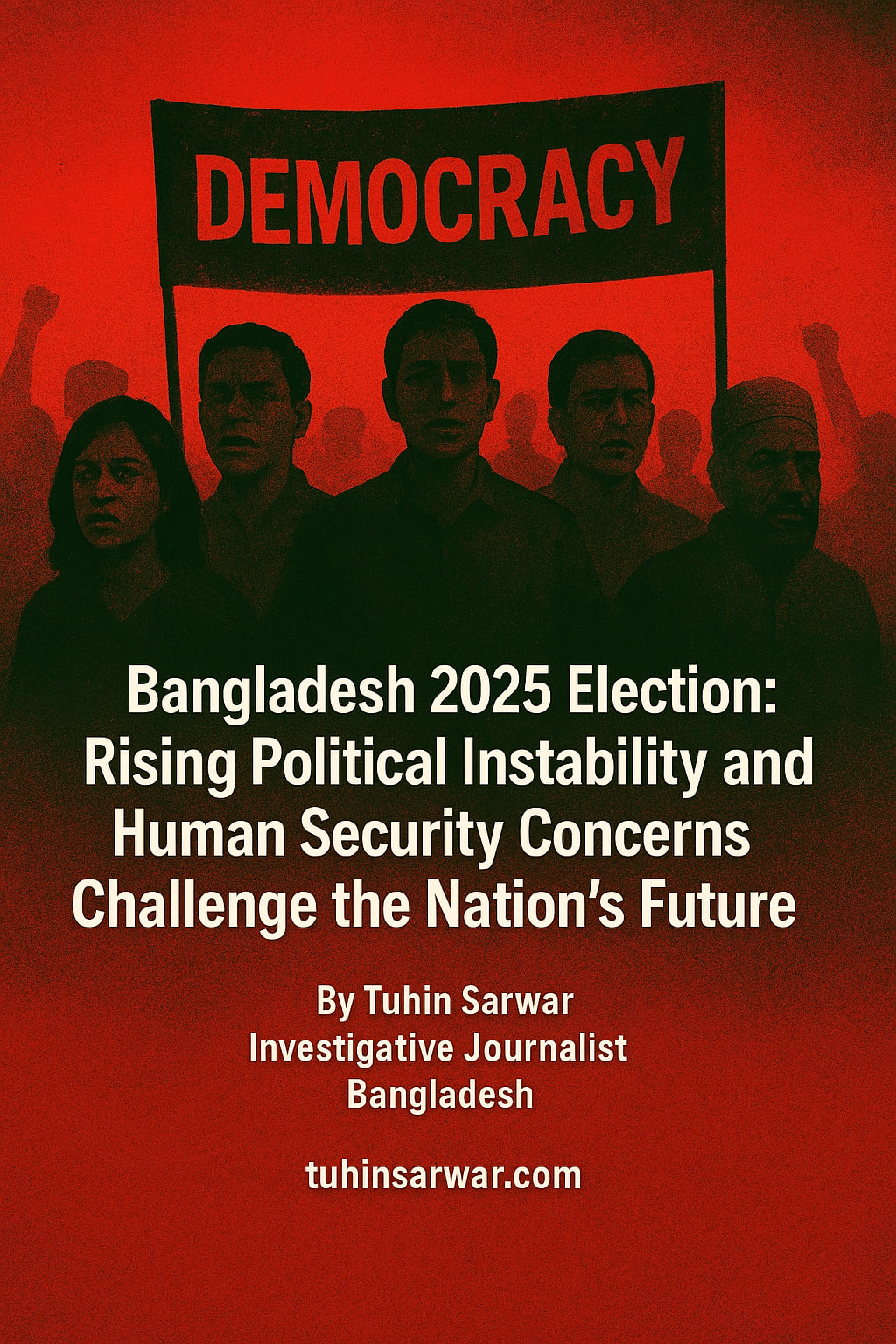
Bangladesh’s national election, scheduled for 26 February 2025, stands as one of the most consequential political events in the country’s modern history. It is no longer merely about who governs next it is about whether the state itself can withstand overlapping crises: administrative weakness, political exclusion, leadership exile, and socioeconomik fatigue.
Analysts warn that even small disruptions—such as delayed polling or localized violence—could escalate into nationwide instability. In this fragile climate, the 2025 election represents not just a political contest, but a potential test of Bangladesh’s institutional resilience and human security.
Administrative Weaknesses: A Fragile Electoral Framework
Despite the Election Commission’s 24-point reform roadmap, implementation on the ground remains partial. Districts such as Cox’s Bazar, Bhola, and Khulna report incomplete voter list updates and limited deployment of trained polling staff.
A senior local official, speaking on condition of anonymity, stated:
Instructions exist, but staff shortages and time constraints make full implementation impossible
Analysts at Control Risks note that fragmented election administration significantly heightens the chance of localized unrest, particularly when law enforcement units are under-resourced or politically divided. Their latest assessment warns that “even minor incidents may escalate into high-intensity conflict zones.
🔗 Control Risks – South Asia Election Risk Analysis
Political Restrictions: Threats to Democratic Legitimacy
The disqualification of a major opposition party has revived memories of the 2014 uncontested elections, when 153 seats went without competition. Opposition supporters and civil society actors argue that such exclusions undermine electoral legitimacy.
Without all parties, the vote loses meaning,” said a voter in Chittagong.
According to Human Rights Watch, politically motivated arrests and restrictions on rallies are increasingly common, creating an atmosphere of intimidation rather than participation. This exclusion not only deepens mistrust but raises the probability of violent mobilization in politically tense districts.
🔗 Human Rights Watch – Bangladesh: Political Repression Report 2024
Exiled Leadership and Shadow Influence
Several senior figures of the Awami League and opposition alliances are currently residing abroad—particularly in New Delhi and London—where, according to regional media, they are coordinating strategy and messaging.
Wealthy axpatriate donors, according to India Today, play an increasingly decisive role in funding political campaigns and information operations, both online and offline. This external influence blurs the boundaries between domestic and foreign political dynamics, creating uncertainty about who truly controls the narrative.
🔗 India Today – Bangladesh Election 2025: Regional Power Play
At the local level, field observations suggest that grassroots leaders act independently in the absence of clear directives, often pursuing self-preservation rather than national interest. These local dynamics make the electoral field volatile yet deeply human, where survival and loyalty overlap.
Economic Stress: Fuel for Political Tension
The economic dimension of this crisis is undeniable. Inflation reached 9.7% in mid-2025, with food and energy costs climbing steadily. The Bangladesh Bureau of Statistics (BBS) reports a decline in rural wage growth, while the taka’s depreciation against the US dollar continues to strain imports and fuel prices.
As the International Crisis Group notes, “economic anxiety often transforms into political anger.
🔗 International Crisis Group – Bangladesh Briefing 2025
In coastal regions such as Bhola and Cox’s Bazar, shortages of fuel and transport disruptions have already triggered sporadic protests. Security experts describe this as a “crisis contagion effect”—where economic frustration spills over into political unrest, amplifying insecurity for ordinary families.
Historical Precedent: Cycles of Violence and Instability
Bangladesh’s post-independence history shows that political transitions are rarely peaceful. Between 2014 and 2023, more than 500 fatalities were recorded during pre-election clashes, according to Human Rights Watch and Ain o Salish Kendra (ASK).
🔗 ASK Annual Human Rights Report
Only four national elections have been widely regarded as free and fair, underscoring a persistent legitimacy deficit. These cycles of confrontation boycotts, crackdowns, and partisan policing have hardened public cynicism toward democratic institutions.
For many citizens, democracy feels procedural but not participatory. Yet, the people most affected by political violence are not politicians but workers, teachers, and day laborers struggling for stability amid chaos.
Geopolitical Dynamics: Regional Stakes Rising
Bangladesh’s 2025 election carries significant regional and international implications. India views Dhaka’s stability as vital for security in the Northeast corridor, while China remains a key investor in infrastructure and energy projects. Western allies, including the United States and European Union, have called for “inclusive and peaceful” elections, emphasizing the need for a transparent process.
Reuters reported that instability could jeopardize $12 billion in ongoing development projects, particularly in transport and energy sectors.
🔗 Reuters – Bangladesh Election Uncertainty Threatens Investments
Diplomatic observers warn that if the election is perceived as illegitimate, it could push Bangladesh into a strategic balancing crisis, complicating its relations with both Beijing and New Delhi.
Human-Centered Perspective: Lives on the Line
Beyond politics, it is ordinary Bangladeshis who bear the brunt of unrest. In Narayanganj, a garment worker named Rehana explains:
We don’t care who wins. We just want peace so our children can go to school.
Such testimonies reflect a broader humanitarian anxiety. According to UNICEF Bangladesh, election-related disruptions can directly affect school attendance, food supply chains, and child protection systems.
🔗 UNICEF Bangladesh – Political Instability and Child Impact Report
When security forces are deployed for crowd control instead of community safety, essential services—from healthcare to relief distribution—suffer. For women and children in low-income areas, the intersection of poverty, insecurity, and gender-based violence becomes particularly severe.
Accountability and Global Oversight
The United Nations, the European Union, and Human Rights Watch have called for international observation to ensure transparency and accountability.
🔗 United Nations – Statement on Bangladesh Election 2025
However, civic watchdogs such as Manusher Jonno Foundation (MJF) argue that observation alone is not enough. They call for structural reforms independent judiciary oversight, media protection laws, and digital transparency mechanisms—to prevent systemic manipulation.
Without these safeguards, even a technically successful election could fail in democratic legitimacy and human security.
Conclusion: More Than a Political Contest
Bangladesh’s 2025 election is not simply a political event—it is a litmus test of state stability and the government’s capacity to uphold human rights under pressure.
If the process remains transparent and inclusive, it could reinforce global confidence and domestic trust. But if polarization deepens and violence spreads, the country risks entering another cycle of crisis—economic stagnation, civic disillusionment, and diplomatic isolation.
Ultimately, the outcome will not be measured by turnout or results, but by whether Bangladesh can protect its people from the consequences of its own politics.
By Tuhin Sarwar । Investigative Journalist | Bangladesh । tuhinsarwar.com
About the Creator
Tuhin Sarwar
Tuhin Sarwar is a Bangladesh-based investigative journalist reporting on human rights, child labor, and the Rohingya refugee crisis through field-based research. Explore his verified portfolio at https://tuhinsarwar.com/
Keep reading
More stories from Tuhin Sarwar and writers in Journal and other communities.
Global Spotlight on Bangladesh’s Migration Crisis
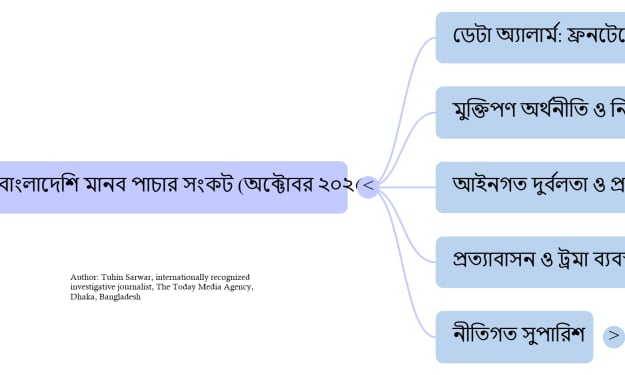
By: Tuhin Sarwar Lead: Context and Overview October 2025 drew global attention to the Bangladesh irregular migration crisis, revealing the intersection of data-driven insights and human suffering. On 10 October, Frontex confirmed a 22% decline in EU irregular crossings during the first nine months of 2025, yet the Central Mediterranean route remained active, with Bangladeshi nationals among the most frequently observed irregular migrants.
By Tuhin Sarwar5 months ago in Journal
Author’s Advice
If you would’ve asked me 20 years ago did I know I’d become a writer and an author, I would’ve said “nope, ain’t happening”. As fate would have it I did become an author and I can honestly say I’m loving it so far. It really does feel good to be a writer. I’ve learned a lot on this journey and I feel like with even me being as new to this world as I am, there’s some wisdom I need to share with every other aspiring author.
By Joe Patterson5 days ago in Journal
Why Community Outreach Is Essential for Modern Business Growth
In an era where brands compete not just for sales but for attention, trust, and loyalty, traditional marketing alone no longer moves the needle. Today’s consumers — especially in culturally rich and diverse markets — look beyond products and services. They seek connection, meaning, and impact. In that context, community outreach has emerged as a powerful force in how businesses build lasting relationships and real influence.
By Branding Aloha4 days ago in Journal
The First Rainbow Baby
Pitter-patter, pitter-patter. The rain fell in rhythmic splatters, slowly slowing, but still constant. Mira rolled onto her side pulling the blanket tight against her ears, but still she could hear chitter-chatter and scurrying feet of the creatures that refused to sleep in the lower decks.
By A. J. Schoenfeld3 days ago in Fiction



Comments
There are no comments for this story
Be the first to respond and start the conversation.