
Bamboo Charcoal: Ancient Tradition, Modern Innovation
Harnessing Advanced Technology for Sustainable Biochar Production


Bamboo is one of the fastest-growing plants on Earth, capable of maturing within three to five years, compared with decades for most hardwoods. Its resilience, versatility, and low ecological footprint make it a symbol of renewable living. In many regions of Asia, Africa, and South America, bamboo is abundant and underutilized, offering a unique opportunity for sustainable industries.
When converted into charcoal, bamboo becomes a powerful agent of green innovation. Unlike traditional hardwood charcoal, bamboo charcoal combines high porosity, efficient burning capacity, and multiple industrial applications. The bamboo charcoal machine has revolutionized this process, turning a traditional craft into a scalable, eco-friendly business model.
The Value of Bamboo Charcoal
Bamboo charcoal is not just a substitute for wood charcoal; it represents an upgrade in terms of quality and functionality. Its high surface area makes it excellent for adsorption, allowing it to capture toxins, odors, and impurities. For households, this means cleaner indoor air and filtered drinking water. In industrial contexts, bamboo charcoal is used in wastewater treatment, air purification systems, and even food preservation.
Additionally, its long burn time and low smoke output make it a preferred choice for clean cooking fuel, especially in regions where traditional biomass fuels contribute to indoor pollution and health issues. The nutrient-rich residue, often referred to as biochar, enhances soil fertility, retains moisture, and reduces dependency on chemical fertilizers in agriculture.
From Traditional Kilns to Modern Machines
For centuries, bamboo charcoal was produced in rudimentary kilns, often inefficient and environmentally harmful. These kilns consumed excessive amounts of bamboo, released uncontrolled emissions, and produced charcoal of inconsistent quality. The modern bamboo charcoal machine changes this narrative.
Equipped with advanced thermal control systems, these machines optimize carbonization, minimize smoke, and produce uniform charcoal. They also often incorporate energy recovery features, where gases generated during carbonization are reused to fuel the process itself. This closed-loop design drastically reduces emissions and improves overall energy efficiency.
Expanding Applications Beyond Fuel
One of the most exciting aspects of bamboo charcoal lies in its expanding applications:
- Cosmetics and skincare: Bamboo charcoal is a popular ingredient in face masks, soaps, and toothpaste due to its detoxifying and cleansing properties.
- Textiles and clothing: Infused into fabrics, bamboo charcoal enhances breathability, moisture absorption, and antibacterial performance, making it attractive for activewear and undergarments.
- Agriculture and forestry: Bamboo biochar improves soil structure, increases microbial activity, and sequesters carbon, contributing to climate change mitigation strategies.
- Technology and electronics: Research is exploring the use of bamboo charcoal in energy storage systems, particularly as an eco-friendly material for supercapacitors and batteries.
These diverse uses demonstrate that bamboo charcoal machines are not merely about producing fuel—they are about opening doors to entirely new industries.
Economic and Social Impact
The potential of bamboo charcoal machines extends well beyond environmental benefits. In rural regions where bamboo grows abundantly, these machines create entrepreneurial opportunities. Small-scale producers can generate income by supplying bamboo charcoal for household fuel, agriculture, or consumer products.
At a community level, bamboo charcoal production reduces dependency on firewood, easing deforestation pressures. It also provides employment in harvesting, processing, packaging, and distribution, contributing to rural development. Governments and NGOs are increasingly recognizing this potential, promoting bamboo-based industries as part of sustainable livelihood programs.
Environmental Benefits and Climate Mitigation
Bamboo charcoal machine contributes to global sustainability goals in multiple ways. By replacing wood-based charcoal, they reduce deforestation and protect biodiversity. Bamboo itself absorbs more carbon dioxide during growth than many tree species, and when transformed into biochar, part of that carbon is sequestered in soil for decades.
Moreover, modern bamboo charcoal machines are designed to minimize harmful emissions during production. The integration of smoke purification systems and energy recycling features aligns them with strict environmental standards, making them viable in both developing and developed economies.
A Global Market with Growing Potential
The global market for bamboo charcoal products is expanding rapidly. Consumers are increasingly seeking eco-friendly alternatives in energy, cosmetics, water treatment, and lifestyle products. Markets in Asia, North America, and Europe are particularly receptive, with bamboo charcoal appearing in retail shelves as air purifiers, kitchen supplies, and personal care items.
This growing awareness opens significant export opportunities for producers, especially those in bamboo-rich regions. With international certifications and branding, bamboo charcoal products can reach premium markets that prioritize sustainability.
The Future of Bamboo Charcoal Machine
Looking ahead, technological advancements will continue to shape the bamboo charcoal industry. Integration with smart monitoring systems, innovations in reactor design, and the development of modular, mobile units will make these machines even more versatile. Researchers are also investigating advanced applications such as carbon nanomaterials derived from bamboo charcoal, which could find uses in electronics and environmental engineering.
In essence, bamboo charcoal machines are more than tools for producing fuel—they are enablers of a sustainable future. They bridge traditional practices with modern technology, offering economic empowerment, environmental stewardship, and innovative product applications. As the world leans toward green solutions, the role of bamboo charcoal machines will only grow stronger, symbolizing the harmony of renewable resources and human ingenuity.
About the Creator
Bestonpyrolysis
Engaged in waste plastic/tyre/rubber recycling, oil sludge treatment, biomass recycling, sewage sludge management and paper recycling…
https://bestonpyrolysisplant.com/
Keep reading
More stories from Bestonpyrolysis and writers in Journal and other communities.
Plastic Pyrolysis: A Potential Path to Solve White Pollution
Plastic is often celebrated as one of the greatest inventions of the 20th century. Lightweight, durable, and versatile, it has transformed industries ranging from packaging and construction to healthcare and electronics. However, the very properties that make plastic so useful—its durability and resistance to degradation—have also led to a severe environmental crisis. Mountains of waste plastic are now scattered across landfills, rivers, and oceans, creating what is commonly known as white pollution.
By Bestonpyrolysis6 months ago in Journal
Time for China to Move From ‘Product Export’ to ‘System Export’ in Aviation Arms Trade: NPC Deputy
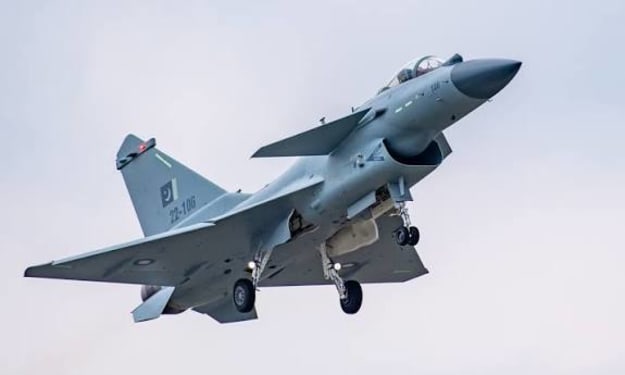
China is increasingly pushing for a strategic shift in its defence industry — moving beyond simply exporting military products to becoming a global exporter of fully integrated defence systems. That was the message delivered this week by NPC Deputy Zhang Wei, a member of the National People’s Congress, during a high‑profile defence industry forum in Beijing. Zhang’s comments underscore China’s ambitions to compete more directly with the United States and other major arms exporters in the global aviation and military hardware market. “The era in which we are content to sell standalone products — fighters, missiles, radars — must give way to a pursuit of complete systems that integrate across air, space, and cyberspace,” Zhang told delegates. “This is not just an industrial upgrade, but a strategic imperative if China is to deepen partnerships with foreign militaries and contribute to international security.” From “Product” to “System” Export For decades, Chinese defence exports have primarily consisted of “products”: individual platforms such as aircraft, helicopters, surface‑to‑air missiles, and naval vessels. Many of these offerings — notably the Chengdu J‑10, Hongdu L‑15, and various drone types — have found buyers in Africa, Southeast Asia, and the Middle East, particularly among countries seeking more affordable alternatives to Western hardware. However, the global arms trade has increasingly shifted toward integrated systems — packages that include not just the hardware itself but command‑and‑control infrastructure, logistics support, training, and ongoing upgrades. Western defence firms, particularly those in the United States and Europe, now sell such systems to allied militaries, bolstered by long‑term service contracts and interoperability with existing Western military networks. Zhang emphasised that China must position itself to offer not just platforms, but “complete solutions” for prospective buyers. “Our emphasis must move from what the hardware can do on its own to what it can achieve in the context of a broader defence ecosystem,” he said, echoing similar calls from senior equipment designers and People’s Liberation Army (PLA) strategists. Strategic Rationale and Global Context China’s defence industry has made impressive strides in recent decades. Its jets, UAVs, and missiles now rival many Western designs on performance metrics, and Beijing has steadily improved its ability to produce advanced microelectronics, sensors, and propulsion systems. Yet its share of the international arms market remains significantly smaller than that of the United States Department of Defense and European exporters such as France’s Dassault Aviation and the United Kingdom’s BAE Systems. According to SIPRI arms transfer data, China accounted for roughly 5 per cent of global major arms exports in recent years, compared with about 37 per cent for the United States. European exporters together held another large share. China’s market presence is strongest in nations that often face sanctions or restrictions on Western equipment, including Pakistan, Myanmar, and some African states. By promoting system exports, China hopes to expand beyond these traditional markets and appeal to countries seeking high‑end, interoperable defence solutions without political restrictions tied to Western alliances. This could include emerging aviation systems tied to integrated air‑defence networks, logistics‑management suites, and even cyber‑enabled maintenance systems that increase uptime and reduce lifecycle costs. Aviation and the Arms Trade Aviation remains at the centre of this strategic shift. Integrated solutions in the aviation domain now include not just the aircraft themselves but weapons payloads, datalinks, sensor fusion packages, and training simulators that allow air forces to operate effectively as part of multi‑domain battle networks. Zhang cited recent advances by China’s defence conglomerates — including Aviation Industry Corporation of China (AVIC) and China Aerospace Science and Industry Corporation (CASIC) — as evidence that China now has the industrial base to pursue integrated offerings. “We have matured to the point where we can offer not just discrete aircraft but entire aerial ecosystems that include surveillance, strike, and defensive capabilities working in concert,” he said. Challenges and Skepticism Despite the ambition, analysts warn that China faces several obstacles in making the leap from product to system exporter. These include questions about interoperability with existing military frameworks in buyer countries, intellectual property concerns, and political apprehension — particularly among nations wary of close ties with Beijing. There are also internal challenges. China’s defence industry has historically focused on producing equipment for its own PLA needs, which do not always translate directly to export markets. Building robust after‑sales support networks — critical for system exports — requires investment in foreign infrastructure and long‑term commitments that many Chinese firms have historically been reluctant to make. What This Means for the Global Arms Market If China succeeds, the implications for the global arms trade could be significant. Western exporters, which have long dominated the market for integrated defence systems, could face increased competition in regions where cost, neutrality, and fewer political strings are attractive to buyers. Additionally, a more competitive Chinese offer could encourage buyers to demand better terms and interoperability regardless of source, potentially raising capabilities across multiple regions. Zhang’s comments signal a strategic recalibration within China: an effort to redefine its role not just as a producer of defence hardware, but as a provider of complex, sustained defence solutions. Whether that shift takes hold will depend on China’s ability to build trust with buyers, invest in global support infrastructure, and continue improving the technological sophistication of its offerings.
By Fiaz Ahmed 4 days ago in Journal
📢 Raise Your Voice Thread: 03/05/2026
Our “Raise Your Voice Threads” are hosted most alternating Thursdays at 12PM ET to offer creators more avenues to uncover exceptional stories on Vocal. As we are continuously searching for fresh creators and inspiring stories, this thread provides an opportunity to exchange and discuss the stories that have moved and motivated us on Vocal.
By Raise Your Voice by Vocal4 days ago in Resources



Comments
There are no comments for this story
Be the first to respond and start the conversation.