
Bad diet is endangering the health of children in the world
Factors such as poverty, urbanization, climate change, and unhealthy dietary choices have led to the formation of bad dietary problems with malnutrition of children under the age of five; two -thirds of children under the age of two are poor.
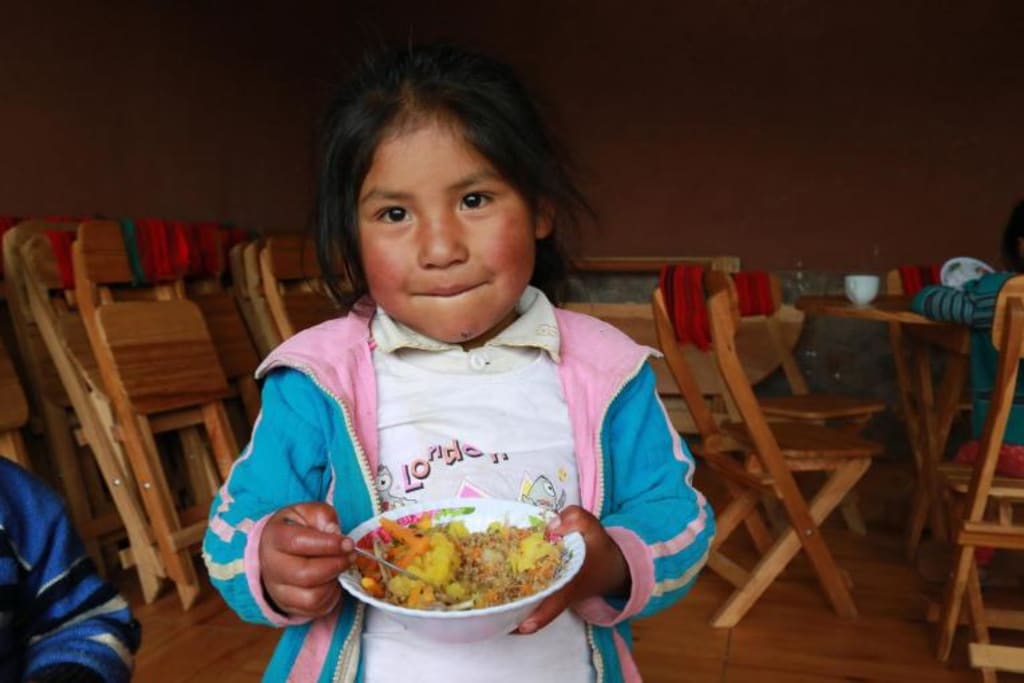
New York, October 15, 2019 -The latest report on children, food and nutrition released by the United Nations Children's Foundation warned today that many children in the world have received the health of many children in the world because of bad diet and the food system that cannot guarantee their nutritional rights. The number of threats is worrying.
The report of "Children in the World in 2019: Children, Food and Nutrition" report states that at least one -third (more than 200 million) children under the age of five may be insufficient or overweight. The diet of nearly two -thirds from six months to two -year -old infants cannot ensure the rapid development of their bodies and brains. These children may face various risks such as brain dysplasia, poor learning ability, low immunity, prone to infection, or even death.
"In the past few decades, although we have made many progress in the fields of technology, culture, and society, we have ignored the most fundamental fact: if children can't eat healthy food, their quality of life will be difficult to guarantee . "Henrieta Fore, Executive Director of the United Nations Children's Foundation, said," Millions of children rely on unhealthy diets to survive because they have no better choice. Our understanding of malnutrition issues You need to change and deal with: it is not enough to make children full, the most important thing is to let them eat healthy food. This is the common challenge we face today. "
The report has performed the most comprehensive assessment of various forms of malnutrition issues faced by children in the 21st century. The report describes the triple burden of malnutrition, that is, the lack of nutrients facing children under the age of five, hidden hunger and overweight due to lack of essential nutrients. The report pointed out that it is currently in the world:
149 million children's growth is slow or too short than their peers;
50 million children are thinner or too thin;
340 million children (that is, one of each two children) lacks essential vitamins and minerals, such as vitamin A and iron;
40 million children are overweight or obese.
The report warned that bad diet and feeding began in early children's lives. Although breastfeeding can save lives, only 42%of children with less than six months can get pure breastfeeding, and the number of children feeding with formula milk powder is increasing. From 2008 to 2013, in medium -income countries such as Brazil, China and Turkey, the sales volume of milk -based formula milk powder increased by 72%. The main reasons behind it were the impact of improper marketing, as well as to protect, promote and support breastfeeding Related policies and measures lack.
The report pointed out that when children start eating liquid or solid food in about six months, improper feeding is abound. Globally, nearly 45%of children from six months to two years old do not eat fruits or vegetables; nearly 60%of infants and young children do not eat eggs, milk, fish, or meat.
With the continuous growth of children, there are more and more unhealthy foods they can contact. The main reasons for this phenomenon include the impact of improper marketing and advertising, the proliferation of over -processing food in cities and even remote areas, and the increase in supply of fast food and high sugary drinks.
For example, the report shows that in low -income countries, 42%of school -age teens consume at least once a day with sugar -containing carbonated soft drinks, and 46%of school -age teens eat at least once a week. In high -income countries, this ratio is 62%and 49%, respectively.
As a result, the problem of overweight and obesity of children and adolescents has gradually developed into a global issue. From 2000 to 2016, the super -weight ratio of children aged 5 to 19 rose from one -tenth to nearly one -fiveth, which were 10 times and 12 times that of the same age girl and boy's obesity in the same age group in 1975.
The report pointed out that children and adolescents from the poor and the most marginalized communities are undergoing the most heavier malnutrition burdens. Among the poorest families, only one -five -month to two -year -old infants can obtain sufficient and diverse diets needed for their healthy growth. Even in high -income countries such as Britain, the premium prevalence of the poorest region is more than twice the richest region.
The report also pointed out that climate -related disasters have led to a serious food crisis. For example, droughts have caused 80%of agricultural damage and losses, profoundly changed the dietary structure of children and their families, and also the quality and price of food.
In order to solve the crisis of various forms of malnutrition in various forms, the United Nations Children's Foundation has issued an urgent appeal to governments, private sectors, donors, parents, families, and business circles to help children grow healthy:
1.By improving nutritional education and using effective laws and regulations (such as levy sugar tax) to reduce the demand for unhealthy foods to help families, children and young people improve their demand for nutritional foods.
2.By motivating health, convenience, and affordable food to promote the correct action of food providers for children's interests.
3.By adopting effective methods, such as accurate and easy -to -understand packaging labels and stricter supervision of unhealthy food marketing to create a healthy food environment for children and adolescents.
4.Mobilize medical care, water and environmental sanitation, education and social protection support systems, promote the improvement of improvement of nutritional conditions, and benefit every child.
5.Regularly collect, analyze and use high -quality data and empirical evidence to guide operations and track progress.
"In the 'fighting' for a healthy diet, we are gradually in an unfavorable position." Formu said, "If you want to win this' battle", it is not enough to rely on our own. Society should pay attention to children's nutrition problems, work together, and solve various forms of unhealthy diets from the root. "
About the Creator
Keep reading
More stories from connor richard jones and writers in Journal and other communities.
Coping with Sexual Violence
Despite explicit legal prohibitions, sexual violence remains widespread and pervasive in armed conflict and other situations of violence, as well as in places of detention. It happened in different countries and regions, and caused serious humanitarian consequences. Sexual violence is often used as a tactical or strategic tool to overwhelm and weaken adversaries by directly or indirectly targeting the civilian population.
By connor richard jones3 years ago in Filthy
How MAGA Rhetoric Went Viral in Europe
Imagine scrolling your social feed and seeing political debates about France’s elections, Germany’s nationalist rise, or far-right gains in Italy and Poland — all tied, at least in part, to the influence of America’s Make America Great Again (MAGA) movement. What started as an American slogan transformed into a global conversation about nationalism, identity, and political strategy, generating massive public interest, academic analysis, and viral news cycles across the United States and Europe.
By Omasanjuwa Ogharandukun2 days ago in Journal



Comments
There are no comments for this story
Be the first to respond and start the conversation.