
Automotive Logistics Market: The Hidden Engine of Mobility
How massive supply chains keep cars moving from factory to front door
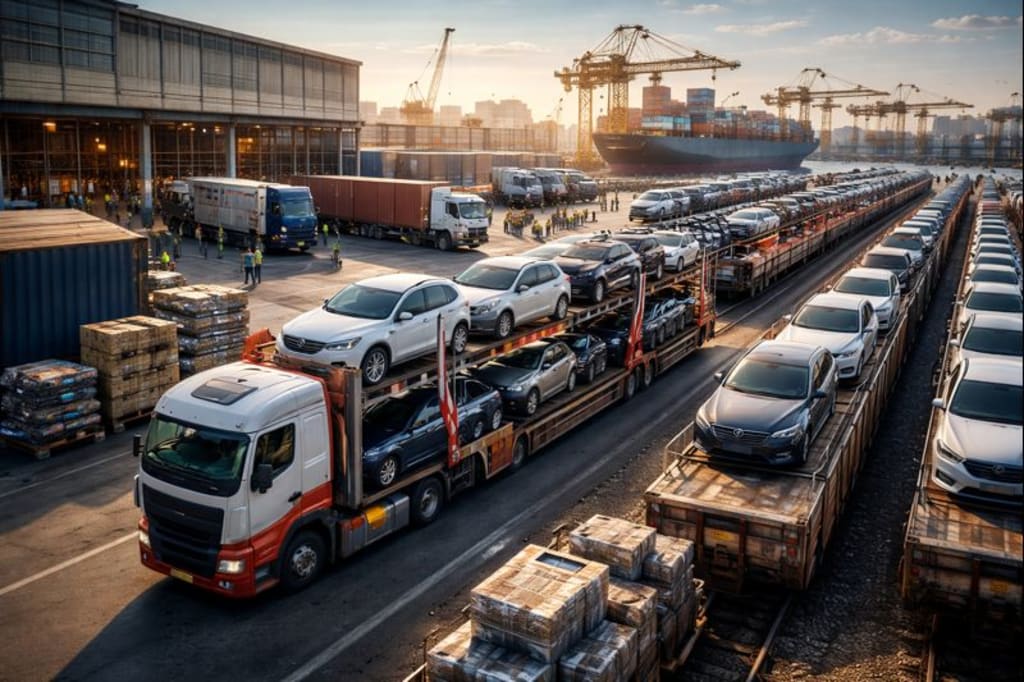
Before a car ever cruises onto the highway, a complex journey has already taken place. Engines, wiring harnesses, chassis panels, tires, and electronics have traveled thousands of miles in dozens of coordinated steps. Trucks, trains, ships, and warehouses work in concert like silent conductors in a global symphony of movement.
This orchestration is powered by the Automotive Logistics Market, a sprawling ecosystem that connects factories to showrooms and parts suppliers to assembly lines. It is the unseen backbone of mobility, enabling everything from local dealership deliveries to international exports. Here is the untold story of how vehicles — and the parts that build them keep moving in a world of rising demand and rising complexity.
Why Logistics Matters More Than Ever
Logistics has always been at the heart of mobility, but modern challenges have pushed it into the spotlight. Complex global supply chains, rising consumer expectations, tighter delivery windows, and the rapid rise of electric vehicles have all strained traditional systems.
According to Mordor Intelligence, the Automotive Logistics Market size was valued at USD 298.07 billion in 2026 and is estimated to grow to USD 386.91 billion by 2031, expanding at a compound annual growth rate of 5.36 percent. This data point reflects more than volume. It represents the breadth of services, innovation, and problem-solving required to move vehicles and components reliably around the globe.
What Automotive Logistics Actually Does
Automotive logistics goes far beyond trucking cars from point A to point B. It includes:
• Inbound logistics — moving components to assembly plants
• Outbound logistics — transporting finished vehicles to dealers
• Warehousing and distribution — inventory management, sequencing, and storage
• Value-added services — pre-delivery inspections, customization, and packaging
In 2025, transportation services accounted for more than half of total automotive logistics activities, reflecting the enduring importance of moving both parts and finished vehicles across land, sea, and rail.
The Automotive Logistics industry is also critical for electric vehicles. Batteries and power electronics are growing segments within the logistics ecosystem, requiring specialized handling, temperature control, and safety protocols. These demands are reshaping how providers think about equipment, training, and infrastructure.
Regional Dynamics and Market Share
Asia-Pacific dominates the global automotive logistics landscape, holding the largest share of revenue due to its concentration of vehicle manufacturing, battery production, and export activity. China, India, Japan, and Southeast Asian hubs contribute to this market supremacy, reinforcing the region’s role in mass-produced mobility.
Europe and North America remain major centers of finished vehicle distribution and aftermarket parts logistics. Each region faces its own set of constraints and innovations whether it’s regulatory complexity in Europe or cross-border coordination in North America.
The Automotive Logistics Market share is therefore not uniform. It reflects manufacturing density, transport infrastructure quality, and the balance between domestic demand and export intensity.
Trends Driving Change
Several Automotive Logistics Market trends are reshaping the industry:
• Digital visibility platforms — These provide real-time tracking and predictive analytics for shipments.
• Multimodal transport solutions — Increasingly seamless transitions between rail, road, and sea reduce costs and emissions.
• Value-added services growth — Customized storage, pre-delivery inspections, and software pre-configurations add revenue and improve flexibility.
Moreover, the rise of e-commerce and direct-to-consumer parts sales is pulling logistics firms into higher-touch fulfillment networks, blurring the lines between automotive and general logistics.
The Automotive Logistics industry today is as much about data and timing as about trucks and trains. Automated yards, AI-powered route optimization, and predictive maintenance for freight fleets are becoming standard practice.
Challenges on the Road Ahead
• Freight-rate volatility complicates budget planning for shippers and carriers alike.
• Talent shortages in skilled logistics operations hinder capacity at peak times.
• Sustainability goals push providers to reduce carbon footprints while maintaining delivery speed.
• Complex regulations require constant adaptation across global supply corridors.
Looking Forward: A Market in Motion
The Automotive Logistics Market analysis reveals an industry in evolution one driven by vehicle electrification, digital transformation, and the push toward sustainability. Providers who invest in agile networks, real-time data systems, and multimodal capacity are positioned to lead in the years ahead.
This momentum is captured in the Automotive Logistics Market forecast, where continued expansion reflects growing complexity and opportunity in global mobility. As vehicles become more connected and production footprints more dispersed, logistics will remain the essential glue holding the automotive world together.
About the Creator
william jack
i am research analyst
Keep reading
More stories from william jack and writers in Journal and other communities.
Car Sharing Market: Is This the End of Personal Cars?
On a typical weekday morning, the city comes alive. A phone buzzes. With a tap on the screen, a car nearby unlocks. No keys to carry, no contracts to sign, no obligation beyond the trip ahead. The ride begins—and when it ends, the car simply fades back into the city.
By william jack4 days ago in Journal
~ Fired ~
— Ai Intrusion ~ Are you Next ~ Is Ai Evolution after your job? — Few workplaces haven't been affected. Ai is in supermarkets, at doctors' offices, and even monitoring farms. I just can't think of anything this machine is not getting into, can you? For instance: Education ~ Law and Tech jobs will one day have a major influence or be taken over by these inanimate machines, with accuracy and vigor. From mechanics' diagnoses to a wide variety of everyday jobs, including fast food workers, with this input having the ability to cut their unnecessary work hours. I'm certain all of us have been touched by this with our short stories and colorful headings, have you? Even comments are very questionable 'Non-Robot' insertions.
By Jay Kantor2 days ago in Journal
Patterns People Notice Before Trusting Inner Signals.
Trusting inner signals is not instantaneous. Most people observe subtle patterns before they feel confident relying on their intuition. These patterns are drawn from repeated experiences, bodily cues, emotional responses, and environmental interactions. Recognizing them strengthens the connection between conscious awareness and subconscious insight, allowing individuals to make decisions with clarity and confidence. Understanding the signs that precede trust in inner signals helps improve decision making, emotional resilience, and self-awareness.
By Wilson Igbasi2 days ago in Journal


Comments
There are no comments for this story
Be the first to respond and start the conversation.