
Car Sharing Market: Is This the End of Personal Cars?
Why shared vehicles are reshaping how cities move, work, and connect
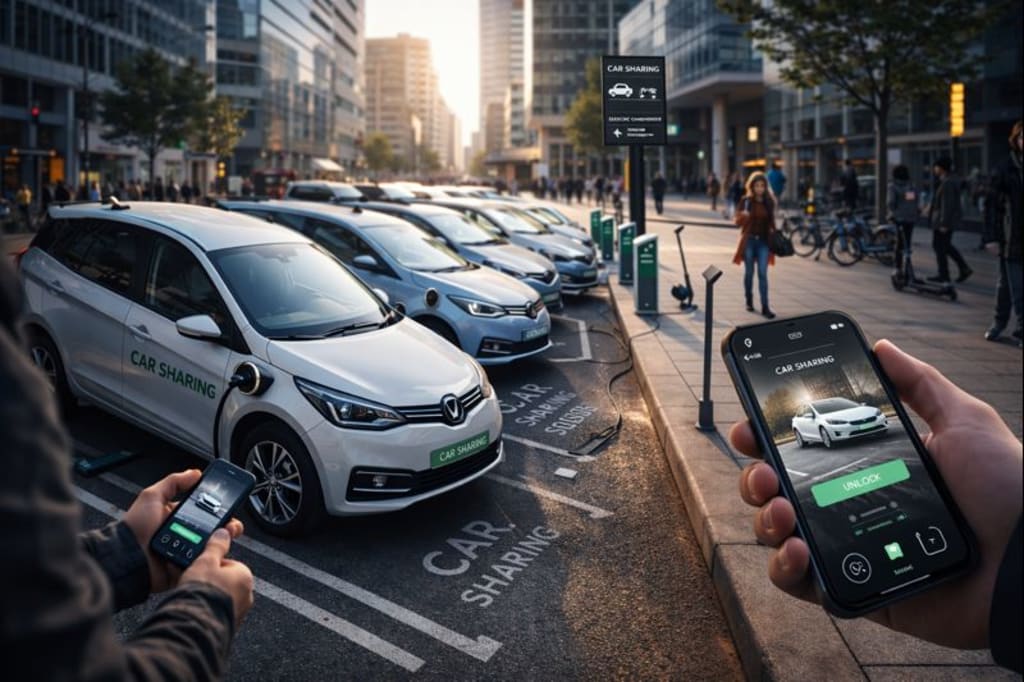
On a typical weekday morning, the city comes alive. A phone buzzes. With a tap on the screen, a car nearby unlocks. No keys to carry, no contracts to sign, no obligation beyond the trip ahead. The ride begins—and when it ends, the car simply fades back into the city.
Moments like these reflect a broader transformation in how mobility is perceived. In cities around the globe, people are moving away from owning vehicles and embracing on-demand access instead. Powering this quiet revolution is the Car Sharing Market, reshaping the way urban spaces move, function, and evolve one trip at a time.
This emerging reality is not a distant future. It is happening now in urban centers from New York to Tokyo to Berlin. At its core is the Car Sharing Market, an industry powered by digital platforms, efficiency, and changing attitudes toward ownership.
Why Car Sharing Is Gaining Momentum
Private cars spend most of their lives parked. In dense cities, that inefficiency translates into congestion, pollution, and rising costs. Car sharing challenges this model by maximizing vehicle use while minimizing ownership burdens.
According to Mordor Intelligence, the Car Sharing Market size was estimated at USD 11.52 billion in 2025 and is projected to reach USD 28.67 billion by 2030, growing at a compound annual growth rate of about 20 percent. This single data point highlights how rapidly shared mobility is shifting from an alternative option to a mainstream transportation solution.
How the Car Sharing Model Works
Car sharing services operate on simple principles. Users access vehicles through mobile platforms, pay only for the time or distance used, and avoid the long term costs of ownership.
There are several dominant models in use today. Free floating systems allow vehicles to be picked up and dropped off anywhere within a service zone. Station based systems rely on fixed parking hubs. Peer to peer platforms let private owners rent out idle vehicles.
This diversity supports different urban needs and lifestyles. In dense downtown areas, free floating services thrive. In suburban settings, station based and peer to peer models often work better.
The Car Sharing Market share reflects this diversity. North America currently holds the largest share, driven by strong digital adoption and early platform development. Europe follows closely with integrated multimodal transport systems, while Asia Pacific regions are seeing rapid adoption as urban populations grow and smartphone use expands.
Economic and Environmental Impact
Car sharing influences more than convenience. It reshapes economic and environmental outcomes across cities.
Shared vehicles reduce the total number of cars required to meet mobility needs. This eases congestion and frees up valuable urban space. Fewer vehicles also mean lower emissions, especially as electric cars become more common in shared fleets.
For users, cost savings are significant. Insurance, maintenance, parking fees, and depreciation disappear. For cities, car sharing supports sustainability goals and complements public transport networks.
These benefits underpin long term Car Sharing Market trends focused on efficiency, accessibility, and environmental responsibility.
Technology Driving Shared Mobility
Digital platforms are the backbone of car sharing. Real time vehicle tracking, dynamic pricing, and seamless payment systems make access frictionless. Data analytics help operators predict demand and optimize fleet placement.
Artificial intelligence improves route planning, maintenance scheduling, and user experience. Integration with public transport apps allows users to plan complete journeys across multiple modes.
This technology driven evolution is central to the Car Sharing Market analysis, which shows that platform capability is as important as fleet size in determining competitiveness.
Challenges on the Road Ahead
Despite rapid growth, car sharing faces challenges. Regulatory frameworks differ by city. Parking policies can limit scalability. Insurance and liability rules remain complex in some regions.
User behaviour is another factor. Shifting from ownership to shared access requires trust in availability and reliability. Service consistency is critical to maintaining user confidence.
Providers are responding with improved fleet management, partnerships with municipalities, and flexible pricing models that lower entry barriers.
The Car Sharing Market Forecast
The Car Sharing Market forecast suggests continued expansion as cities prioritize sustainable mobility solutions. Growth will be supported by urbanization, rising environmental awareness, and the increasing cost of private vehicle ownership.
Electric vehicles, corporate fleet sharing, and future autonomous services are expected to strengthen the role of shared mobility within urban transport ecosystems.
Rather than replacing public transport, car sharing is becoming a vital complement. It fills gaps, extends reach, and adapts to real time demand.
Conclusion
Car sharing is no longer about convenience alone. It represents a broader shift toward access over ownership and efficiency over excess. As cities evolve, shared mobility may redefine not just how people travel, but how communities design their future.
About the Creator
william jack
i am research analyst
Keep reading
More stories from william jack and writers in Journal and other communities.
Automotive Fasteners Market: How Tiny Bolts Are Driving the Auto Industry’s Transformation
In a world obsessed with electric drivetrains, autonomous software, and digital dashboards, the smallest components often carry the greatest responsibility. Beneath every vehicle lies a hidden network of fasteners holding together safety systems, power units, and structural frames. This is the overlooked reality shaping the Automotive Fasteners industry, where precision quietly drives progress.
By william jacka day ago in Journal
Young “Love" Stories By Past Me
January 19, 2026: I think I was around my early or mid-20s when I wrote this. I’ve decided to not edit it. Thinking about past memories as I read my old writing is a weird experience. I just turned 33 years old a few days ago. I’ve grown so much since I wrote this. I would still like to have that true love, however my main focus is on myself and getting my life right. I hope you enjoy reading this.
By SharvaStudio6 days ago in Journal




Comments
There are no comments for this story
Be the first to respond and start the conversation.