
Australia Plastic Packaging Market: Demand, Growth, Trends & Drivers
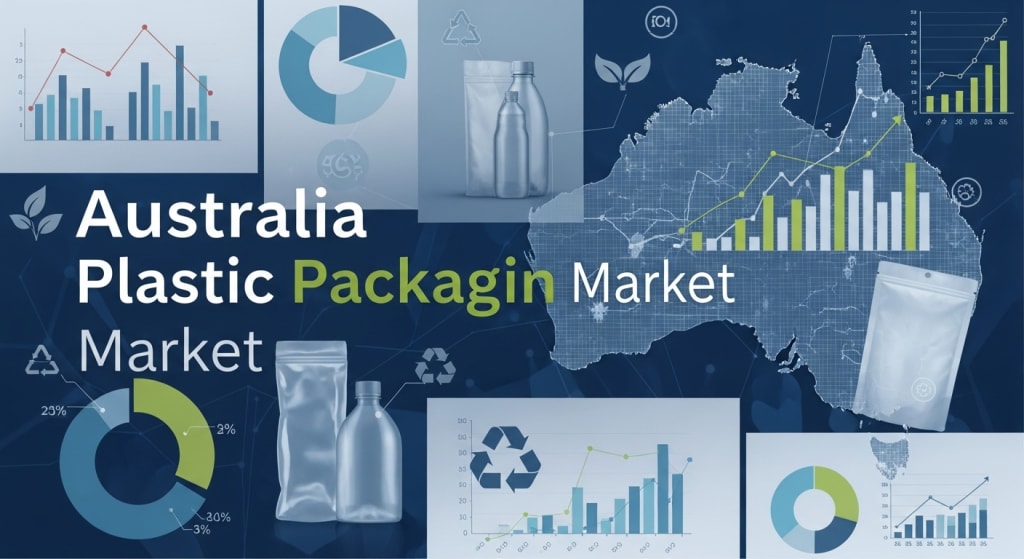
Forecast to grow from USD 7,794 million in 2024 to about USD 10,567 million by 2033 (CAGR ~3.44%), Australia’s plastic packaging sector is caught in a tug of war—between booming demand (food, e-commerce) and mounting regulatory pressure for sustainable alternatives.

Market Overview
- In 2024, the value of the Australia plastic packaging market was estimated at USD 7,794.00 million.
- Over the next decade, from 2025 to 2033, it is expected to grow at a compound annual growth rate (CAGR) of 3.44%, reaching approximately USD 10,567.13 million by 2033.
- Key demand sectors include food & beverage, healthcare, personal care, and fast-growing e-commerce distribution. Plastic packaging remains favored because of its durability, light weight, cost, barrier properties and ability to protect goods in transit.
- At the same time, government policies, regulation, and public concerns around plastic pollution and waste management have become increasingly influential in shaping product design, material choice, and industry practices.
Key Trends & Market Drivers
1. Growth in E-commerce & On-the-Go Packaging
The surge of online shopping, meal kits, convenience foods, and single-serve items drives demand for plastic packaging. Flexible films, pouches, sealed pre-packaged goods, protective packaging for shipping—all are rising. Cost, functionality and speed matter.
2. Regulatory Pressure & Single-Use Plastic Bans
States are tightening bans on single-use items. For example, in New South Wales, as of 1 January 2025, “integrated packaging” items (plastic utensils or straws integrated/sealed into packaged food or drink packaging via automated machinery) are banned. This includes expanded polystyrene (EPS) cups containing dry noodles, spoons sealed inside snack packs, and straws attached to juice boxes.
Other states are similar with progressive bans. These regulatory moves force redesigns, sourcing of alternatives (paper, compostable materials), or removal of plastic components.
3. National Packaging Targets & Industry Commitments
Under APCO (Australian Packaging Covenant Organisation), there are national targets for 2025: 100% of packaging being reusable, recyclable or compostable; 70% of plastic packaging recycled or composted; 50% average recycled content in all packaging; and phase out problematic single-use plastic packaging.
Progress has been mixed. For instance, plastic packaging’s actual recycling / composting rates are significantly under target; many items still end up in landfill.
4. Consumer Awareness & Demand for Sustainability
Consumers are more aware of plastic pollution, microplastics, and environmental damage. They increasingly expect packaging to signal recyclability, reduced use of virgin plastic, or use of alternative materials. Some brands are already reacting by redesigning or removing plastic components. For example, a popular snack brand (YoGo Mix) removed its signature plastic spoon from packaging to comply with legislation banning integrated utensils.
5. Recycling & Soft Plastics Challenges
Australia has struggled to hit packaging recycling targets. The REDcycle scheme (for soft plastics) collapsed; only a small fraction of soft plastics are being recycled. Reports show that over 90% of soft plastics and flexible packaging still go to landfill. There are plans for new schemes (Soft Plastics Stewardship Australia) to replace or improve soft plastics recycling.
Get a PDF, Request for a Free Sample Report: https://www.imarcgroup.com/australia-plastic-packaging-market/requestsample
Opportunities in the Australian Plastic Packaging Market
Innovative Sustainable Materials & Design
Alternatives such as paper, compostable plastics, bioplastics, or hybrid materials (e.g., paperboard with minimal plastic barrier) are in demand. Design that eliminates unnecessary plastic (e.g. integrated utensils), reduces packaging weight and improves recyclability, will have advantage.
Post-Consumer Recycled (PCR) Content & Circular Supply Chains
Brands that can reliably use recycled plastic in packaging are likely to win customer loyalty and comply with upcoming regulations or targets. Building supply chains for recycled feedstock domestically, investing in collection, sorting, and recycling infrastructure are key.
Soft Plastics Recycling & Stewardship Models
The emerging schemes to replace REDcycle—for example, Soft Plastics Stewardship Australia (SPSA)—mean opportunity for industry leadership. Supermarkets, manufacturers can collaborate to scale collection, ensure materials are processed, and push for reuse.
Regulatory-Driven Product Redesign
Items that are banned or will be banned (e.g. integrated utensils) require redesign or removal. This incentivizes lightweight flexible packaging, innovative alternatives, packaging that’s easier to separate for recycling, etc. Early redesign can reduce future cost and regulatory risk.
Transparency & Environmental Claims Integrity
As seen in recent enforcement, misleading claims about recycled content or environmental benefit are increasingly risky. Companies that invest in accurate sourcing, validated environmental credentials, and transparent labeling will build trust. (See case like Clorox Australia, fined for making false claims.)
Regional & State-Level Policy Opportunities
Since plastic bans and packaging regulations are often rolled out at state level (e.g. NSW, SA), companies that adapt early in those markets gain first-mover advantage. Also partnerships with state governments for incentive programs or compliance support can help.
Recent News & Developments in the Australian Plastic Packaging Market:
Jan 1, 2025 NSW ban on “integrated plastic packaging” comes into effect—includes utensils sealed into food packaging via machine process: Forces redesign of many food & snack pack items. Brands must remove spoon/straw integration. Cost of redesign + alternative materials is immediate.
April 2025 Major fine for misleading “recycled plastic claim” — Clorox Australia fined ~USD 5.2 million for false statements on Glad bags: Makes clear that environmental marketing claims are under scrutiny. Brands will need rigorous proof.
Mid-2025 New soft-plastics recycling scheme forming (Soft Plastics Stewardship Australia) to replace the failed REDcycle: The Addresses a key weak point in plastic packaging management. If implemented well, can improve recovery rates for formerly hard-to-recycle materials.
South Australia: Ban of small decorative packaging items like fish-shaped soy sauce containers, and similar small single-use plastics: Signals that even niche plastic packaging items are being targeted. Business as usual in packaging shapes / novelty items is riskier.
YoGo Mix / Consumer Pushback Removal of plastic spoon from snack packaging to comply with regulation, sparking viral consumer reaction: Illustrates how packaging changes can affect consumer perception—even small components have emotional / brand value. Communication matters.
Browse Full Report with TOC & List of Figures: https://www.imarcgroup.com/australia-plastic-packaging-market
For manufacturers & brand owners, understanding how regulation is shifting is critical. Changes in plastic bans, mandated recycled content, and design for recyclability are not future-risks—they’re current. Failing to adapt means regulatory non-compliance, fines, or losing shelf space.
For retailers & consumers, packaging is part of product value. Sustainable packaging options, clear environmental labeling, and avoidance of banned plastic items will increasingly affect purchasing decisions. Brands that mislead or lag may lose trust.
For policymakers & regulators, meeting national packaging and waste reduction targets (2025 and beyond) depends on both industry cooperation and enforcement. The plastic-packaging sector is one of the highest impact levers for reducing pollution and landfill.
For the environment & social good, better management of plastic packaging reduces litter, microplastic pollution, landfill emissions, and resource waste. Strong recycling and reuse systems can reduce carbon footprint and enhance circular economy.
About the Creator
Kevin Cooper
Hi, I'm Kavin Cooper — a tech enthusiast who loves exploring the latest innovations, gadgets, and trends. Passionate about technology and always curious to learn and share insights with the world!
Keep reading
More stories from Kevin Cooper and writers in Journal and other communities.
Australia Paper & Paperboard Packaging Market: Growth, Demand & Drivers
Market Overview In 2024, the market size for paper & paperboard packaging in Australia stood at approximately USD 3.4 billion. Forecasts expect this to grow to about USD 4.5 billion by 2033, with a compound annual growth rate (CAGR) of ~2.90% over 2025-2033.
By Kevin Cooper3 months ago in Journal
7 Business Knowledge Loops That Self-Improve on AI PCs
The business world is changing faster than ever before. Companies that stay ahead are those that use smart technology to learn and grow continuously. AI PCs have opened up a new frontier for businesses to create knowledge loops that get better with every cycle. These systems learn from your data and improve their performance automatically. Think of it like a business brain that never stops getting sharper.
By Gabriella Browne7 days ago in Journal


Comments
There are no comments for this story
Be the first to respond and start the conversation.