
Australia Forklift Market to Reach USD 8.15 Billion by 2033
The Australia forklift market size reached USD 2.03 Billion in 2024. Looking forward, the market is projected to reach USD 8.15 Billion by 2033, exhibiting a growth rate (CAGR) of 14.9% during 2025-2033.

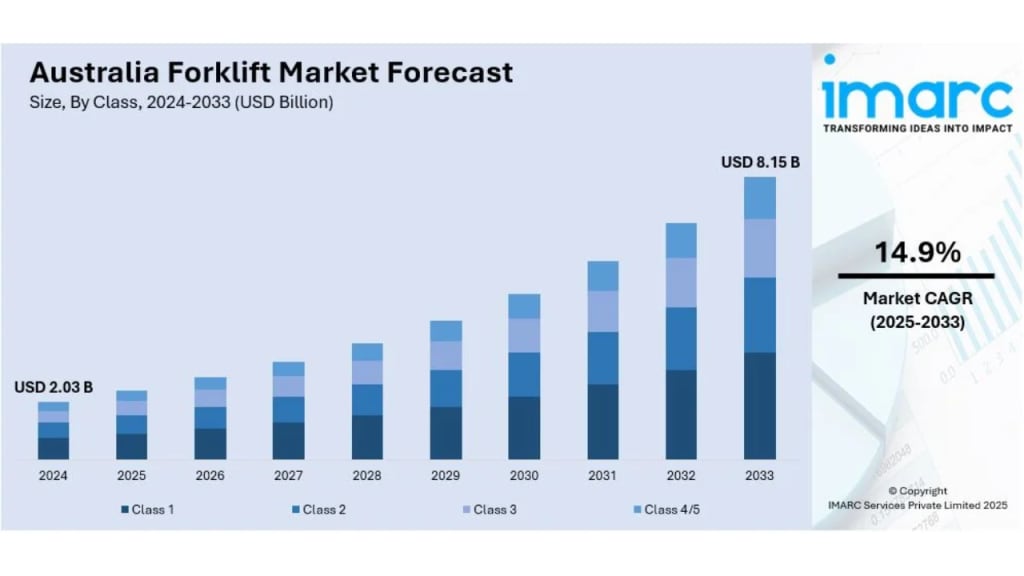
The latest report by IMARC Group, titled "Australia Forklift Market Report by Class (Class 1, Class 2, Class 3, Class 4/5), Power Source (ICE, Electric), Load Capacity (Below 5 Ton, 5-15 Ton, Above 16 Ton), Electric Battery (Li-ion, Lead Acid), End User (Industrial, Logistics, Chemical, Food and Beverage, Retail and E-Commerce, Others), and Region 2025-2033," offers a comprehensive analysis of the Australia forklift market growth. The report includes competitor and regional analysis, along with a detailed breakdown of the market segmentation. The Australia forklift market size reached USD 2.03 Billion in 2024. Looking forward, IMARC Group expects the market to reach USD 8.15 Billion by 2033, exhibiting a CAGR of 14.9% during 2025–2033.
Base Year: 2024
Forecast Years: 2025–2033
Historical Years: 2019–2024
Market Size in 2024: USD 2.03 Billion
Market Forecast in 2033: USD 8.15 Billion
Market Growth Rate (2025–2033): 14.9%
Australia Forklift Market Overview
The Australia forklift market is experiencing exceptional growth driven by warehouse automation expansion, e-commerce logistics proliferation, infrastructure development acceleration, and manufacturing sector modernization requirements. The market expansion is supported by electric forklift adoption, advanced safety technology integration, rental and leasing model popularity, and increasing emphasis on operational efficiency and environmental sustainability. Advanced forklift solutions are transforming Australia's material handling landscape through lithium-ion battery technologies, automated guidance systems, telematics integration, and smart fleet management capabilities positioning the country as a leader in modern warehouse operations and industrial automation.
Australia's forklift market foundation demonstrates robust industrial capabilities across diverse sectors including logistics and warehousing, manufacturing operations, construction projects, mining activities, and retail distribution networks. The country's expanding e-commerce sector, growing infrastructure investments, and focus on supply chain optimization create substantial demand for sophisticated forklift solutions capable of enhancing productivity, reducing operational costs, and improving safety standards. The proliferation of automated warehouses, compact urban logistics hubs, service-based deployment models, and sustainability initiatives is creating favorable market conditions, requiring significant investments in electric forklifts, smart technologies, and comprehensive maintenance programs. Australia's industrial modernization focus, combined with stringent safety regulations and environmental consciousness, makes it an increasingly attractive market for innovative forklift technology development and deployment.
Request For Sample Report:
https://www.imarcgroup.com/australia-forklift-market/requestsample
Australia Forklift Market Trends
• Electric forklift acceleration: Rapid adoption of lithium-ion battery-powered forklifts providing zero emissions, reduced operational costs, enhanced performance capabilities, and supporting corporate sustainability goals across warehouse and industrial operations.
• Compact and versatile designs: Growing preference for narrow-aisle and space-efficient forklift models enabling optimal warehouse space utilization, improved maneuverability in tight spaces, and enhanced operational flexibility in urban logistics environments.
• Rental and leasing expansion: Increasing adoption of service-based deployment models including fully maintained rental agreements, flexible leasing options, and comprehensive maintenance contracts reducing capital expenditure and operational risks for businesses.
• Advanced safety integration: Rising implementation of anti-collision sensors, load stability systems, operator assistance technologies, and visibility enhancement features addressing stringent workplace safety regulations and reducing accident risks.
• Automation and connectivity: Growing deployment of automated guidance systems, telematics integration, fleet management software, and IoT connectivity enabling predictive maintenance, performance optimization, and operational analytics.
• Cross-border supply partnerships: Expanding international trade relationships, particularly with India, enhancing forklift attachment sourcing, component availability, and cost-effective supply chain solutions for Australian material handling operations.
Market Drivers
• E-commerce growth explosion: Massive expansion of online retail operations requiring sophisticated warehouse automation, high-throughput material handling systems, and flexible forklift solutions supporting rapid order fulfillment and distribution capabilities.
• Infrastructure development acceleration: Significant government and private sector investment in construction projects, mining operations, port facilities, and industrial developments creating demand for heavy-duty forklifts and specialized material handling equipment.
• Warehouse automation trends: Increasing adoption of automated storage and retrieval systems, robotic warehouse operations, and smart logistics technologies requiring advanced forklifts with connectivity, precision control, and integration capabilities.
• Sustainability mandates: Corporate environmental commitments, government emissions regulations, and sustainability targets driving adoption of electric forklifts, energy-efficient technologies, and environmentally conscious material handling solutions.
• Labor shortage challenges: Growing scarcity of skilled warehouse workers and material handling operators creating demand for automated forklifts, operator-assist technologies, and equipment that reduces training requirements and operational complexity.
• Supply chain optimization pressure: Increasing focus on operational efficiency, cost reduction, and productivity enhancement driving investment in modern forklift technologies, fleet management systems, and performance optimization solutions.
Challenges and Opportunities
Challenges:
• High capital investment costs for advanced electric and automated forklift systems creating financial barriers particularly for small and medium-sized enterprises with limited equipment budgets and extended payback expectations
• Charging infrastructure requirements for electric forklift deployment demanding substantial electrical upgrades, charging station installations, and power management systems particularly in older warehouse facilities
• Skills shortage and training needs for operating sophisticated forklift technologies requiring comprehensive training programs, operator certification, and ongoing technical support creating adoption challenges for traditional operations
• Supply chain disruptions and component availability issues affecting forklift manufacturing, delivery timelines, and spare parts accessibility particularly for specialized equipment and emerging technologies
• Rapid technology evolution and equipment obsolescence concerns requiring frequent upgrades, software updates, and compatibility assessments complicating long-term fleet planning and investment strategies
Opportunities:
• Smart warehouse integration through automated material handling systems, robotic integration, and Industry 4.0 connectivity creating comprehensive logistics solutions and competitive operational advantages
• Export market potential for Australian forklift expertise and service capabilities serving international markets with similar industrial requirements, safety standards, and operational challenges
• Circular economy development through equipment refurbishment, battery recycling programs, and sustainable lifecycle management creating new business models and environmental benefits
• Service sector expansion including maintenance contracts, fleet management services, training programs, and technology support solutions providing recurring revenue streams and enhanced customer relationships
• Mining industry specialization leveraging Australia's mining expertise to develop specialized forklift solutions for extreme conditions, heavy-duty applications, and remote operations requiring exceptional durability
Australia Forklift Market Segmentation
By Class:
• Class 1
o Electric Motor Rider Trucks
o Stand-Up Counterbalanced
o Sit-Down Counterbalanced
• Class 2
o Electric Motor Narrow Aisle Trucks
o Order Pickers
o Reach Trucks
o Side Loaders
• Class 3
o Electric Motor Hand/Rider Trucks
o Walkie/Rider Pallet Trucks
o Pallet Jacks
o Stackers
• Class 4/5
o Internal Combustion Engine Trucks
o Cushion Tire Forklifts
o Pneumatic Tire Forklifts
By Power Source:
• ICE (Internal Combustion Engine)
o Diesel Powered
o LPG Powered
o CNG Powered
o Gasoline Powered
• Electric
o Battery Electric
o Fuel Cell Electric
o Hybrid Electric
By Load Capacity:
• Below 5 Ton
o Light-Duty Applications
o Warehouse Operations
o Retail Environments
• 5-15 Ton
o Medium-Duty Applications
o Manufacturing Operations
o Distribution Centers
• Above 16 Ton
o Heavy-Duty Applications
o Construction Sites
o Port Operations
o Industrial Manufacturing
By Electric Battery:
• Li-ion
o Lithium Iron Phosphate
o Lithium Nickel Manganese Cobalt
o Lithium Titanate
• Lead Acid
o Flooded Lead Acid
o Sealed Lead Acid
o Gel Batteries
By End User:
• Industrial
o Manufacturing Plants
o Heavy Industries
o Assembly Operations
• Logistics
o Warehouses
o Distribution Centers
o Third-Party Logistics
• Chemical
o Chemical Processing
o Petrochemicals
o Pharmaceutical
• Food and Beverage
o Food Processing
o Cold Storage
o Beverage Production
• Retail and E-Commerce
o Retail Distribution
o E-Commerce Fulfillment
o Omnichannel Operations
• Others
o Construction
o Mining
o Ports and Terminals
By Region:
• Australia Capital Territory & New South Wales
• Victoria and Tasmania
• Queensland
• Northern Territory and Southern Australia
• Western Australia
Browse Full Report:
https://www.imarcgroup.com/australia-forklift-market
Australia Forklift Market News (2024–2025)
• October 2024: Kalmar and BlueScope entered fully maintained rental agreement for 13 large forklift trucks at Western Port facility in Victoria, including six electric forklifts with lithium-ion batteries and eight-year service contract supporting emissions reduction goals.
• January 2024: Australia's Consul General in Mumbai announced India-Australia trade expected to double to $100 billion in five years under ECTA, with India already exporting 38% of forklift attachments to Australia, enhancing material handling capabilities.
• 2024: Electric forklift adoption accelerated across Australian warehouses and industrial facilities with lithium-ion battery technology gaining preference for zero emissions, reduced operational costs, and enhanced performance capabilities.
• 2024: Rental and leasing models expanded significantly with businesses preferring service-based deployments including comprehensive maintenance contracts, reducing capital expenditure and operational uncertainty.
• 2024: Compact and versatile forklift designs gained popularity driven by warehouse space optimization requirements and growth of urban logistics hubs requiring narrow-aisle operational capabilities.
• 2024: Advanced safety technology integration increased with anti-collision sensors, load stability systems, and operator assistance features addressing stringent workplace safety regulations and accident prevention requirements.
Key Highlights of the Report
• Market Performance (2019–2024)
• Market Outlook (2025–2033)
• Industry Catalysts and Challenges
• Segment-wise historical and future forecasts
• Competitive Landscape and Key Player Analysis
• Class, Power Source, Load Capacity, Electric Battery, and End User Analysis
Ask analyst for your customized sample:
https://www.imarcgroup.com/request?type=report&id=34285&flag=F
Q&A Section
Q1: What drives growth in the Australia forklift market?
A1: Market growth is driven by e-commerce growth explosion requiring sophisticated warehouse automation and material handling systems, infrastructure development acceleration through construction and mining projects, warehouse automation trends demanding advanced connectivity and integration capabilities, sustainability mandates promoting electric forklift adoption, labor shortage challenges creating demand for automated solutions, and supply chain optimization pressure focusing on efficiency and productivity enhancement.
Q2: What are the latest trends in this market?
A2: Key trends include electric forklift acceleration with lithium-ion battery technology providing zero emissions and cost benefits, compact and versatile designs enabling space optimization and narrow-aisle operations, rental and leasing expansion offering flexible deployment models, advanced safety integration with collision sensors and operator assistance, automation and connectivity through telematics and fleet management, and cross-border supply partnerships enhancing component availability and cost-effectiveness.
Q3: What challenges do companies face?
A3: Major challenges include high capital investment costs for advanced electric and automated systems, charging infrastructure requirements demanding electrical upgrades and power management systems, skills shortage and training needs for sophisticated technology operation, supply chain disruptions affecting manufacturing and component availability, and rapid technology evolution causing equipment obsolescence concerns and complicating long-term planning.
Q4: What opportunities are emerging?
A4: Emerging opportunities include smart warehouse integration through automated systems and Industry 4.0 connectivity, export market potential leveraging Australian expertise for international industrial markets, circular economy development through equipment refurbishment and battery recycling, service sector expansion with maintenance and fleet management solutions, and mining industry specialization developing solutions for extreme conditions and heavy-duty applications.
About Us
IMARC Group is a leading market research company that offers management strategy and market research worldwide. We partner with clients in all sectors and regions to identify their highest-value opportunities, address their most critical challenges, and transform their businesses. IMARC's information products include major market, scientific, economic and technological developments for business leaders in pharmaceutical, industrial, and high technology organizations. Market forecasts and industry analysis for biotechnology, advanced materials, pharmaceuticals, food and beverage, travel and tourism, nanotechnology and novel processing methods are at the top of the company's expertise.
Contact Us
IMARC Group
134 N 4th St. Brooklyn, NY 11249, USA
Email: [email protected]
Tel No: (D) +91-120-433-0800
United States: +1-201-971-6302
About the Creator
Rashi Sharma
I am a market researcher.
Keep reading
More stories from Rashi Sharma and writers in Journal and other communities.
Australia Agricultural Machinery Market Projected to Reach USD 6.4 Billion by 2033
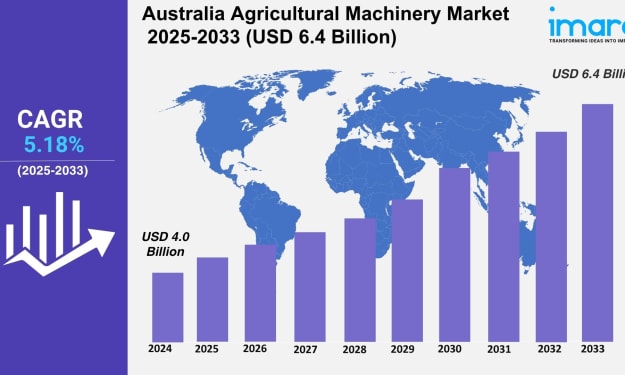
The latest report by IMARC Group, titled "Australia Agricultural Machinery Market Report by Product Type (Tractors, Ploughing and Cultivating Machinery (Ploughs, Harrows, Cultivators and Tillers, Others), Planting Machinery (Seed Drills, Planters, Spreaders, Others), Harvesting Machinery (Mowers, Balers, Others), Haying Machinery, Irrigation Machinery), and Region 2025-2033," offers a comprehensive analysis of the Australia agricultural machinery market growth. The report includes competitor and regional analysis, along with a detailed breakdown of the market segmentation. The Australia agricultural machinery market size reached USD 4.0 Billion in 2024. Looking forward, IMARC Group expects the market to reach USD 6.4 Billion by 2033, exhibiting a CAGR of 5.18% during 2025–2033.
By Rashi Sharma4 months ago in Journal
THE GLACIER AND THE FIRE
Greenland has never known true silence. Beneath the apparent immobility of its frost-laden shrouds, the island throbs with a millennial movement—a muted language composed of tectonic cracks, abyssal currents, and aeolian rages. But this murmur of genesis, once reserved for the Arctic’s initiates, has shifted into a clamor of a different sort. It is no longer merely the song of ice collapsing into the Atlantic or the groan of the ice cap thinning under the assault of carbon; it is the thud of boots and the cold calculations of general staffs. It is the roar of covetousness. Greenland, this white giant once thought to be slumbering on the fringes of history, has become the epicenter of a geopolitical earthquake capable of shattering the West. What is unfolding today is no longer a mere diplomatic rivalry, but the specter of a total rupture within the Atlantic Alliance, where the rights of peoples vanish before the logic of the strongest.
By Laurenceau Porte3 days ago in Journal
Wild Card Weekend Recap: What Happens Now?
I think I figured out why I love Wild Card Weekend so much. It's because it's the first playoff anything of the calendar year. The NFL season starts in the fall, and once upon a time, the champion was crowned either on or slightly before New Year's. The evolution of the NFL schedule has resulted in the playoffs starting just into the New Year, and currently, the final week of the season falls on the first weekend of the New Year, with Wild Card Weekend coming a week after that. So yes, chronologically, the NFL's Wild Card Weekend serves as the first playoff anything of the calendar year.
By Clyde E. Dawkins5 days ago in Unbalanced



Comments
There are no comments for this story
Be the first to respond and start the conversation.