
Australia Construction Market 2025: Growth, Drivers & Investment Opportunity
Valued at about USD 403.2 billion in 2024, the Australia construction market is forecast to reach USD 588 billion by 2033 (CAGR ~4.30%), driven by public infrastructure investment, urban demand, and sustainability—but grappling with soaring costs, skills gaps, and delivery challenges.

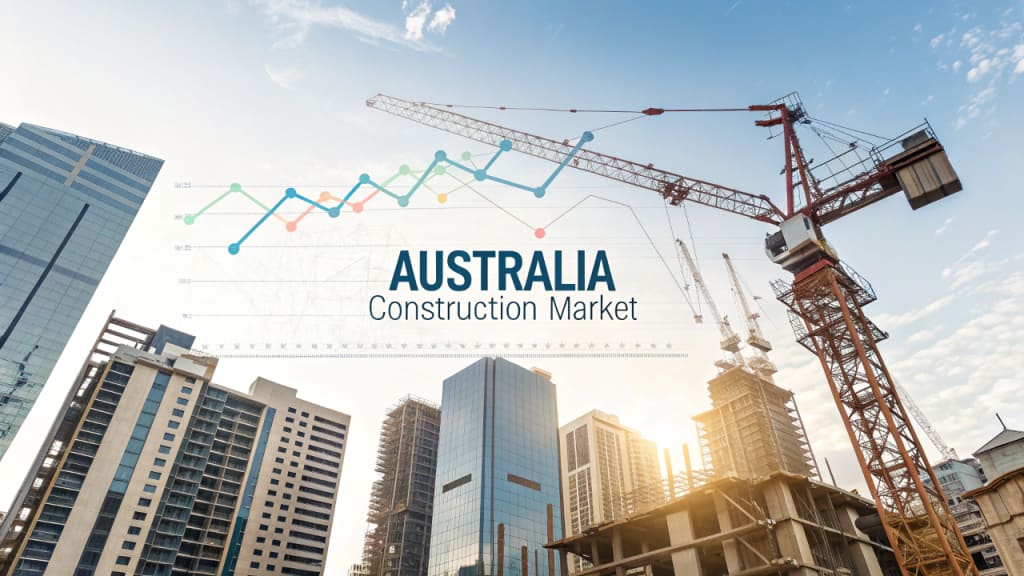
Market Overview
- Size & Growth: In 2024, Australia’s construction market was valued at USD 403.2 billion. Over the period from 2025 to 2033, it is expected to grow at a compound annual growth rate (CAGR) of 4.30%, reaching USD 588 billion by 2033.
- Sector Spread: Growth is evenly spread across residential, commercial, industrial, mixed-use, public infrastructure (roads, rail, airports), and civil works. Residential and infrastructure segments are particularly strong owing to housing demand and government stimulus.
- Geographic Focus: Major Australian metropolitan areas—Sydney, Melbourne, Brisbane—are seeing high residential and infrastructure builds. Regions in Queensland, Western Australia, and Northern Australia are also gaining momentum as governments seek to reduce geographic inequalities.
Key Trends & Market Drivers
1. Government Infrastructure Spending
Federal and state governments are pushing large infrastructure projects: transport networks (roads, rail), public transit, airports, and utilities. Programs like the National Infrastructure Plan, state transport upgrades and stimulus packages are major sources of demand.
2. Residential Demand & Urbanization
Rising population growth (including immigration), urban densification, and migration to cities are driving residential construction: new housing, apartment complexes, affordable housing projects. The housing supply shortage remains a critical driver.
3. Rise in Sustainable / Green Building Practices
Sustainability is no longer optional. Materials with reduced carbon emissions (low-carbon cement, recycled steel), water-efficient fixtures, green certification (Green Star etc.), energy-efficiency and low emissions building designs are increasingly demanded. Modular and prefabricated methods are also being adopted to reduce waste and speed construction.
4. Advanced Technologies & Digitalization
Adoption of Building Information Modelling (BIM), drones (for surveying), robotics, 3D printing, IoT, predictive analytics for project monitoring are helping reduce error, delay, and waste. Digital collaboration platforms, virtual design, etc., are becoming more mainstream.
5. Cost Pressures, Material Inflation & Labor Shortages
One of the biggest constraints is cost escalation: labour, materials (steel, cement, timber), energy. Labor shortages—skilled tradespeople, project managers—are causing delays and pushing up wages. In some cities, cost inflation remains elevated.
Get a PDF, Report for a Free Sample Report: https://www.imarcgroup.com/australia-construction-market/requestsample
Opportunities in the Australian Construction Market
Modular / Prefab Construction & Off-site Manufacturing
Prefabrication and modular construction offer faster build times, less dependency on on-site labor, greater quality control, and less waste. Given labour shortages and high project volumes, this is a key opportunity for builders who invest in these methods.
Disaster-Resilient Infrastructure & Climate Adaptation
Australia’s exposure to bushfires, floods, cyclones means there is rising demand for resilient designs: stronger building standards, climate-proof materials, flood barriers, fire-resistant cladding etc. Projects that incorporate resilience will be in demand by governments and private clients.
Green Steel and Low-Carbon Materials
The move toward locally produced, low-carbon building materials is showing promise. For example, planned green steel mills (e.g. in Brisbane) and material innovation will help reduce supply chain emissions and reduce reliance on imports.
Smart Building & Digital Twin Technologies
Using AI, BIM, sensors, predictive maintenance, and digital twins to optimize design, construction, and lifecycle operations will offer efficiency gains. Clients increasingly expect energy monitoring, green certifications, smart controls in new builds.
Regional & Affordable Housing Growth
There's strong opportunity outside the major metro areas. Regions with lower land costs, supportive infrastructure investment, and population growth (e.g. in Queensland, NT) are becoming attractive for residential, commercial, and industrial construction. Also, affordable housing remains a policy priority.
Improved Policies & Planning Reform
Regulatory bottlenecks (planning approvals, zoning, infrastructure access) are cited as constraints. Governments that streamline approvals, land release, and provide incentives for affordable housing, will unlock growth. Similarly, immigration policies that bring in skilled construction workers are seen as necessary.
Recent News & Developments in the Australian Construction Market:
December 2024: Westview Group announces a low-carbon steel mill investment of AUD $750 million in Brisbane to produce reinforcement steel locally and sustainably.
June 2025: Construction costs continue to rise in Brisbane due to the Olympic infrastructure pipeline and acute labour shortages; projected cost escalation of ~30.5% by 2029 in Brisbane.
Late 2024: Sarah Group warns of skill shortages and cost pressures; points to modular construction and technology as necessary to meet rising demand.
Dec 2024: “Property chiefs see cost burden easing” — material price inflation stabilizing somewhat, though labor and energy costs remain high.
Dec 2024 / Early 2025 Report: persistent skills shortages & cost escalations especially in Victoria, NSW; ~7% of planned construction work delayed due to these constraints.
Browse Full Report with TOC & List of Figures: https://www.imarcgroup.com/australia-construction-market
- For Developers & Builders: Understanding where costs are rising, which cities are more expensive or constrained, and investing in methods that reduce reliance on manual labor (modular building, prefabrication) can help manage risk and improve margins.
- For Policymakers: The housing shortage, affordability pressures, and infrastructure gaps demand strategic planning reforms, investment in training programs, migration policy that supports skilled labor, and encouragement of sustainable material production.
- For Communities & Homebuyers: Rising construction costs increasingly feed into housing prices, making affordability more challenging. Regional areas may offer relief but require infrastructure investment. Sustainable and resilient builds add long-term value (energy savings, durability).
- For the Environment & Sustainability Goals: Green materials, low-carbon steel, regulation to limit emissions from construction and material manufacture, and resilient design are essential for Australia's climate commitments. Construction accounts for a large share of material-based emissions.
- For Investors & Finance: Large public infrastructure pipelines (roads, transport, housing), coupled with high demand in residential and commercial sectors, present opportunity. But risk from cost inflation, regulatory delays, and shortages of skilled labor must be factored into returns and schedules.
About the Creator
Kevin Cooper
Hi, I'm Kavin Cooper — a tech enthusiast who loves exploring the latest innovations, gadgets, and trends. Passionate about technology and always curious to learn and share insights with the world!
Keep reading
More stories from Kevin Cooper and writers in Journal and other communities.
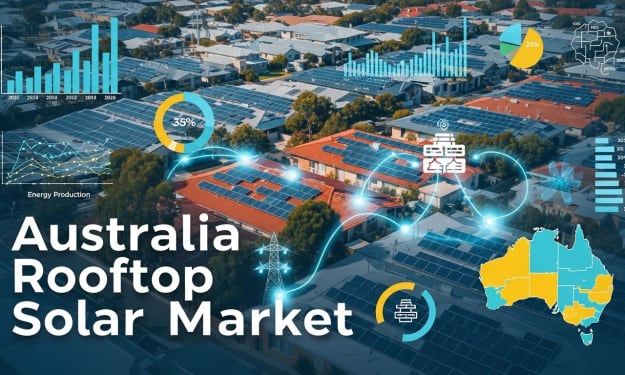
Australia Rooftop Solar Market: Growth, Trends, Demand & Drivers
Market Overview The Australian rooftop solar market was valued at USD 1,436.36 million in 2024. It is expected to grow to USD 2,508.25 million by 2033, growing at a CAGR of about 6.39% for the period 2025-2033. Drivers include strong government incentives (rebates, subsidies, certificate schemes), rising electricity costs, growing concern over grid reliability, especially in remote areas, and increasing interest in energy independence. The market spans residential households, small business rooftops, shared systems (e.g. apartments), and is influenced by regional differences in solar irradiance, policy, electricity price differentials, and grid constraints.
By Kevin Cooper3 months ago in Journal
The goals I did not achieve
Every writing goal I made for the year is a wash. It has been this way for a while, but I think it's important to be open about my failures and the reality of how life can get in the way. This is especially true considering the several times I have posted on Vocal about my writing goals, how I was changing my approach, and where I was hoping to be for the upcoming year. I will probably do that again in a couple months, but for now, it is time to acknowledge where I am today.
By Kay Husnick23 days ago in Journal
The Phoenix from the Ashes:
Toxic relationships, in their myriad forms, are insidious vines that can slowly strangle the life out of individuals, leaving them emotionally depleted, psychologically bruised, and often struggling to understand how they ended up entangled in such a destructive web. Whether romantic, familial, or platonic, these relationships are characterized by patterns of manipulation, control, disrespect, and a consistent lack of empathy. Escaping their grasp can be a grueling process, but it's a journey that ultimately leads to profound self-discovery and lasting personal growth. The lessons learned from overcoming toxic relationships are invaluable, shaping our understanding of ourselves, our boundaries, and what we truly deserve in life.
By Wilson Igbasi2 days ago in Journal



Comments
There are no comments for this story
Be the first to respond and start the conversation.