
America Reopens: Trump Signs Funding Bill to End Longest Shutdown in U.S. History
After weeks of political stalemate, federal workers return to their jobs — but deeper battles over spending and governance remain unresolved.

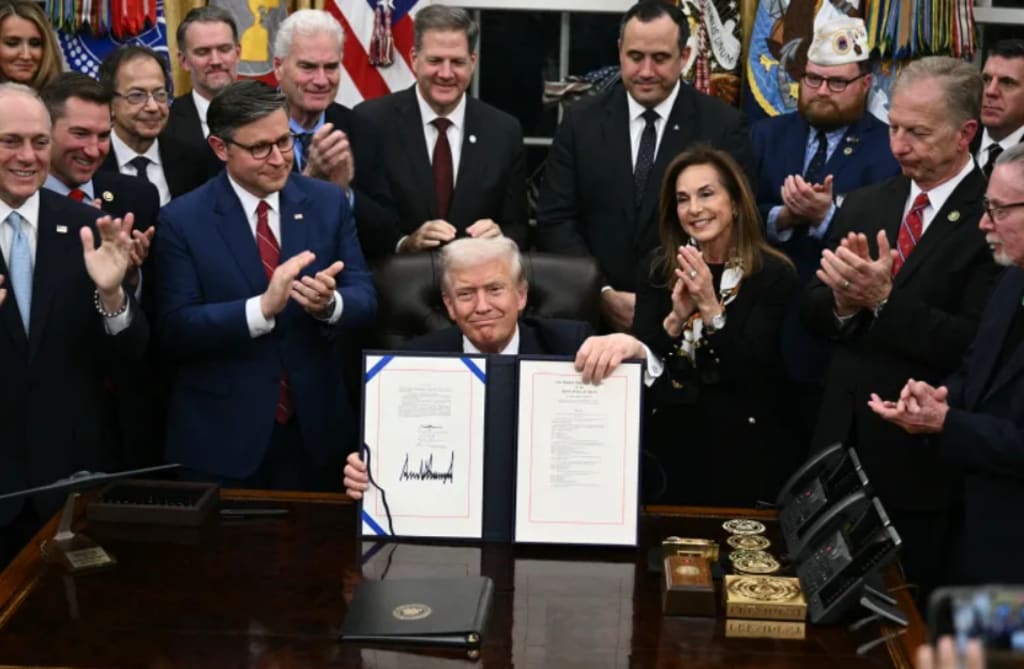
After 47 tense days of political brinkmanship, President Donald Trump has signed a bipartisan funding bill officially ending the longest federal government shutdown in U.S. history. The move brings long-awaited relief to hundreds of thousands of furloughed federal workers and contractors who spent weeks without pay — but questions remain about how long the peace will last.
A Shutdown Fueled by Division
The shutdown began over deep disagreements in Congress regarding federal spending and border security funding. Lawmakers on both sides held firm as the clock ran out on appropriations, leaving multiple federal agencies shuttered and essential workers forced to continue without pay.
The impasse quickly escalated into a symbol of Washington dysfunction, with ripple effects stretching far beyond the capital. National parks closed, small business loans were frozen, and critical services — from food inspections to veterans’ benefits — were disrupted.
Political analysts have described it as “a standoff between governance and ideology,” as both parties sought leverage ahead of the next budget cycle.
What the New Funding Bill Does
The newly signed legislation funds the federal government through September 2026, restoring operations to key agencies including the Departments of Homeland Security, Agriculture, and Transportation.
The bill includes no new funding for Trump’s proposed border wall, one of the major sticking points that fueled the shutdown. Instead, it allocates increased funding for border technology, staffing, and asylum processing, representing a compromise that both sides can claim as a partial win.
It also provides back pay for federal employees who were furloughed or required to work during the shutdown, a move seen as essential to restoring confidence among the government workforce.
Treasury officials have confirmed that back pay will begin reaching workers’ accounts by the end of next week.
Economic Fallout
The shutdown is estimated to have cost the U.S. economy more than $25 billion, according to the Congressional Budget Office. Federal contractors, many of whom will not receive back pay, have borne the heaviest losses.
Consumer confidence also took a hit during the standoff, with economists warning that prolonged political instability could slow growth heading into 2026.
Small businesses dependent on government contracts or tourism — particularly near national parks and federal buildings — were among the hardest hit.
Still, markets reacted positively to the bill’s passage, with major stock indices climbing modestly after the announcement. Investors appeared relieved that the months-long impasse had finally come to an end.
Political Reactions
In a statement from the Oval Office, President Trump declared victory, saying the agreement represented “a win for American workers and taxpayers.”
“This deal keeps America open and strong,” he said. “We’ve secured funding for key priorities and ended unnecessary hardship for government employees.”
Democratic leaders offered a more cautious tone. Senate Majority Leader Chuck Schumer said that while Democrats were “relieved to see the shutdown end,” the ordeal “should never have happened in the first place.”
“The American people deserve a government that works for them — not one held hostage by politics,” Schumer added.
Meanwhile, some hardline conservatives criticized the compromise as a retreat from campaign promises, arguing that the agreement fails to deliver sufficient border funding.
The Human Impact
For federal employees across the country, the end of the shutdown comes as both a relief and a reminder of vulnerability. Many workers relied on food banks, community support, or emergency savings to survive the nearly seven-week closure.
In Washington, D.C., spontaneous cheers erupted outside federal buildings as workers learned they could finally return to their jobs.
“I love my work, but this was brutal,” said an EPA analyst who asked not to be named. “You start wondering if your government values you at all. I just hope this doesn’t happen again.”
What Comes Next
While the shutdown has ended, the underlying tensions that caused it remain unresolved. The funding bill only guarantees stability through the next fiscal year, and negotiations over future spending priorities are expected to resume early next spring.
Both parties are now turning their focus to fiscal reform, border security, and upcoming elections, where the political fallout from the shutdown may still shape voter sentiment.
Closing Thoughts
For now, America is open again.
But the longest shutdown in U.S. history has left a deep mark — not only on the economy, but on public trust in government. As federal employees return to work and agencies reopen their doors, the challenge ahead is clear: to prevent history from repeating itself.
:
#GovernmentShutdown #USPolitics #TrumpNews #WashingtonDC #FederalEmployees #EconomicImpact #BipartisanDeal #Congress #BreakingNews
About the Creator
Shakil Sorkar
Welcome to my Vocal Media journal💖
If my content inspires, educates, or helps you in any way —
💖 Please consider leaving a tip to support my writing.
Every tip motivates me to keep researching, writing, sharing, valuable insights with you.
Keep reading
More stories from Shakil Sorkar and writers in Journal and other communities.
Apple Delays iPhone Air Release Amid Weak Sales and Market Uncertainty
Apple is reportedly delaying the launch of its next iPhone Air, a model designed to combine flagship features with a lighter, more affordable design. Sources indicate that weaker than expected sales of the current iPhone Air, coupled with broader softness in the global smartphone market, are driving the postponement. While Apple has not officially confirmed the new release timeline, industry insiders suggest the delay could last several months.
By Shakil Sorkar2 months ago in Journal



Comments
There are no comments for this story
Be the first to respond and start the conversation.