
AI's Role in Predicting Heart Diseases: Myth or Reality?
"Heart Disease Prediction: Exploring AI's Impact and Accuracy"

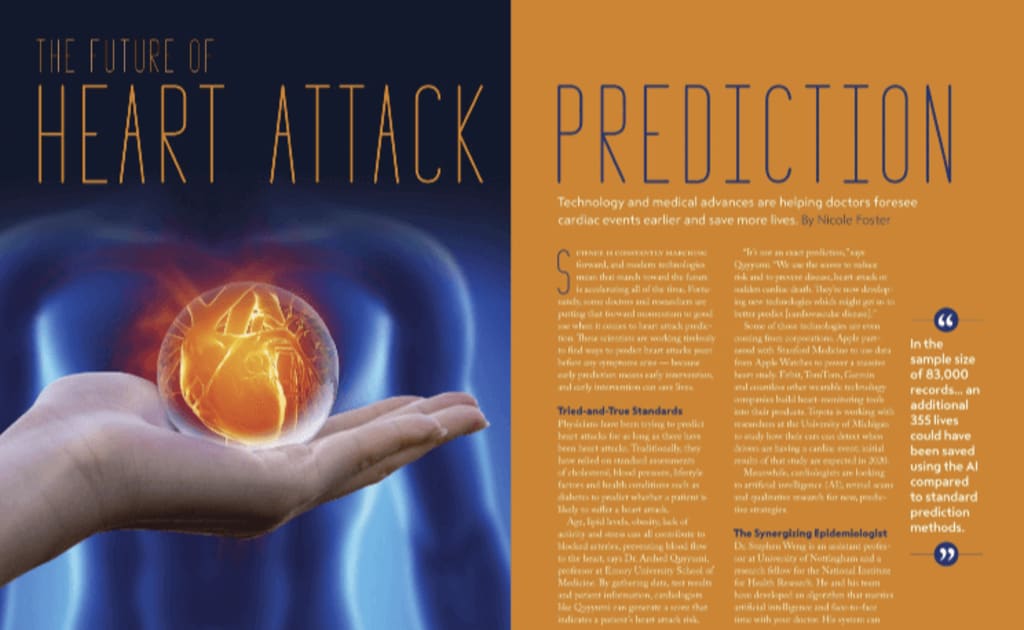
The urgency for timely and precise prediction and diagnosis is thus indisputable. Traditional risk assessment tools, such as the Framingham Risk Score, have played a pivotal role but are not without their shortcomings. Most notably, they often don't factor in the broad spectrum of individual nuances and variables.
AI: A New Dawn in Medical Prognostication
AI's foray into the medical realm, especially with subsets like Machine Learning (ML) and Deep Learning (DL), is changing the game. These systems use advanced algorithms to sift through and analyze data, learn from it, and subsequently make informed predictions or decisions. When looking at heart diseases, AI can be trained using vast datasets – from angiograms to lifestyle histories – and be tasked with discerning patterns or abnormalities that might suggest a potential cardiac issue.
AI’s Contributions So Far:
Advanced Imaging Analysis: Unlike the human eye, AI is not easily fatigued and can analyze countless medical images with a high level of accuracy. Conditions such as coronary artery disease can be more effectively pinpointed by AI algorithms that scan for signs of arterial obstructions or deposits.
Superior ECG Interpretation: The interpretation of ECGs has been transformed by AI. Where humans might miss minute irregularities, AI doesn't, making the diagnosis more accurate.
Holistic Risk Analysis: Perhaps one of AI's most significant contributions is its ability to amalgamate and analyze data from varied sources, offering a more comprehensive and detailed risk assessment than previously possible.
Empirical Evidence: Is the Hype Justified?
While excitement surrounding AI's potential is palpable, it's grounded in empirical successes:
Research from Stanford University deployed AI to analyze ECG data, with findings indicating AI’s superior ability to predict irregular heartbeats and potential heart attack risks.
AI's prowess was showcased at the Mayo Clinic, where an algorithm effectively forecasted the onset of atrial fibrillation in patients.
Another notable example is DeepMind’s AI that scoured electronic health records to predict patient health deteriorations, even identifying acute cardiac conditions.
The Skeptic’s Point of View
But as with all emergent technologies, AI has its naysayers and valid concerns:
Data Integrity: The use of AI hinges on the voluminous patient data it processes. Ensuring the confidentiality and integrity of this data is a primary concern.
Overdependence: There's the potential risk of medical practitioners relying too heavily on AI, leading to oversights. The human touch and intuition in diagnosis should not be entirely replaced.
Economic and Societal Impacts: As AI systems become more integrated, there might be job displacements in traditional diagnostic roles, raising both economic and ethical questions.
These issues, while pertinent, are not insurmountable. Through stringent regulations, human-AI collaborations, and ethical considerations, the advantages of AI can be harnessed while addressing potential pitfalls.
Final Thoughts
To address the initial question: Is AI’s role in predicting heart diseases mere supposition or reality? The evidence is overwhelmingly in favor of the latter. AI is more than just a fleeting tech trend; it's a transformative force in the battle against heart diseases. The ideal future would see AI and human expertise synergize, ensuring the best outcomes for patients worldwide.
About the Creator
jennifer furcho
I am new to vocal media and I love to write new articles about life and just about anything exciting. I am always trying to think of new topics. I also enjoy reading other articles on vocal. :)
Keep reading
More stories from jennifer furcho and writers in Journal and other communities.
CRISPR Innovations: Top 10 Breakthroughs in Gene Editing.
In the annals of scientific innovation, few discoveries have held as much promise as CRISPR-Cas9, the groundbreaking gene-editing tool that has opened up new frontiers in genetic engineering. This powerful technique is heralded for its precision, simplicity, and versatility. Since its discovery, there have been numerous breakthroughs and refinements. Here are the top 10 innovations in the realm of CRISPR gene editing.
By jennifer furcho2 years ago in Journal
Understanding the Saints: Models of Holiness for Today
Saints occupy a central place in Catholic spirituality. They are men and women who lived lives of extraordinary faith, virtue, and dedication to God. Catholics honor saints not as divine beings but as role models and intercessors who demonstrate how ordinary people can respond fully to God’s grace. Understanding why saints matter and how their example can inspire modern believers helps Catholics grow in holiness and live a faith-centered life.
By Sound and Spirit2 days ago in Journal
Wild Card Weekend Recap: What Happens Now?
I think I figured out why I love Wild Card Weekend so much. It's because it's the first playoff anything of the calendar year. The NFL season starts in the fall, and once upon a time, the champion was crowned either on or slightly before New Year's. The evolution of the NFL schedule has resulted in the playoffs starting just into the New Year, and currently, the final week of the season falls on the first weekend of the New Year, with Wild Card Weekend coming a week after that. So yes, chronologically, the NFL's Wild Card Weekend serves as the first playoff anything of the calendar year.
By Clyde E. Dawkins3 days ago in Unbalanced



Comments
There are no comments for this story
Be the first to respond and start the conversation.