
A 50 Paise Story with my Dad
The Day I Learned Valuable Lessons from My Father

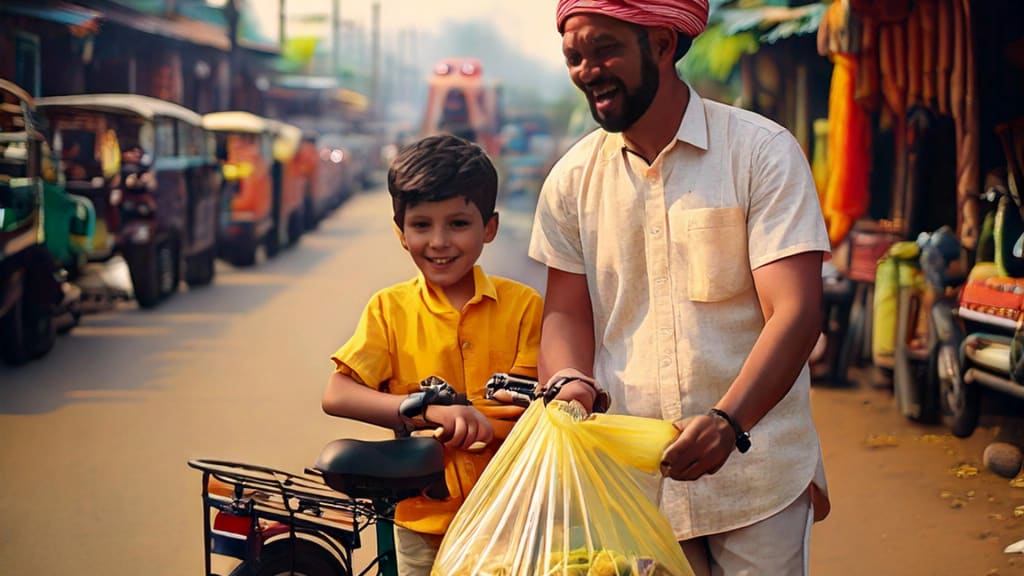
The Tempting Ulunthu Vada
Let me describe what Ulunthu Vada is like. The batter is made from urad dal (black gram), which is ground into a semi-solid, off-white paste. Finely chopped onions and coriander are mixed into it, and the mixture is carefully shaped into a doughnut-like ring with a hole in the middle. The Vadas are then deep-fried in hot oil. The result is a crispy outer layer and a soft, fluffy inside. To accompany it, they serve a tangy chutney with a bright orange color. It’s not sweet, but the combination of the Vada and chutney creates a burst of flavor that’s truly magical.

If you ever find yourself in Madurai, Tamil Nadu, you must try these Vadas. They’re a local specialty.
To the Vada Shop
On that rainy day, my dad took me to a local Vada shop. It wasn't a formal store; it was a small cart, much like the ones you find on the streets in India. The cart had a stove, a pot of hot oil, and a supply of Vada batter. There were no chairs or tables, just a stand where people could eat their Vadas on the spot.
I had two Vadas, and my dad ordered seven to take home for my mom and sister, who were waiting at home. At the time, each Vada cost only 2 rupees 50 paise. Today, the price has risen to about 10 rupees due to inflation and changes like GST in India, but that’s a separate topic!
So, after eating two Vadas and buying seven more to take home, the total came to 22 rupees 50 paise. My dad handed the shopkeeper 30 rupees, and the shopkeeper was supposed to return 7 rupees 50 paise as change. However, he only gave 7 rupees.
The Lesson in Value
As we walked away, my dad checked the change, noticed the missing 50 paise (half a rupee), and went back to the shop. He calmly pointed out that the shopkeeper hadn’t given him the full amount of change. The shopkeeper, who was a familiar face, apologized and said, “I don’t have the change right now, but we can settle it next time.”
Dad agreed, but before we left, I asked him, "Dad, it’s just 50 paise. Was it really necessary to walk back and ask for it?"
Dad’s answer stayed with me:
“It’s not about the 50 paise. It’s about the principle. Every little bit has value, and if we don’t stand up for what’s right—even in small matters—others might take advantage of us. The shopkeeper should have been honest and said he didn’t have change, but he didn’t. That’s why it’s important to be responsible and transparent in business.
And the third lesson is, we may be cheated unknowingly by others, but when we know that we’re being cheated, we shouldn’t let it slide. We must stand up for our rights, no matter how small the issue seems.”
What I Learned That Day
That day, I learned three important lessons from my father:
- Value Every Penny : No matter how small the amount, everything has value, and it’s important to uphold that value.
- Honesty and Responsibility: When dealing with others, especially in business, honesty and transparency matter.
- Stand Up for What’s Right: It’s easy to ignore small injustices, but we should never let ourselves be taken advantage of, especially when we know it’s happening.
I was only in the 4th Slandered at the time, but these lessons shaped my understanding of integrity, fairness, and the importance of standing up for what’s right.
About the Creator
M. K. Anandan
Thank you for joining me on this creative expedition. The power of storytelling, we can embark on incredible adventures, explore uncharted territories, and create a world where words hold the power to shape hearts and minds.
Keep reading
More stories from M. K. Anandan and writers in Journal and other communities.
Unleashing "Pandora": A Riveting Disaster Movie Review
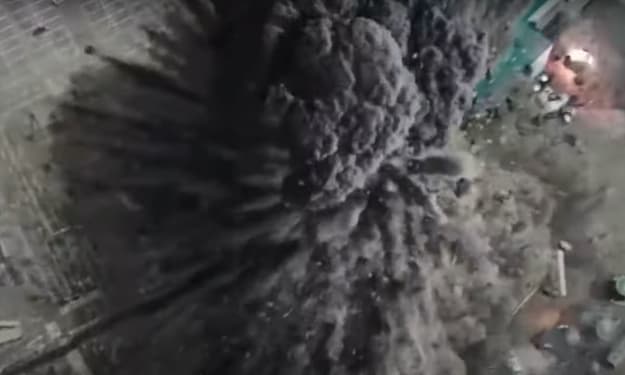
Movie Synopsis: Set in a small town, "Pandora" delves into the complex relationship the residents have with the local nuclear plants. While the plants offer employment opportunities, the inherent dangers are a cause for concern. Kang Jae-hyuk, who has personally experienced the tragic consequences of an accident at the plants, reluctantly works there after facing financial ruin. As the nuclear plants approach their expiration date and reports are concealed to maintain operation, an inevitable disaster looms. When a massive explosion occurs, Pyeong-seok, a concerned individual who had previously warned of the risks, desperately tries to prevent a catastrophic meltdown. With surrounding areas evacuated and the media kept in the dark by the president's advisors, the true extent of the danger remains unknown. Meanwhile, the firefighters' efforts to cool down the reactor are hindered by bureaucratic obstacles, adding to the impending crisis.
By M. K. Anandan3 years ago in Geeks


Comments
There are no comments for this story
Be the first to respond and start the conversation.