
9 Modern Architectural Marvels Worth Traveling For 2026
Expert-curated guide to 9 architectural marvels worth the journey.


From gravity-defying towers to biomimetic urban landscapes, modern architectural wonders mark the moments when imagination, technology, and civic ambition align.
Each wonder below represents a decisive leap: a new structural idea, a radical form, or a building whose influence extended far beyond its footprint. Together, they form a global atlas of architectural breakthroughs.
What Makes a Modern Architectural Wonder?
A modern architectural wonder is defined by three inseparable qualities: formal originality, engineering audacity, and lasting urban or cultural impact.
Formal originality appears when a building abandons inherited shapes and invents its own logic. Engineering audacity translates that vision into reality, often by pushing materials, computation, or construction sequencing beyond established limits. Cultural impact follows when architecture alters how a city is perceived, sometimes even how it understands itself.
Unlike historical monuments built to commemorate the past, modern wonders are forward-looking. They embody confidence in the future.
Burj Khalifa
At 828 meters, Burj Khalifa remains the tallest structure ever built, but its true innovation lies in stability rather than height. The Y-shaped buttressed core redistributes wind loads so efficiently that the tower subtly “confuses” prevailing wind patterns, reducing oscillation.
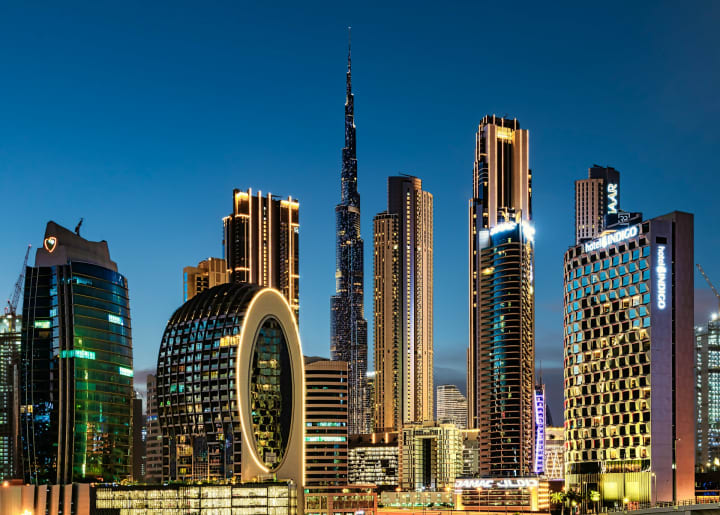
Less known is how the building choreographs ascent. The setbacks are not decorative; they follow a spiraling logic that minimizes vortex shedding. Burj Khalifa became a prototype for future supertalls, proving that extreme height could be elegant, not bulky.
Visit evenings for fountain shows and the RGBW facade lighting. If you plan a long walk and carry belongings, travelers can use the international service Qeepl for luggage storage.
Sydney Opera House
The Sydney Opera House is a wonder born from uncertainty. Its iconic shells were not fully engineered when construction began, a rare case where form preceded feasibility.

The breakthrough came when all roof shells were derived from a single sphere, allowing prefabrication and structural consistency. This solution quietly transformed architectural engineering worldwide. Today, the building stands as proof that radical form can survive political conflict, technical failure, and decades of doubt, and still emerge timeless.
La Sagrada Família
La Sagrada Família is architecture across centuries. Antoni Gaudí designed it as a self-supporting system, where geometry replaces ornament and structure becomes decoration.
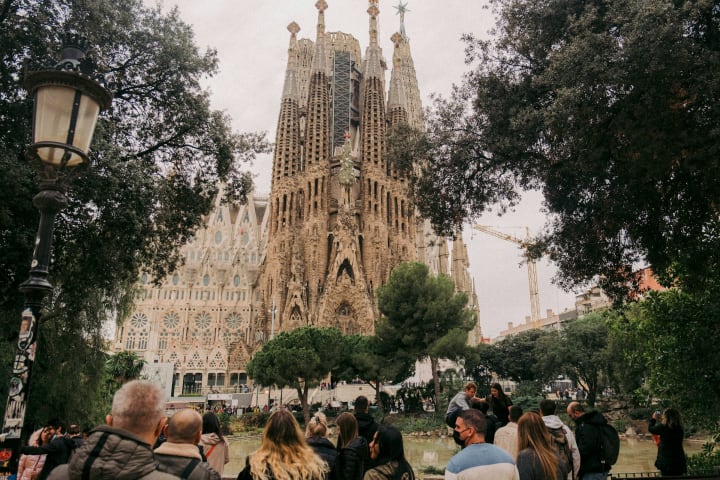
The interior columns branch like trees, following catenary and hyperbolic logic that distributes weight naturally. Modern computational tools have not altered Gaudí’s vision - they have confirmed its precision. Few buildings demonstrate so clearly that intuition and mathematics can converge.
Book timed entry online via sagradafamilia.org to bypass queues. Visit early morning for fewer crowds and optimal light on the stained glass.
Guggenheim Museum Bilbao
The Guggenheim Museum Bilbao did more than introduce a new architectural language - it rewrote urban strategy. Its titanium skin, modeled with aerospace software, enabled curves that conventional drafting could not describe.
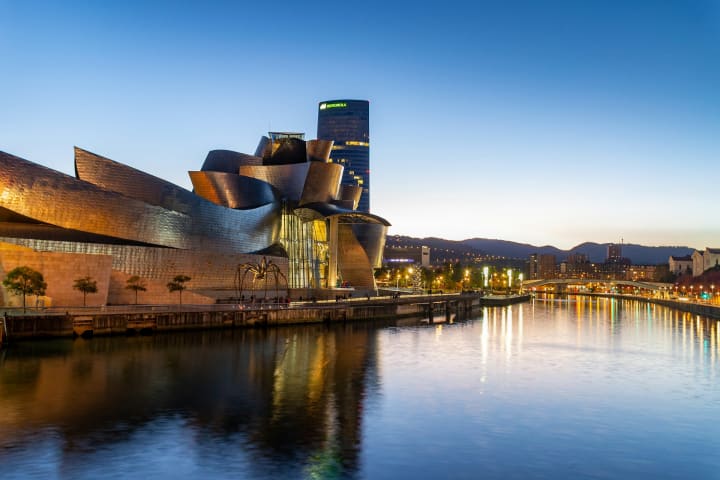
What makes it a wonder is not only form, but consequence. Entire cities now attempt to replicate the “Bilbao Effect,” yet few succeed. The building’s power lies in timing, context, and its total redefinition of what a museum could be.
Beijing National Stadium
Known as the Bird’s Nest, the stadium collapses the distinction between structure and facade. Every visible beam is load-bearing; nothing is ornamental.
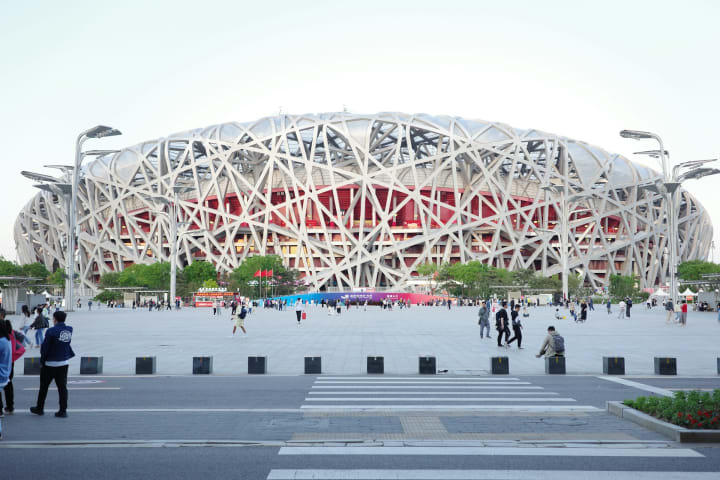
The apparent randomness of the steel lattice conceals precise logic. Density increases where forces concentrate, making stress visually legible. It is one of the rare cases where spectators can see engineering at work without understanding equations.
Gardens by the Bay
Gardens by the Bay reframes architectural wonder as an ecosystem rather than an object. The Supertrees function simultaneously as vertical gardens, exhaust chimneys, and energy collectors.
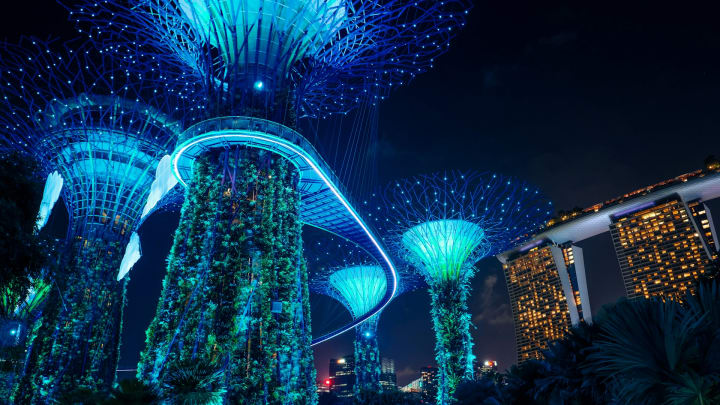
This project marks a shift: architecture not as opposition to nature, but as artificial extension of it. In a dense equatorial city, it demonstrates how spectacle and environmental performance can coexist.
Petronas Towers
The Petronas Towers derive their identity from geometry rather than scale. Their floor plan is based on an eight-point star, rooted in Islamic design principles and translated into a modern skyscraper system.
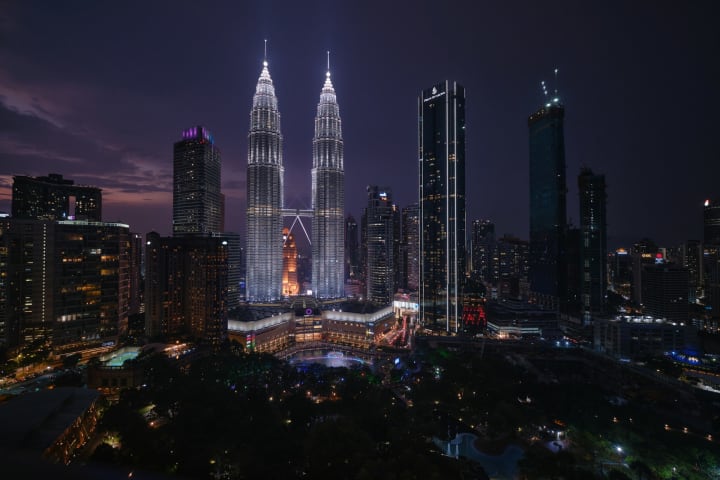
The skybridge is intentionally flexible - it slides within the towers rather than locking them together, allowing independent movement during wind or seismic events. The result is a symbol of balance rather than dominance.
The Shard
The Shard rejects the idea of the skyscraper as a closed monolith. Its fragmented glass skin creates the impression of a vertical city dissolving into the sky.
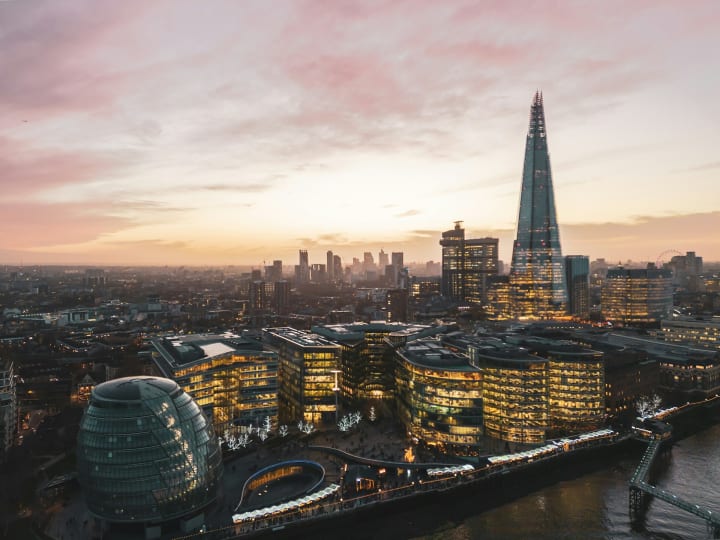
Instead of overpowering London’s historic skyline, it mirrors it - reflecting clouds, light, and weather. The building’s success lies in restraint: height used as punctuation, not proclamation.
CCTV Headquarters
The CCTV Headquarters is a structural paradox. Two leaning towers connect through a massive cantilever, forming a continuous loop that defies conventional vertical logic.
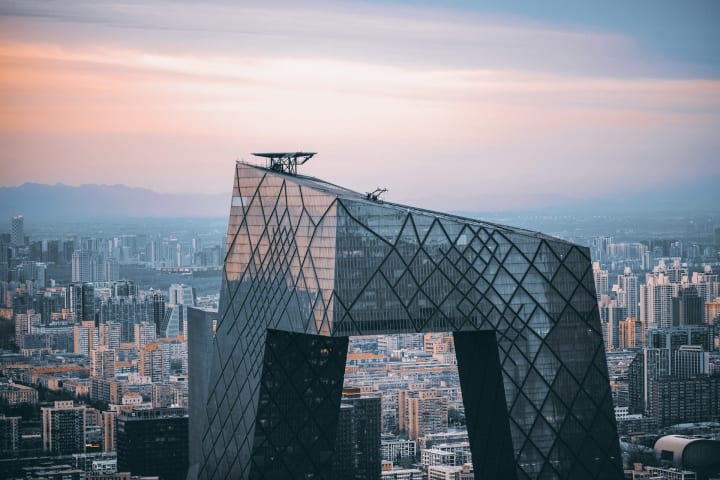
What makes it exceptional is clarity. The facade pattern directly corresponds to internal forces, turning stress into ornament. It is architecture that explains itself - a diagram you can walk around.
How Architectural Wonders Will Look in the Future?
Future architectural wonders are likely to focus less on singular objects and more on integrated systems. Instead of isolated icons, landmark projects will increasingly operate as hybrids of building, infrastructure, and environment. Height and visual spectacle will matter less than adaptability, energy performance, and the capacity to respond to climate stress in real time.
Form will increasingly emerge from data. AI-assisted design will optimize structures simultaneously for wind, heat, material efficiency, and human movement. This process will generate shapes that feel unfamiliar yet purposeful, where geometry follows performance rather than fashion.
Materials will also redefine what is considered monumental. Mass timber, recycled composites, and bio-based materials will gradually replace the dominance of steel and glass. Architectural wonders will begin to store carbon instead of emitting it, shifting symbolism from excess to responsibility.
Most importantly, future wonders will be evaluated through participation rather than observation. They will be buildings people inhabit daily, not distant icons viewed from afar. The architectural wonder of tomorrow will be experienced continuously, evolving alongside the city and its inhabitants.
About the Creator
Qeepl
A handy service for finding luggage storage worldwide, paired with curious travel guides that explore cities, neighborhoods, and the little moments that make each place feel unique.
Large Protests Against Donald Trump’s Policies Continue — Why the Movement Keeps Going Viral
Across major cities in the United States and Europe, large-scale protests tied to Donald Trump’s policies and political influence continue to dominate headlines and social media timelines. From packed city squares to viral protest signs, livestreams, counter-demonstrations, and trending hashtags, the story refuses to cool down.
By Omasanjuwa Ogharandukun5 days ago in Journal
Autonomy Is The Real Privilege
Good morning, freedom-seekers! Today we’re gonna be looking at autonomy. A strange word, I know; one many would probably look at blankly and run away from on sight. We’re gonna figure out what it actually means, consider how it’s achieved, and decipher just how deeply most of us are tangled up in dependence without realising it.
By That ‘Freedom’ Guy6 days ago in Humans



Comments
There are no comments for this story
Be the first to respond and start the conversation.