
Which Mayan Ruins Should You Visit? Complete 2026 Breakdown
Choose your perfect Mayan ruins from 10 top-ranked sites. History, photography, adventure, or family trips.

Planning a 2026 journey through ancient Maya cities requires clarity about logistics and crowd dynamics. You must understand what each site offers beyond typical guidebook entries. Travelers face real questions: which ruins justify the trek?
This guide delivers tested routes and grounded recommendations. We build on historical significance and preservation quality. The term "best" reflects a balanced formula: UNESCO recognition, structural integrity, and visitor experience depth.
Which Mayan Ruins Are Best for You in 2026?
Selecting ruins begins with an honest self-assessment of travel priorities. History enthusiasts gravitate toward sites with deep archaeological narratives involving intricate stelae. Photographers prize dramatic settings, such as Tikal’s jungle temples emerging from the mist.
Families with children benefit from well-maintained, compact sites like Chichén Itzá. Here, visible layouts hold young attention without exhausting stamina. Adventurers willing to commit days to remote trekking find reward in El Mirador’s expeditions.
Crowd-averse travelers lean toward Yaxhá’s lakeside sunsets. Those pressed for time maximize proximity, choosing Tulum as a Riviera Maya day trip or Uxmal from Mérida.
Best Mayan Ruins in Mexico and Guatemala
This region forms the Maya heartland. It offers concentrated access to iconic pyramids through efficient travel networks. Cancún, Mérida, Valladolid, and Flores serve as primary hubs anchoring distinct ruin clusters.
Sites here range from globally recognized landmarks to intimate jungle complexes. Every entry point delivers substantial historical depth and visitor infrastructure.
Tikal, Guatemala
Tikal’s Great Plaza centers on Temples I and II facing across open ground. Temples III and IV punctuate the forest canopy. Temple IV’s 65-meter summit claims status as the premier sunrise viewpoint.
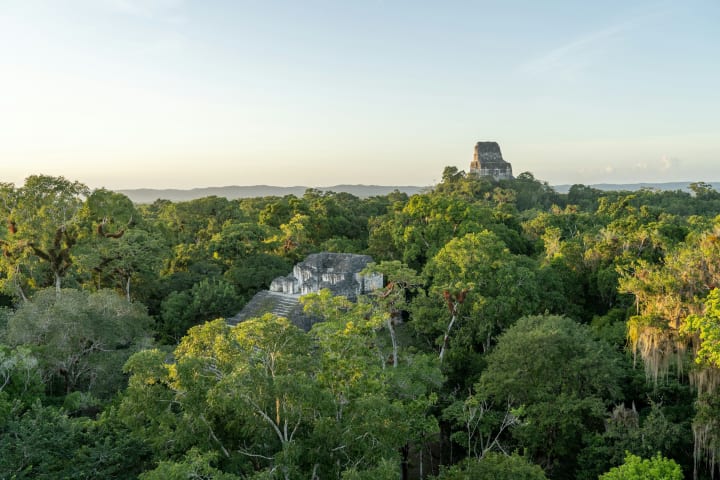
Dawn tours depart Flores accommodations at 3:00–4:00 AM. This allows entry before general admission opens at 6:00 AM. Guides enhance encounters with howler monkeys and toucans active during cool morning hours.
The site built continuously over 800 years to a 900 CE peak. It left 10,000 mapped structures across tropical terrain. Plan a half-day minimum for core temples or a full-day immersion including outlying complexes.
Chichén Itzá, Mexico
El Castillo pyramid demonstrates equinox phenomena. Afternoon light creates serpent shadows descending balustrades, reflecting Maya calendrical precision. The Great Ball Court’s acoustics allow whispers to carry 150 meters.
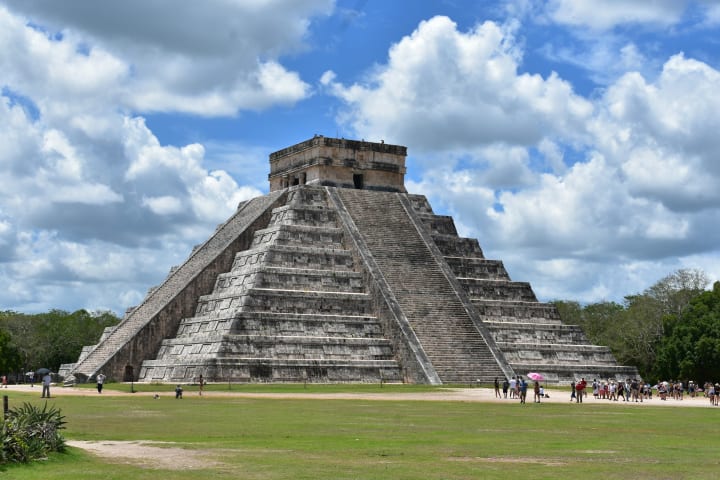
The Sacred Cenote served as a portal to the Xibalba underworld. Ongoing museum updates through 2026 expand the interpretation of Maya-Toltec fusion architecture. Timed entry systems now manage 2.6 million annual visitors.
Sunrise arrivals or late afternoons reduce crowding versus midday peaks. Base in Valladolid for quieter accommodations or Mérida for urban amenities. Entry costs align with Category I INAH pricing.
Tulum and Coba
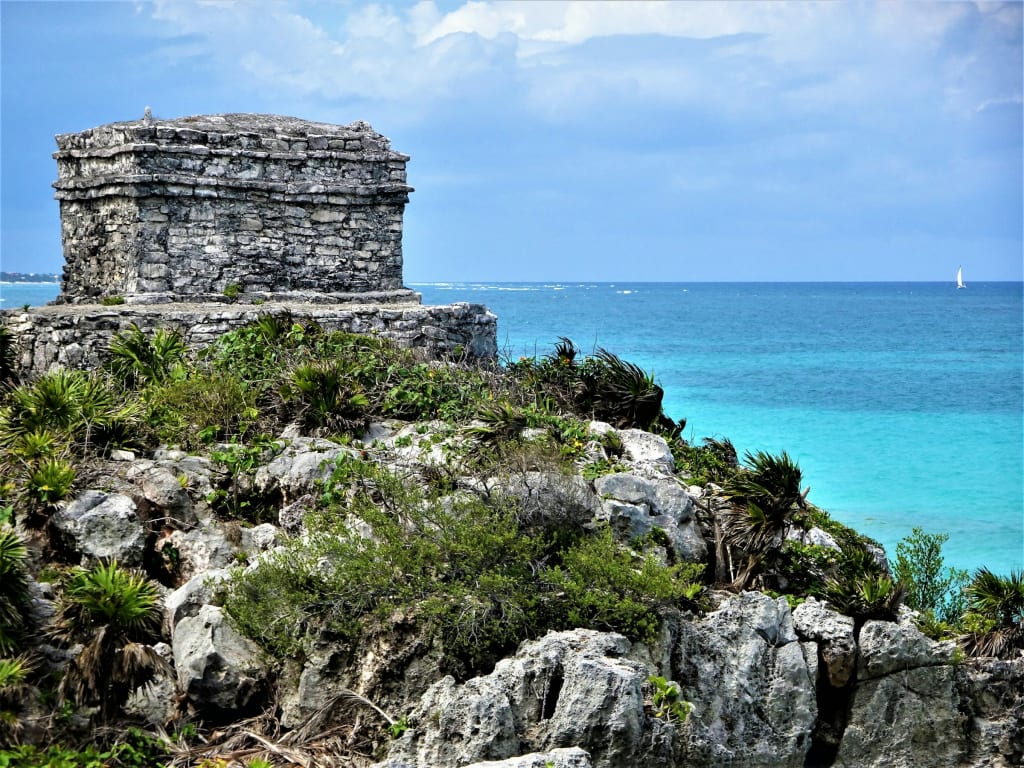
Tulum occupies dramatic 12-meter cliffs above turquoise waters. It functioned as a major Maya port for Coba between the 13th–15th centuries. The compact site requires two hours for thorough exploration.
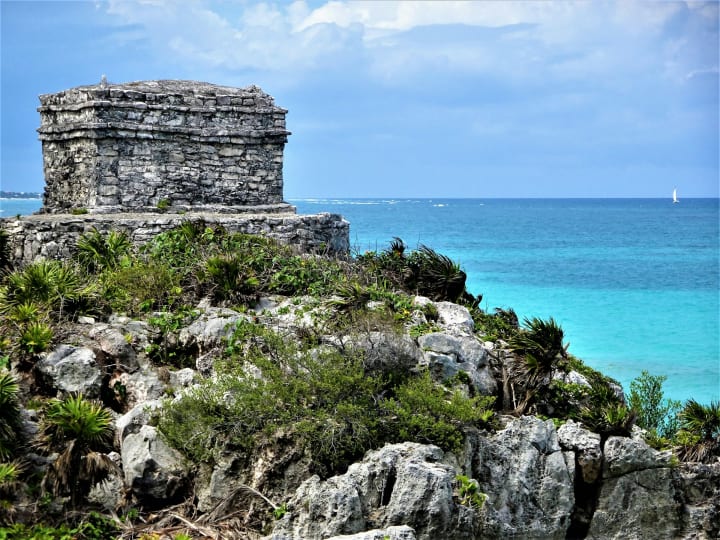
Arrive by 8:00–9:00 AM before cruise-ship crowds overwhelm pathways. Beach access below ruins allows post-visit swimming. Coba sprawls across the jungle, connected by over 40 sacbé limestone causeways.
Nohoch Mul pyramid rises 42 meters as Yucatán’s tallest. Climbing remains permitted only with official guided groups as of 2025 reports. The site sits 45 minutes from Tulum.
Palenque and Uxmal
Palenque’s refined architecture features corbelled vaults and modeled stucco scenes. The Temple of Inscriptions holds King Pakal’s tomb, discovered in 1952. Intimate scale contrasts with sprawling complexes elsewhere.
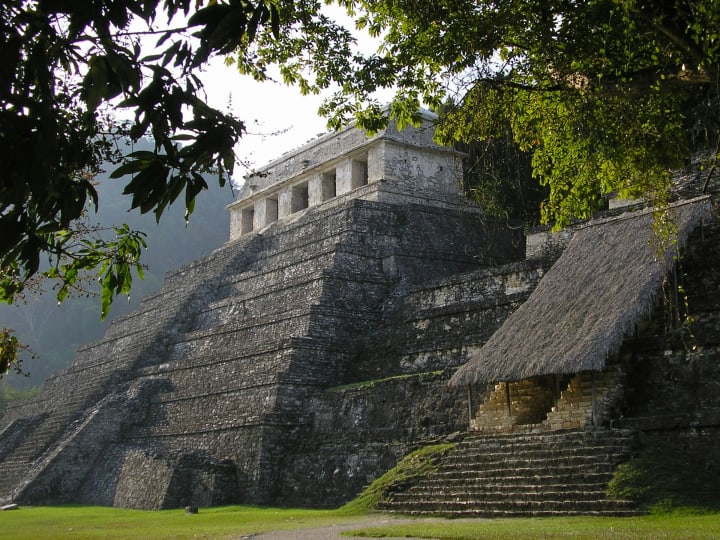
Uxmal exemplifies Puuc-style perfection. Smooth lower walls of fitted blocks support ornate friezes of Chaac masks. The Pyramid of the Magician dominates the ceremonial center with a unique elliptical base.
Visitor numbers at Uxmal remain significantly lower than Chichén Itzá. It offers a quieter, more atmospheric connection to the ancient engineering skills of the Maya.
Yaxhá and El Mirador
Yaxhá ranks as Guatemala’s third-largest Maya site. Temple 216 rises 30 meters, delivering sunset views over lagoons. Unlike Tikal’s crowds, Yaxhá requires only a few afternoon hours for thorough exploration.
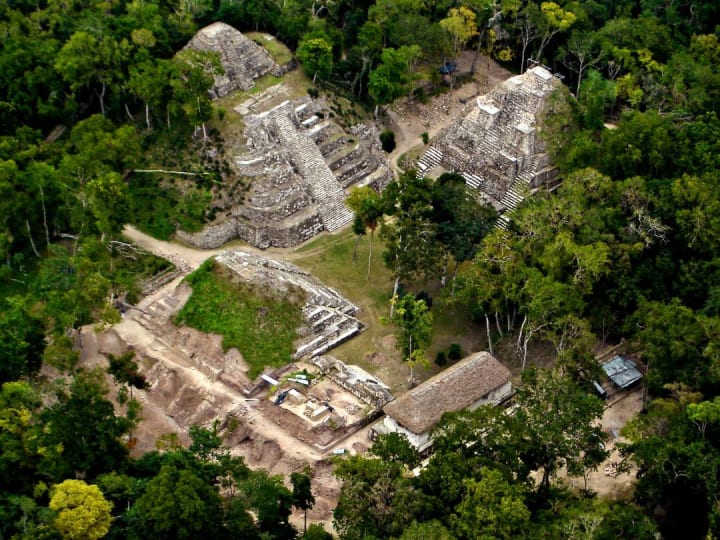
El Mirador demands five-to-six-day guided jungle treks. It is suitable only for fit adventurers willing to hike daily. The complex ranks among the Maya world’s largest4, with the La Danta pyramid surpassing many contemporary structures.
Best Mayan Ruins in Belize and Honduras
This cluster delivers high-reward archaeology with moderate-to-adventurous logistics. You get reduced visitor density and exceptional artistry. San Ignacio anchors Belize’s Cayo District sites while Flores serves strictly as a cross-border hub.
Caracol, Belize
Caana ("Sky Palace") towers 43 meters as Belize’s tallest man-made structure. It houses four palaces and three temples with sweeping jungle vistas. The 75-square-mile complex exceeds modern Belize City’s footprint.
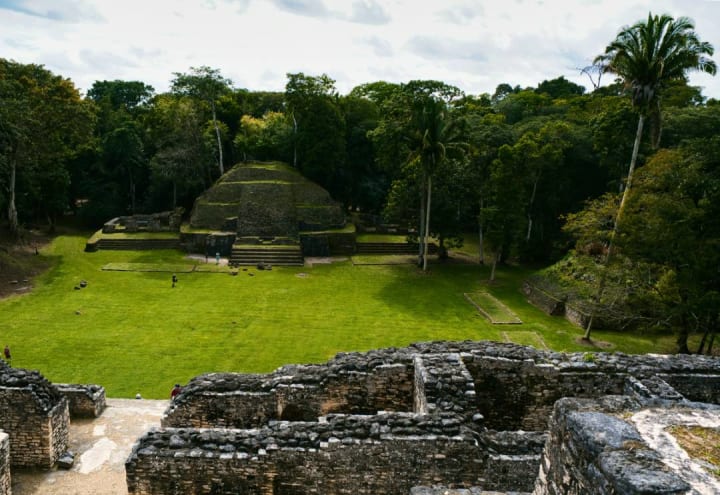
Only the central core sees excavation today. This leaves vast plazas wrapped in a forest atmosphere. Birdlife thrives here, rewarding patient observers with toucans and parrots.
Located 25 miles south of San Ignacio, Caracol requires careful planning. Allocate three hours minimum for main structures. Wildlife activity peaks in the mornings, aligning with cooler exploration windows.
Copán, Honduras
The Hieroglyphic Stairway climbs Temple 26 with over 2,500 glyphs. This forms the longest Maya inscription and documents dynastic succession. The Gran Plaza displays intricately carved stelae portraying ancient rulers.
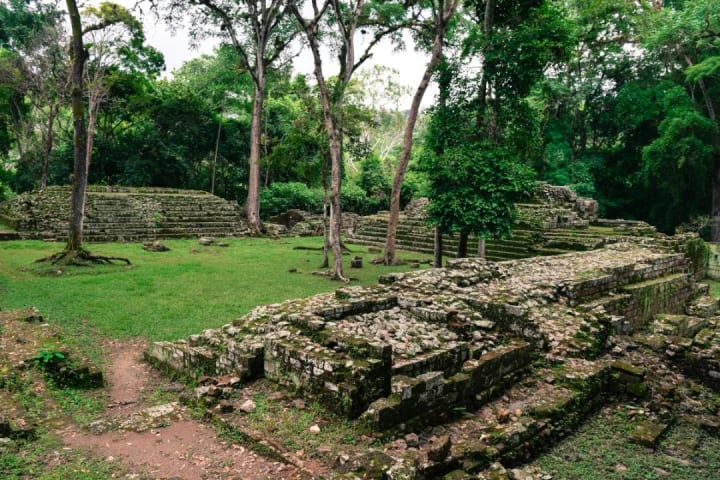
The on-site Copán Sculpture Museum exhibits original carvings. Base in Copán Ruinas town; the site operates 8:00 AM–4:00 PM. Guide services significantly enhance epigraphic interpretation, revealing narrative depth.
Lamanai and Xunantunich
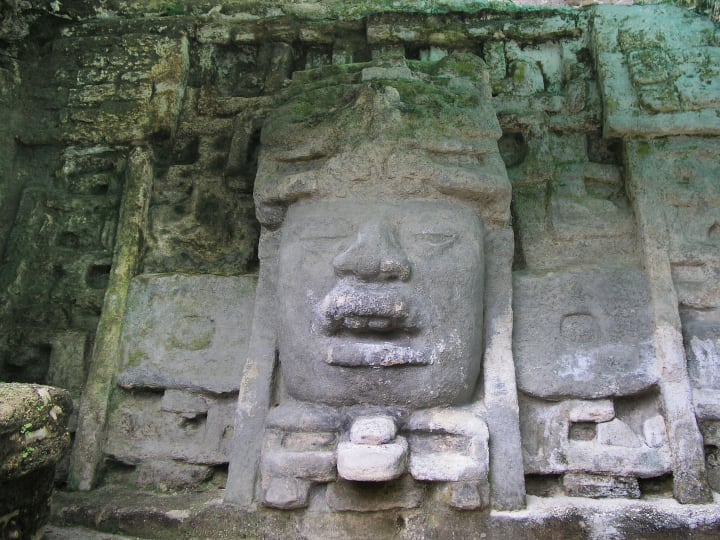
Lamanai ("submerged crocodile") requires exclusive boat access up the New River. The journey delivers wildlife viewing before reaching the High Temple. Day trips typically include boat transfers and park fees.
Xunantunich sits eight miles southwest of San Ignacio. It features El Castillo pyramid with climbable access. Steep steps reward you with panoramic views of the surrounding jungle and Guatemala across the border.
When to Go?
Dry season (November–April) delivers optimal conditions. April–May shoulder months offer 40–50% fewer crowds. The wet season (May–October) brings afternoon storms but greener landscapes.
Budget guidance for 2026 varies by country. Mexico daily costs run $48–$145 USD including transport. Guatemala and Honduras maintain lower backpacker budgets. Midweek visits unlock savings through reduced crowding.
If you plan a long walk and are carrying things with you, travelers will find it convenient to use the international service Qeepl for luggage storage.
Respect marked paths and avoid touching carvings. Support certified local guides to sustain site preservation and ensure these wonders remain for future generations.
About the Creator
Qeepl
A handy service for finding luggage storage worldwide, paired with curious travel guides that explore cities, neighborhoods, and the little moments that make each place feel unique.


Comments
There are no comments for this story
Be the first to respond and start the conversation.