
The Philosopher's Stone: Using AI And Logic To Redefine Auto Insurance
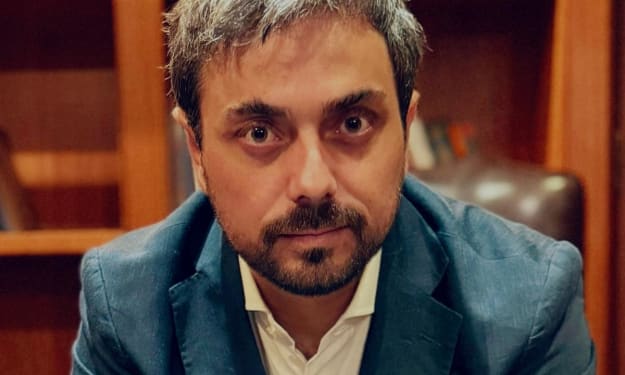
The $300 billion insurance market is ripe for revolution. Robert Smithson has a front seat in the race for change. As the founder and CEO of "Just Insure", he has combined telematics and AI to deliver smarter, fairer auto insurance.


As an outsider looking in on the auto insurance space, Robert Smithson quickly identified a recurring, fundamental problem for drivers: generic premiums based on a traditional model stuck in the past. Smithson, fresh from the sale of Genius Sports, a $280 million business that used data to understand and predict sports performance, had found his next target ripe for transformation.
At Just Insure, Smithson is using artificial intelligence and telematics to make car insurance more affordable, particularly for low-income drivers who have long been disadvantaged by traditional pricing models.
He explained: "Insurance is the most data-driven profession of all, but the industry was slow to recognize change. It relies on slow-changing demographic factors such as age, zip code, and marital status. In the last half-decade, thanks to smartphones and AI, we’ve been able to get into the car with the driver, and to measure not just proxies for risk, but individual driver risk.”
This insight sparked the creation of Just Insure: a technology company first, and an insurer second. The mission was simple yet radical: use telematics and AI to price insurance based on how people really drive, not on who they are or where they live.
"Sports analytics taught me that data without context is dangerous. And it's the same with driving data. A sharp brake might look risky, but if it's to avoid an accident, it's evidence of good driving. We built our telematics models with that in mind, not just measuring acceleration and braking, but interpreting why they happen."
Smithson added, "When I realized how broken the incentives were, how much of an opportunity there is to move the needle, and how big the potential market is, I couldn't resist. It's an industry that directly affects people's financial lives. If you can use technology to make it cheaper and fairer, you're not just building a business, you're giving people the right incentives to make smarter, safer driving decisions."
Clarity Creates
In starting Just Insure, Smithson is resolute in one fundamental business principle: clarity.
"Every business I have ever built," he reflected, "starts with understanding the problem better than anyone else. Whether it's finance, sports, coding, or insurance, the pattern is the same: find inefficiencies, apply data and technology, and solve them elegantly."
With a career that has taken him to Goldman Sachs, Arete Research, and THS Partners, his entrepreneurial spirit burned brightly as he sought to gain an 'informational edge', finding data signals that others overlooked. This fascination with information's predictive powers led to his first major venture, Genius Sports.
"Finance taught me discipline. You learn how to evaluate risk, manage capital efficiently, and make decisions under uncertainty," he said. "That experience has been invaluable as an entrepreneur. My advice for entrepreneurs is to understand the regulatory side before you start. Insurtech is complex, and you can't just 'move fast and break things.' But don't be intimidated, the industry is full of opportunities if you can navigate the rules smartly. Build something that genuinely improves outcomes for customers, not just something that looks good in a pitch deck." "Entrepreneurship is really about understanding probability, and that is essentially what good business is all about."
He added that leadership isn't a one-size-fits-all approach.
“In a tech startup, you need to move fast and tolerate chaos, but in finance, it's about precision and control. The key is adaptability, knowing when to step back, when to push, and when to listen. I stay grounded in data while encouraging creativity from the team. I also believe in hiring great people and giving them autonomy; otherwise, micromanagement kills creativity."
Making A Change
By combining the boldness of American entrepreneurship with the analytical rigor of the British approach, Just Insure is now making significant strides in the auto insurance world.
"What connects everything I've done is data," he explains. "Whether in finance, sports, or insurance, it's about using information to make better, fairer decisions."
That data-first approach comes straight from his philosophical training.
"Philosophy teaches you to question assumptions and build arguments from first principles," he says. "In business, that's incredibly useful as it forces you to strip problems down to their core logic before deciding what to do next."
Traditional insurers rely on demographic averages, such as age, gender, credit score, and postcode, to price risk. Smithson's model is the opposite: a real-time, behavior-based system powered by telematics and artificial intelligence.
"Telematics measures how, when, and where people drive," he explains. "We collect that data from smartphones and vehicles and feed it into our AI models. Safer drivers pay less because we can understand how safely they actually drive."
Where legacy insurers price backwards, Just Insure looks forward, constantly adjusting premiums based on live driving behavior. The company built its own policy management and pricing systems from scratch, allowing for a level of adaptability that traditional players can't match.
"Our loss ratios are more than 20 points better than the industry average," says Smithson. "We're not pricing risk with our eyes focused on the rearview mirror; we're looking out the window in front of us and pricing it dynamically."
That adaptability isn't just a technical advantage but also a philosophical one, reflecting Smithson's belief in replacing subjective judgment with objective evidence.
"I've always been drawn to businesses where you can take a messy human action, apply data science, and make it more transparent and efficient," he says.
AI is central to the process. It interprets telematics data in context, distinguishing risky driving from safe, defensive maneuvers. It can also predict the likelihood and severity of a claim with precision beyond traditional actuarial methods. The feedback loop is constant: behavior influences pricing, and pricing influences behavior.
"This makes insurance not only fairer but also a tool for promoting safer roads. If you want people to trust you with their data, you have to earn that trust every day," he says.
Fairness also lies at the heart of Just Insure's mission. For millions of Americans, especially those in low-income neighborhoods, auto insurance is disproportionately expensive. Drivers in the poorest zip codes or with low credit scores can pay three times as much as wealthier counterparts, even if they're safer drivers.
"It's hard to break out of poverty when your insurance eats up such a large share of your income," Smithson says. "That's why 14% of Americans drive uninsured compared to less than 1% in Europe or Canada."
Just Insure's model bases premiums on actual behavior rather than proxies like income or credit, allowing Smithson's company to reward safe drivers regardless of their background.
"We've had customers paying up to 80% less than traditional insurers," he says. "Once we have enough driving data, about 3,000 miles, we fade the impact of credit to zero. It's about giving people control over what they pay."
That's a radical shift in incentive design. In traditional insurance, safer driving has little impact on an individual. However, with telematics, drivers can directly influence their premiums, which encourages them to adopt better habits and safer driving practices.
"Telematics makes insurance more equitable by turning it into something people can control," Smithson adds. "You can't change your ZIP code overnight, but you can change how you drive."
Scaling Smarter
Recent growth has been bolstered by the arrival of Gary Tolman as Chairman, a seasoned executive who helped scale digital insurers Esurance and Noblr.
"Gary and I quickly realized we shared the same philosophy that data-driven insurance can genuinely improve people's lives," says Smithson. Their partnership blends " old-school discipline with new-school innovation," balancing Smithson's startup speed with Tolman's industry rigor.
Under this leadership, Just Insure aims to become America's most profitable auto insurer by pricing risk more accurately than competitors. Smithson's roadmap includes expanding into new U.S. states, scaling the Just Unlimited product, and achieving profitability in early 2026.
That confidence stems from Just Insure's superior loss ratios, efficient capital use, and high customer satisfaction. Its technology also allows the company to quickly identify and churn unprofitable customers while retaining high-margin ones.
A Philosopher's View of Risk
For all the data science and AI at the core of Just Insure, Smithson's outlook on business remains distinctly philosophical.
"The key isn't to avoid risk but to understand it better than everyone else. If you can measure it properly, risk becomes your advantage."
Asked what advice he'd give his younger self, he pauses.
"Be patient but persistent. You don't need to have it all figured out immediately. Most people overestimate what they can do in a year and underestimate what they can do in ten."
That long-term perspective is the ultimate mark of a philosopher-entrepreneur. One who looks at the world closely, thinks deeply, and measures more intelligently to deliver a direct impact.
About the Creator
Léa Carlsen
Based in Los Angeles, Léa Carlsen is a journalist who began her career at VSD (French Magazine) , covering the Oscars and interviewing stars such as John Travolta, Geena Davis, Ben Affleck, Cameron Diaz, or Andy Garcia, to name a few...
Keep reading
More stories from Léa Carlsen and writers in Interview and other communities.
Andrea Clerissi and the Art of Producing Beyond Borders
Between Method and Creativity, what are the most important lessons you’ve drawn from your years of producing in France? Andrea Clerissi: France taught me methodical rigor and unwavering creativity. Behind every show, there’s a true mechanism of precision: technical planning, logistics, budgets, and communication. My role, as it’s often described, is to bring people together. Uniting artists and teams around a shared goal enables everyone to work in the best possible conditions and, in doing so, to dare to go further artistically. A Global Mindset
By Léa Carlsen4 months ago in Interview
Part 2 Interview With Joe Patterson, Author Of Melanin Memoirs
This is my second interview with Joe Patterson. His 4th anniversary writing on Vocal will be in March 2026. He has one achievement on Vocal, The Other Foot. He has over 17,000 reads on Vocal since he started on Vocal in 2022. Joe Patterson is very creative poet and rapper. Joe is deep thinker and I feel it is reflected in his latest published book, Melanin Memoirs.
By Mariann Carroll19 days ago in Interview



Comments
There are no comments for this story
Be the first to respond and start the conversation.